Domestic turkey
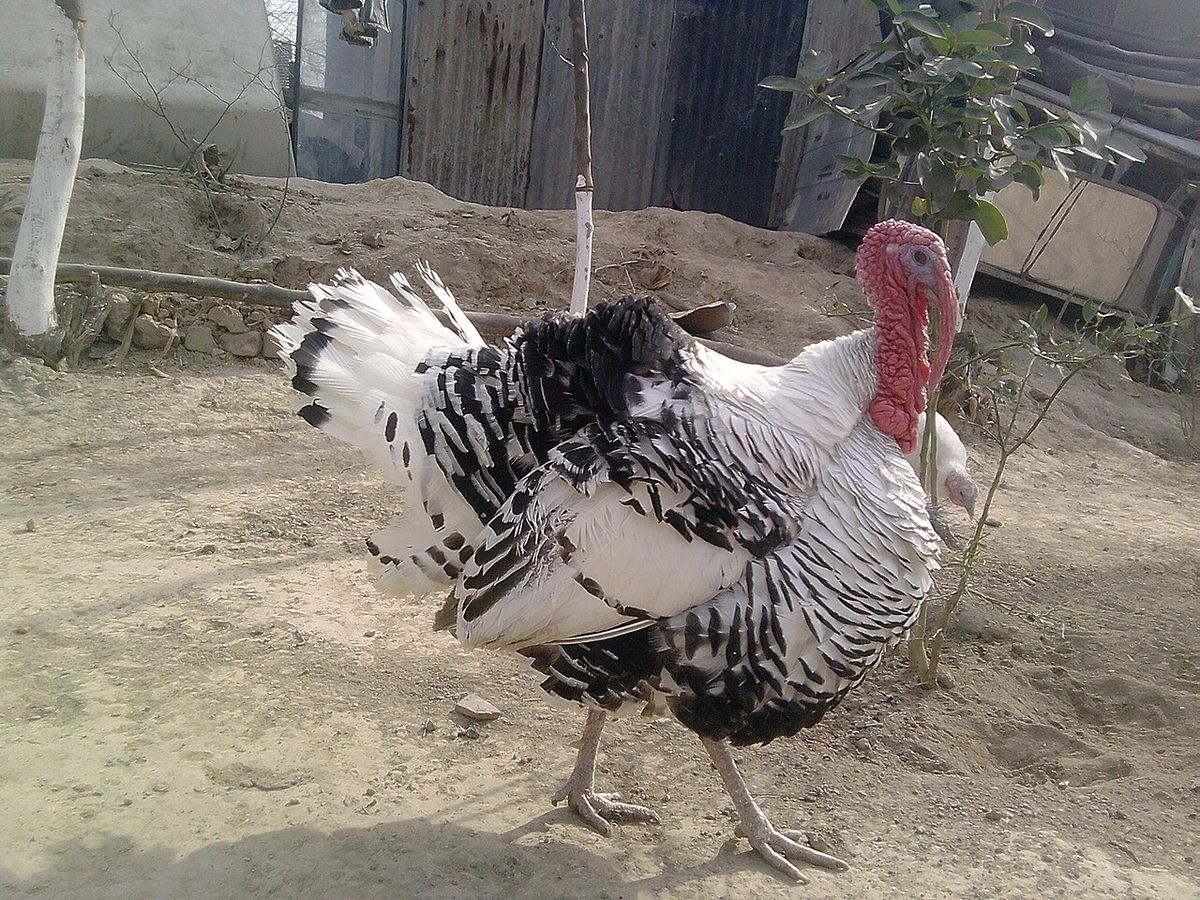
The domestic turkey (Meleagris gallopavo domesticus) is a large fowl and the domesticated form of the wild turkey, originally from central Mexico. It is a principal form of poultry agriculture globally and a central feature of Canadian holiday traditions, particularly Thanksgiving and Christmas dinners. Industrialized farming has made turkey meat widely affordable, with the Broad Breasted White being the dominant commercial breed raised for its substantial meat yield. The bird is also processed into various products year-round, including ground turkey, deli slices, and frozen whole birds, forming a regular part of the modern diet.
History and Domestication
The domestic turkey's lineage traces directly to the South Mexican subspecies of wild turkey, which was domesticated by ancient Mesoamericans at least two millennia ago in a region bounded by the present Mexican states of Jalisco, Guerrero, and Veracruz. These peoples utilized the bird for its meat and eggs as vital protein sources and employed its feathers extensively for decorative purposes. The Aztecs associated the turkey with their trickster god Tezcatlipoca, possibly due to its perceived humorous behaviour. Spanish explorers transported turkeys from central Mexico to Europe in the 16th century, where distinct breeds like the Spanish Black and Royal Palm were subsequently developed. The turkey was introduced to England by navigator William Strickland, whose family coat of arms from the 16th century is among the earliest known European depictions of the bird. By 1573, English farmer Thomas Tusser noted its presence on Christmas menus, and turkeys were among the supplies listed for New World colonies in 1584 and sent from England to the Jamestown colony in Virginia in 1608. For centuries in the United Kingdom, turkey remained a relative luxury until intensive farming methods from the late 1940s, combined with advances in refrigeration and disease control, dramatically reduced its cost and increased availability.
Biology and Physical Characteristics
The domestic turkey is the eighth largest living bird species by maximum mass, which can reach 39 kilograms (86 pounds). This extreme size renders larger individuals completely flightless and terrestrial, though younger or smaller birds can manage short-distance flight. The bird's physical features include a fleshy protuberance atop the beak called a snood and a wattle attached to the underside of the beak. Commercial turkeys are predominantly bred to have white feathers because the pin feathers are less visible when the carcass is dressed, although brown or bronze-feathered varieties like the Broad Breasted Bronze are also raised. The Latin species name gallopāvō means 'chicken peacock,' while the English name 'turkey' likely originated from an early misidentification with the guineafowl, which was imported to England through the country of Turkey.
Behaviour and Social Structure
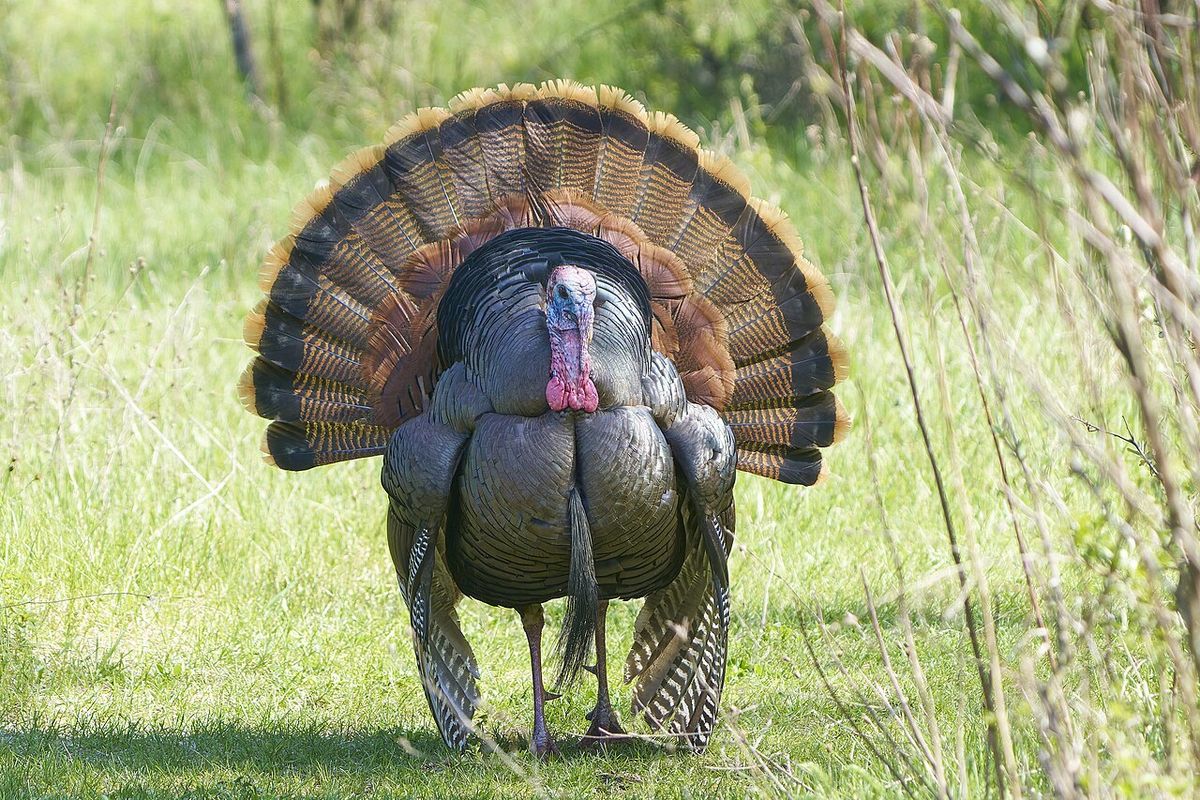
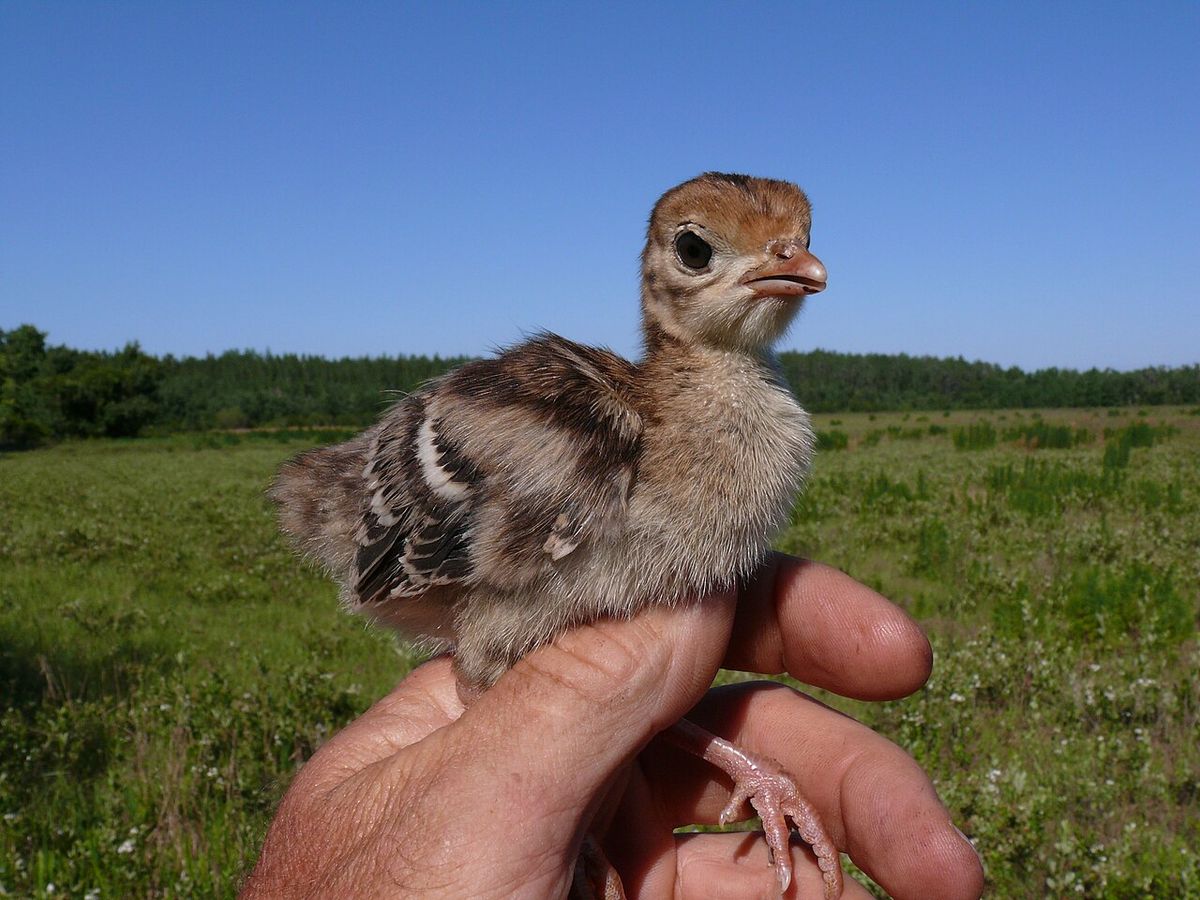
Domestic turkeys are highly social birds that become very distressed when isolated, with many behaviours such as feeding, drinking, and dust-bathing being socially facilitated, meaning expression by one animal increases the tendency for others to perform it. Young poults readily fly short distances, perch, roost, and perform spontaneous, frivolous running that has the appearance of play, though these behaviours become less frequent with maturity. Adults exhibit a wide range of comfort behaviours including wing-flapping, feather ruffling, leg stretching, and dust-bathing, and they can recognise unfamiliar turkeys, often attacking intruders placed into an established group. Vocalisations are important for communication and monitoring social tension, with a high-pitched trill indicating birds are becoming aggressive, which can escalate into intense sparring with leaps and talons. As males sexually mature, they spend considerable time displaying, which involves fanning tail feathers, drooping wings, erecting all body feathers including the beard, and turning the skin of the head and caruncles bright blue and red. Throughout this display, the snood elongates, the birds strut with necks arched, and they emit the characteristic gobbling call interspersed with sneeze-like sounds and rapid tail feather vibrations.
Commercial Breeds and Varieties
Numerous turkey breeds have been developed, ranging from large-scale commercial varieties to smaller heritage breeds prized for different characteristics. The Broad Breasted White is the overwhelmingly dominant commercial breed chosen for industrial farms due to its high meat yield and less visible pin feathers after processing, and it is typically the breed selected for the United States presidential pardon custom. The Broad Breasted Bronze is another commercially developed table bird, while the Standard Bronze is a single-breasted variant capable of natural breeding. Heritage breeds offer genetic diversity and often differ in flavour and appearance from their industrial counterparts, with many having darker, more flavourful meat. The Beltsville Small White was one product of breeding advances in the early 20th century aimed at creating a smaller, more manageable bird for consumers, and its development started in 1934 before being introduced in 1941 and admitted to the American Poultry Association Standard in 1951.
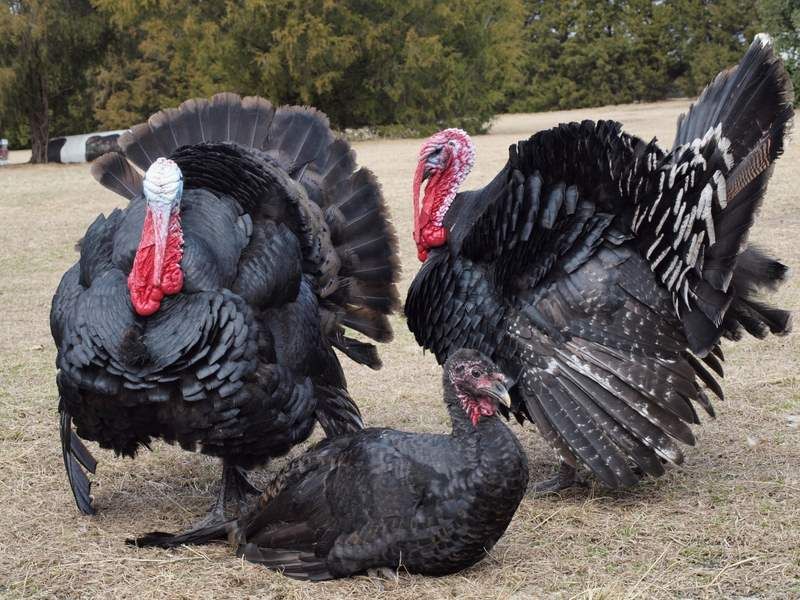
Key heritage breeds include the Broad Breasted Bronze, which is a commercially developed strain of table bird. The Standard Bronze is similar but is single breasted and can naturally breed. The Bourbon Red turkey is a smaller, non-commercial breed with dark reddish feathers and white markings. The Slate, or Blue Slate, turkey is a very rare breed with gray-blue feathers. The Black turkey, also known as Spanish Black or Norfolk Black, has very dark plumage with a green sheen. The Narragansett Turkey is a popular heritage breed named after Narraganset Bay in New England. The Chocolate is a rarer heritage breed with light brown markings, common in the Southern U.S. and France before the Civil War. The Beltsville Small White is a small heritage breed introduced in 1941. The Midget White is another smaller heritage breed.
- Bourbon Red: A smaller, non-commercial breed with dark reddish feathers and white markings.
- Narragansett: A popular breed named after Narragansett Bay in New England.
- Slate (or Blue Slate): A very rare breed with gray-blue feathers.
- Black (Spanish Black, Norfolk Black): Features very dark plumage with a green sheen and was historically raised in East Anglia for London markets.
- Chocolate: A rarer breed with markings similar to a Black Spanish but light brown in colour, common in the Southern U.S. and France before the Civil War.
- Beltsville Small White: A small breed whose development started in 1934, introduced in 1941, and admitted to the American Poultry Association Standard in 1951.
- Midget White: Another small heritage breed often confused with the Beltsville Small White.
Industrial Production Systems
Modern turkey production is a highly industrialized process beginning at breeder farms that supply eggs to hatcheries. After 28 days of incubation, the hatched poults are sexed and delivered to grow-out farms, where hens and toms are raised separately due to different growth rates, with hens slaughtered at 14-16 weeks and toms at 18-20 weeks. In common rearing systems, chicks are placed in small circular brooding pens for their first week to ensure they find food and water, often under constant light for the first 48 hours and with infrared heaters and air temperatures starting at 35 degrees Celsius. The temperature is lowered by about 3 degrees Celsius every two days until reaching 18 degrees Celsius at 37 days, after which the pens are removed and birds access entire rearing sheds that can hold tens of thousands of birds in buildings such as converted aircraft hangars. The floor is usually deep-litter wood shavings requiring skilled microbial management, and ambient temperatures for adults are maintained between 18 and 21 degrees Celsius to mitigate heat stress given the bird's high metabolic rate of up to 69 watts per bird. Lighting schedules are manipulated to optimise production, using continuous light, long photoperiods of 23 hours, or intermittent lighting, typically at low intensity of less than one lux to reduce feather pecking. Feed rations are primarily based on corn and soybean meal with added vitamins and minerals, adjusted for protein, carbohydrate, and fat based on age.
Animal Welfare Concerns
Stocking density is a primary welfare concern in commercial turkey production, with high densities linked to increased gait abnormalities, hip and foot lesions like foot pad dermatitis, bird disturbances, and reduced bodyweight. Permissible densities vary geographically. For example, Germany has a voluntary maximum of 52 kilograms per square metre for males and 58 for females, while the RSPCA Freedom Foods scheme in the UK reduces it to 25 kilograms per square metre. Research shows turkeys reared at 8 birds per square metre (61 kg/m2) have more hip lesions and foot problems than those at 6.5 or 5.0 birds per square metre. Insufficient space increases risks of injuries like broken wings from hitting pen walls and exacerbates heat stress, problems worsened by the social facilitation of behaviour which requires abundant simultaneous access to resources. Lighting manipulations can compromise welfare, as long photoperiods with low light intensity can cause blindness from buphthalmia or retinal detachment. Feather pecking frequently begins at one day old and is considered redirected foraging behaviour, often addressed by beak-trimming, while head-pecking becomes more frequent at sexual maturity and can be rapidly fatal in confined spaces. Commercial flocks are reared single-sex because a male placed with females may be aggressively victimised and a female in a male group will be repeatedly mated and likely injured from trampling.
Breeding and Commercial Companies
The dominant commercial breed is the Broad-Breasted White, selectively bred for size and meat amount, which is genetically similar to but separate from the White Holland breed. Mature toms of this breed are too large to achieve natural fertilization without injuring hens, so their semen is collected for artificial insemination, allowing several hens to be inseminated per collection and reducing the number of toms needed. The meat from these breeding birds is too tough for roasting and is mostly used to make processed meats. Interestingly, the eggs of some turkey breeds can develop without fertilization through a process called parthenogenesis. The commercial turkey industry relies on a concentrated supply chain, with countries like France and Poland noted for supplying the UK market, especially after a reduction in UK supply due to post-Brexit labour shortages.
Turkey as a Food Source and Consumption
Turkey is a major global meat source, with approximately 620 million birds slaughtered annually. While historically associated with holiday feasts like Christmas in the English-speaking world and Thanksgiving in Canada and the United States, turkey is now consumed year-round in various forms due to changing consumer preferences and the proliferation of commercial poultry plants. Whole birds, both fresh and frozen, remain popular for traditional meals, while processed products like sliced deli meat and ground turkey are everyday staples. Ground turkey is frequently marketed as a lean substitute for ground beef and features in countless recipes, from burgers and meatloaf to chili, pasta sauces, lettuce wraps, and stuffed peppers. The flavour and texture of turkey meat can vary significantly. Commercially raised Broad Breasted Whites have milder, paler meat, while heritage breeds and wild turkeys offer darker, more intensely flavoured meat. Wild turkey meat is almost entirely dark, with a gamier flavour influenced by seasonal diet and a lower fat content than domestic birds. Turkey eggs are rarely sold commercially due to lower output and high demand for meat birds, with the value of a single turkey egg estimated at about US$3.50, substantially more than a dozen chicken eggs.
Common turkey products and dishes include whole roasted turkey, which is traditionally eaten as the main course of Christmas feasts in much of the English-speaking world and for Thanksgiving in the United States and Canada. Turkeys are also sold sliced and ground for various culinary uses. While turkey consumption was once mainly for special occasions, turkey is now eaten year-round and forms a regular part of many diets. The Broad Breasted White is the most consumed variety, often used for large scale industrial farming. Breeders' turkey meat, which is too tough for roasting, is mostly used to make processed meats.
- Traditional Turkey Dinner: Slices of tender, white turkey breast served with gravy, homestyle stuffing, mashed potatoes, and vegetables, commonly available as a prepared meal.
- Ground Turkey Recipes: Used in meatballs, bolognese, skillet-baked ziti, Swedish meatballs, chili, and burrito bowls.
- Specialty Preparations: Brined and grilled wild turkey breast, confit turkey thighs, and dishes like 'Marry Me Wild Turkey' involving smoking or buttermilk soaking.
- Processed Meats: Sliced turkey for sandwiches and cold cuts, often used where recipes call for chicken.
Cooking Techniques and Preparation
Cooking methods are crucial for achieving moist results, especially with leaner birds like wild turkeys or heritage breeds. Brining is a common technique for seasoning and tenderizing, particularly recommended for wild turkeys or fresh, non-injected domestic birds, as the salt and citrus break down tough connective tissues and season the meat throughout. For standard commercial domestic turkeys that often have a salt brine or water injected during processing to increase weight, additional brining is usually not recommended as it can dilute flavour. If not brining, a common method is to fill the cavity with aromatics like parsley, sage, rosemary, thyme, quartered onion, celery, carrots, and a whole orange or lemon to add moisture and flavour during roasting. Basting with butter or olive oil during cooking also helps prevent dryness. Roasting times generally range from 10 to 15 minutes per pound for an unstuffed bird in a 165 degree Celsius oven, and allowing the cooked bird to rest tented with foil for 20 to 30 minutes is essential for juice redistribution. Grilling is another option, requiring indirect heat at under 350 degrees Fahrenheit on a preheated grill with the bird placed on the side opposite the burners.
Nutritional Profile and Byproducts
Turkey meat is valued for its nutritional profile, with white meat being slightly lower in fat than dark meat, though the overall difference is small and both are healthy protein sources. The reputation of turkey causing drowsiness is largely attributed to the context of large holiday meals with carbohydrates, fats, and alcohol, rather than its tryptophan content alone. The global industry generates approximately two billion to four billion pounds of poultry feathers annually as a major byproduct. Most feathers are ground into a protein source for ruminant animal feed, as ruminants can digest the keratin protein composing feathers. Research into higher-value applications has explored converting feather fibers into textile materials, with the United States Department of Agriculture patenting a method for removing the stiff quill from the fibers. Subsequent research at Philadelphia University's School of Engineering and Textiles involved blending turkey feather fibers with nylon to spin into yarn for knitting, finding that increased feather fiber percentage decreased yarn strength but increased the fabric's heat retention capability, suggesting potential for insulation materials.
Questions about Domestic turkey
What is the difference between a domestic turkey and a wild turkey?
Domestic and wild turkeys are the same species (Meleagris gallopavo) but differ significantly due to selective breeding. Domestic turkeys, especially commercial Broad Breasted Whites, are much larger, with toms often weighing over 20 kilograms at slaughter compared to a mature wild tom's approximate 10.8 kilograms. Domestic birds are bred for white feathers and maximum breast meat, often resulting in a semi-flightless or flightless physique. In terms of flavour, domestic turkey meat is generally milder and paler, while wild turkey meat is almost entirely dark with a more intense, sometimes gamier taste influenced by its natural diet of grass, grain, and insects.
Why is turkey a traditional food for Canadian Thanksgiving?
The tradition of eating turkey for Thanksgiving in Canada, as in the United States, has roots in historical harvest feasts. Turkeys were introduced to North American colonists from Europe in the early 17th century and became a valued source of substantial meat for celebrations. Their large size made them suitable for feeding gatherings, and their seasonal availability aligned with autumn harvests. Over time, the practice became culturally entrenched, supported by the bird's affordability through industrial farming. While the holiday's origins are distinct, the turkey's role as a centrepiece is a shared North American tradition that symbolizes abundance and celebration.
Is it better to buy a fresh or frozen turkey?
Both fresh and frozen turkeys are widely available, and the choice often depends on convenience and planning. Fresh turkeys are generally preferred for perceived quality and flavour and do not require lengthy thawing time. However, they are typically more expensive and must be cooked within a few days of purchase. Frozen turkeys are economical, can be bought well in advance, and are available year-round, but require careful thawing in the refrigerator, which can take several days for a large bird. For food safety, a frozen turkey must be thawed completely before cooking to ensure even heat penetration.
Should you brine a turkey before cooking?
Brining can be an effective method to season the meat deeply and promote juiciness, especially for leaner birds like heritage breeds or wild turkeys. The process involves soaking the bird in a saltwater solution, sometimes with sugar and aromatics, which helps break down tough tissues. However, brining is often not recommended for standard commercial domestic turkeys, as many have already been injected with a saltwater or seasoning solution during processing. Adding more brine to these birds can result in an overly salty, diluted flavour. It is best to check the label on a purchased turkey. If it states 'contains up to X% of a solution,' additional brining is usually unnecessary.
What are some common ways to use ground turkey?
Ground turkey is an extremely versatile and lean protein used as a substitute for ground beef in many dishes. Common applications include making turkey burgers, meatballs, meatloaf, and chili. It is also used as a filling for tacos, lettuce wraps, stuffed bell peppers, lasagna, and pasta sauces like bolognese. Its mild flavour readily absorbs spices and seasonings, making it suitable for a wide range of cuisines, from Italian to Asian-inspired stir-fries. For optimal moisture in recipes like meatballs or meatloaf, cooks often incorporate ingredients such as grated vegetables, breadcrumbs, or dairy like Greek yogurt or ricotta cheese.
How long does it take to cook a turkey?
Cooking time for a whole turkey depends primarily on its weight and whether it is stuffed. For a stuffed turkey, cooking time increases to about 20 minutes per pound. However, the only reliable way to determine doneness is by using a meat thermometer. It is crucial to let the turkey rest, tented with foil, for at least 20 to 30 minutes after removing it from the oven. During this time, the internal temperature will continue to rise slightly, and the juices will redistribute, resulting in moister meat.
Sources and further reading
- Domestic turkey (Wikipedia)
- 25 Absolutely Delicious Ground Turkey Recipes (thekitchn.com)
- Turkey Recipes (wildharvesttable.com)
- Traditional Turkey Dinner (hearttohomemeals.ca)
- How to cook a wild turkey (binkysculinarycarnival.com)
Checked by the Novello Desserts desk. Last updated 2026-10-30.