Fish and chips
Fish and chips is a hot dish composed of battered, deep-fried fish served with thick-cut fried potato chips. It emerged in England during the 19th century, becoming a staple meal for the industrial working class and a cultural icon. The dish spread throughout the Commonwealth, including Canada, where it is a prevalent takeaway and pub offering, often featuring regional fish like Atlantic cod, haddock, pickerel, and Pacific halibut. Its historical significance, sustained by government protection during wartime and adaptation to local ingredients, supports its enduring popularity across generations.
Precursors and 19th Century Origins
The culinary technique of frying battered fish was introduced to England by Sephardic Jewish immigrants from Spain and Portugal. These communities, some arriving as early as the 16th century with a larger wave in the 1850s, prepared fish in a style similar to pescado frito. This involved coating fish in flour and frying it in oil, often olive oil, which allowed it to remain palatable when eaten cold for Jewish Sabbath meals. The first literary reference in England appears in Charles Dickens's 1838 novel Oliver Twist, which mentions "fried fish warehouses". The Victorian chef Alexis Soyer documented the method in his 1845 cookbook, A Shilling Cookery for the People, with a recipe titled "fried fish, Jewish fashion". The potato component developed separately, with the term "chips" for fried potato pieces first cited in Dickens's 1859 work A Tale of Two Cities. The merging of these two elements into a single retail business is attributed to the 1860s, with competing claims from Joseph Malin in Bow, East London, and John Lees in Mossley, Lancashire. The dish's expansion was facilitated by the rapid development of trawl fishing in the North Sea and the new railway networks, which enabled the fast transport of fresh fish to populous industrial cities.
Industrial Expansion and Wartime Role in Britain
Fish and chip shops proliferated across the United Kingdom from the 1860s onward to feed the growing urban workforce. These early establishments, known as 'chippies', were basic operations, often consisting of a large cauldron of fat heated by a coal fire. By 1910, there were over 25,000 shops across the UK, a figure that grew to over 35,000 by the 1930s. The dish's cultural and social importance was starkly demonstrated during both World Wars. The British government, recognizing its role in maintaining civilian morale, safeguarded its supply. Professor John Walton, author of Fish and Chips and the British Working Class, noted the cabinet knew it was vital to keep families on the home front in good heart. Consequently, fish and chips were one of the few foods not subject to rationing. Prime Minister Winston Churchill explicitly referred to the combination as "the good companions". This policy further embedded the dish in national life. The trade also saw commercial innovation, such as Samuel Isaacs opening the first sit-down fish restaurant in Lambeth in 1896, offering table service, china, and cutlery to the working classes.
Global Diffusion and National Adaptations
The dish travelled globally with British influence, adapting to local conditions in each country. In Australia, the first recorded shop owner was Greek migrant Athanasias Comino, who opened his business on Sydney's Oxford Street in 1879, though he was reportedly inspired by an earlier Welshman's shop. Today, Australia has an estimated 4,000 fish and chip shops, and common fish include reef cod, barramundi, flake (shark), and farmed basa imported from Vietnam. Common fish there evolved from snapper and gurnard to hoki and rig (marketed as lemon fish). In Ireland, Italian immigrant Giuseppe Cervi introduced the dish in Dublin in the 1880s after arriving by mistake. His wife's phrase "uno di questa, uno di quella" led to the local order "one and one". In the United States, it is generally called fish and chips, except in regions like Upstate New York and Wisconsin where it is termed a "fish fry". In India, the dish is often based on beckti or pomfret and uses chilli paste, while in South Africa, hake and snoek are common.
Canadian Regional Practices and Ingredients
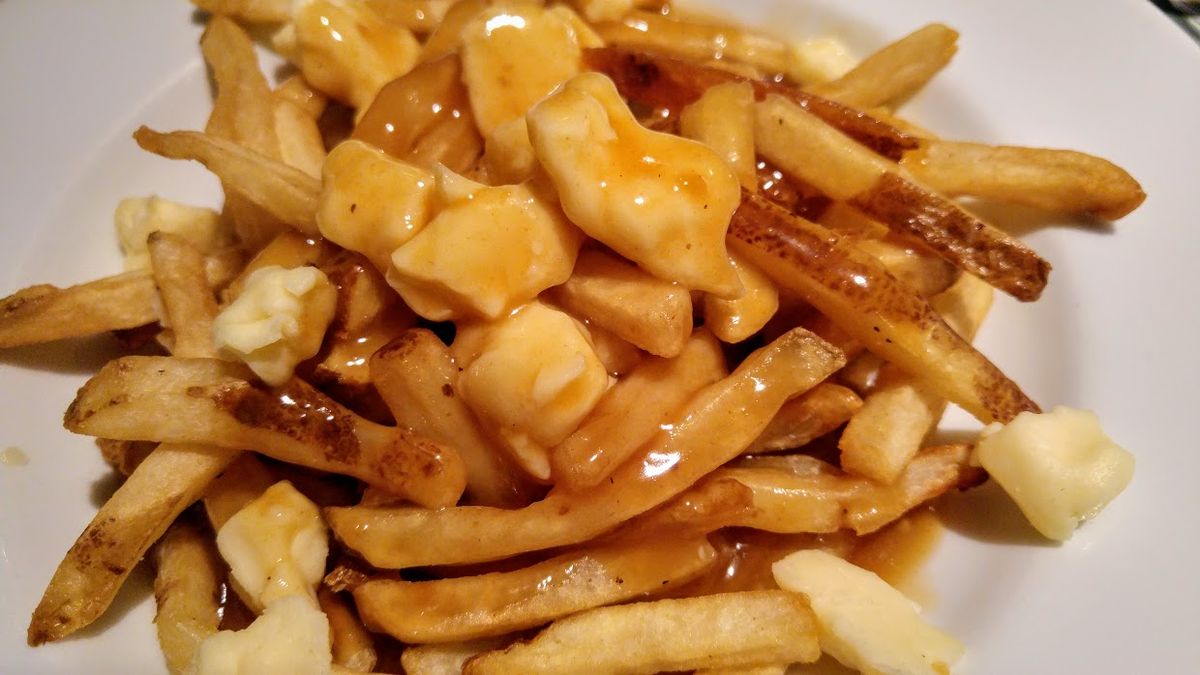
Fish and chips is a very popular takeaway and pub dish found across Canada, with distinct regional characteristics. In the Atlantic provinces, particularly Newfoundland and Labrador, it is a staple food and the most common takeout meal, traditionally made with Atlantic cod. Haddock is also a favoured species in the region. In Ontario and other inland provinces, locally caught freshwater fish such as pickerel, perch, and walleye are frequently featured on menus. Along the West Coast in British Columbia, the dish utilizes Pacific species including Pacific cod, Alaska pollock, flounder, halibut, trout, and Chinook salmon. Preparation in British Columbia sometimes shows the influence of Japanese Canadian culinary traditions, incorporating tempura-style techniques into the batter. While thick-cut chips are the standard accompaniment, a notable Canadian adaptation is the substitution or addition of poutine. The dish is served in a variety of settings, from dedicated takeaway shops to pubs and restaurants, maintaining core traditions like malt vinegar and tartar sauce while showing the country's diverse fisheries.
Ingredients, Batters, and Frying Techniques
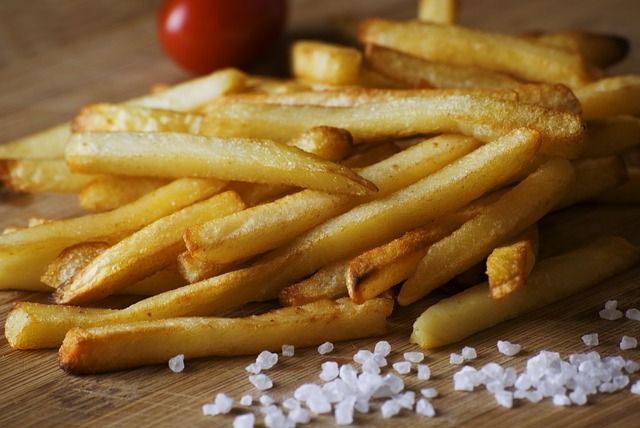
The composition of fish and chips involves specific ingredients and methods. The fish is always a fillet of white fish, with species varying by region. In Britain and Ireland, cod and haddock are most common, but plaice, pollock, hake, coley, skate, and rock salmon (dogfish) are also sold. The batter is a simple mixture of flour and a liquid. A traditional water and flour batter often includes a little sodium bicarbonate and vinegar to create lightness through chemical reaction. Beer batter is popular because the carbon dioxide yields a lighter, crispier texture and an orange-brown colour. The type of beer (lager, stout, bitter) alters the taste. Milk can also be used as the liquid. The frying medium has evolved significantly. Historically, beef dripping or lard was used, and some traditional museums like the Black Country Living Museum still use this method. Today, vegetable oils such as palm oil, rapeseed oil, or peanut oil predominate, chosen for their high smoke points and to make the dish suitable for vegetarians and certain religious dietary rules. The chips are cut much thicker than American french fries, sometimes called steak fries in the US, to achieve a soft interior and crisp exterior.
Accompaniments, Regional Sauces, and Serving Customs
The serving of fish and chips involves a set of customary accompaniments that vary by locality. The most universal seasoning is salt and malt vinegar, sprinkled over the hot food at the counter. In Scotland, particularly in Edinburgh, a combination of brown sauce and vinegar or water, known as "chippy sauce", is often preferred, referred to as "salt and sauce". A wide array of side dishes is common, including mushy peas, curry sauce, gravy, and baked beans. In the English Midlands, chips with mushy peas or beans are known as a "pea mix" or "bean mix". Tartar sauce is a frequent condiment, and a slice of lemon is standard in sit-down restaurants. Ketchup is also widely popular, with a 2020 YouGov poll in the UK ranking it, curry sauce, and mushy peas as the top three chip toppings after salt and vinegar. In Ireland, Wales, and England, many takeaways offer warm side portions of curry sauce or gravy for a small extra fee. Historically, some shops in Northern England would give away "scraps" or "bits" of fried batter. The dish is strongly linked to Friday night consumption, a tradition rooted in Christian practice and weekly fish supply patterns.
Commerce, Regulation, and Cultural Legacy
The fish and chip trade developed its own commercial structures and has been subject to evolving regulations. The National Federation of Fish Friers was established as a trade body in the UK. The annual National Fish & Chips Awards were set up in 1988 to recognize excellence, with the 30th ceremony attended by the Norwegian ambassador to the UK. Regulations have also changed practices. The UK's Fish Labelling Regulations of 2003 generally require fish to be sold with its commercial species name, leading to menus listing "cod and chips" rather than the vague "fish and chips", though caterers are sometimes exempt. The historic recipe and equipment from Joseph Malin's original shop were sold to the American chain Arthur Treacher's Fish & Chips in the early 1970s, with a few outlets in northern Ohio still using the 1860s-style method. Culturally, the dish is deeply embedded, referenced by George Orwell as a chief comfort food and even used as an identification signal by British soldiers during the D-Day landings. Despite a decline in UK shop numbers to about 10,000 by 2009, the dish remains a powerful symbol of tradition, comfort, and communal eating in the UK, Canada, and other nations where it took root.
Questions about Fish and chips
What is the history of fish and chips in Canada?
Fish and chips was established in Canada as a popular takeaway and pub dish, brought by British influence and adapted to local resources. It is particularly prevalent in the Atlantic provinces, where Atlantic cod and haddock from the Grand Banks became the foundational ingredients. In Ontario and prairie regions, freshwater fish like pickerel and perch are commonly used. On the West Coast, British Columbia features Pacific species such as halibut, salmon, and flounder. The dish is so integrated into local culture that in Newfoundland and Labrador it is considered the most common takeout meal. A distinctive Canadian twist is the occasional serving of the dish with poutine instead of or alongside traditional chips.
How did fish and chips become a staple of the British working class?
Fish and chips became a working-class staple in England during the second half of the 19th century due to several converging factors. The rapid development of trawl fishing in the North Sea provided a large, inexpensive supply of white fish like cod and haddock. Simultaneously, the expansion of the railway network allowed this fresh fish to be transported quickly from ports to major industrial cities. The dish itself was cheap, hot, nutritious, and filling, providing a substantial meal for industrial workers and their families. Its affordability and availability led to the explosive growth of fish and chip shops, with over 25,000 across the UK by 1910, ensuring it was accessible in virtually every urban neighbourhood.
What is the debate over frying fats in fish and chips?
A longstanding debate among vendors in the UK concerns whether traditional animal fats or modern vegetable oils are superior for frying. Traditionalists advocate for beef dripping or lard, arguing these fats impart a richer, more authentic flavour and a distinctive crispness to the batter and chips. Proponents of vegetable oils, such as palm, rapeseed, or peanut oil, cite practical advantages including higher smoke points, longer fry life, and the fact they make the dish suitable for vegetarians, Hindus, Muslims, and Jews who avoid animal fats for dietary or religious reasons. Some living history museums, like the Black Country Living Museum, continue to use dripping to demonstrate historical methods.
What are the claims about the first chips in Scotland?
Dundee City Council claims that chips were first sold in Scotland by a Belgian immigrant, Edward De Gernier, in the city's Greenmarket in the 1870s. This claim highlights the Belgian influence often cited in the history of fried potatoes. Within Scotland, there are distinct regional preferences for accompaniments. In Edinburgh and the surrounding area, a combination of Gold Star brown sauce and water or vinegar, known locally as "chippy sauce" or simply "sauce", is hugely popular, with the order "salt and sauce" being standard. In most other parts of Scotland, salt and vinegar remains the preferred seasoning for fish and chips.
What happened to the original Malin's fish and chips recipe?
When Malin's, the shop founded by Joseph Malin in Bow, London, went out of business in the early 1970s, the owners sold the exclusive rights to the original fish recipe and the custom-designed frying equipment, which had remained unchanged since the 1860s. These rights were purchased by the American fast-food chain Arthur Treacher's Fish & Chips, which marketed its product as "the original". Today, only a handful of Arthur Treacher's restaurants remain in operation, most located in northern Ohio. These outlets are considered the last places in the world where the historic Malin's fish and chips recipe is still made using the same equipment design, frying techniques, and recipe from the 1860s.
How is fish and chips served in New Zealand?
In New Zealand, fish and chips is the most popular takeaway food. It became established in the first decade of the twentieth century, with early shops like the British Fried Fish and Chip Potato Saloon in Auckland. Traditionally, the meal was served wrapped in greaseproof paper and then newspaper for insulation, a practice that has become less common with the decline of newspapers, though plain paper is still used. The dish is strongly associated with Friday night dining. Politically, a group of four rising Labour Party politicians, including future Prime Minister David Lange, were nicknamed the "Fish and Chip Brigade" in 1980 after a published picture showed them eating the meal together.
Sources: Wikipedia and current public reporting, checked by the Novello Desserts desk. Last updated 2026-10-18.