Jiggs dinner
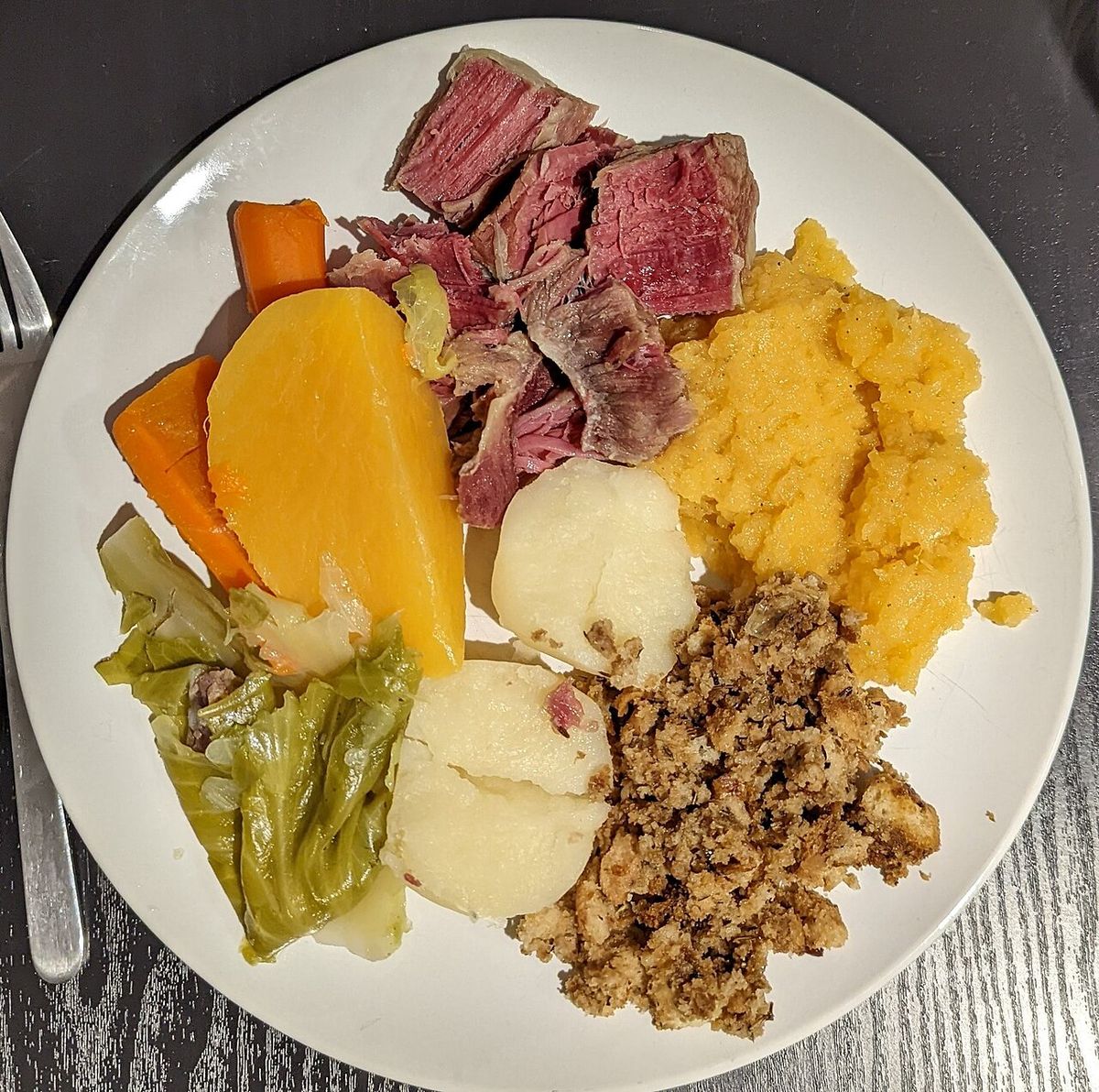
Jiggs dinner, also known as boiled dinner or Sunday dinner, is a traditional meal central to the culinary culture of Newfoundland and Labrador and other Atlantic provinces. The dish typically consists of salt beef or corned beef boiled with root vegetables like potatoes, carrots, turnips, and cabbage, often accompanied by pease pudding and figgy duff steamed in pudding bags. Its name derives from the early 20th-century comic strip character Jiggs, whose fondness for corned beef and cabbage popularized the association. As a fundamental part of outport cuisine and a regular feature of Sunday family gatherings, Jiggs dinner represents a enduring link to the region's Irish heritage and working-class history.
Core Ingredients and Preparation
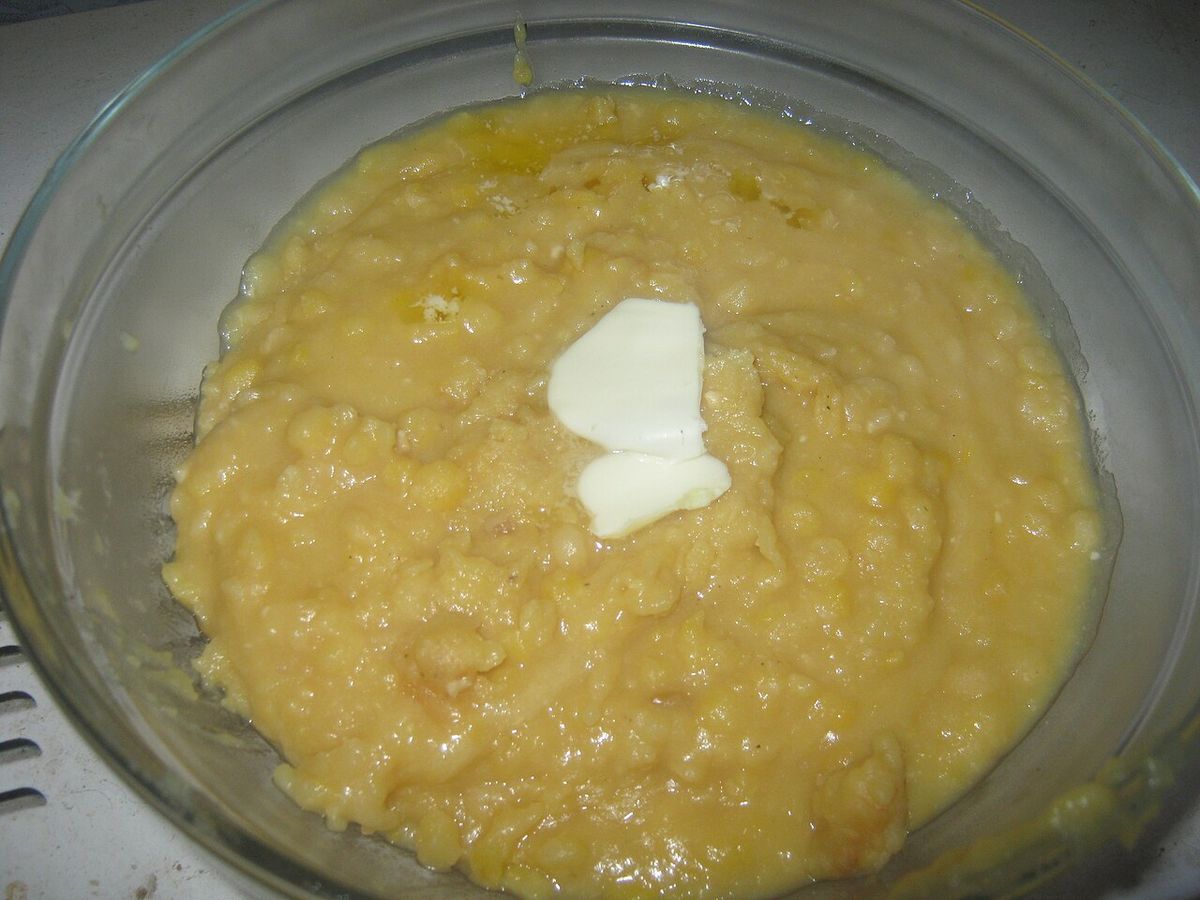
The foundation of a Jiggs dinner is salt beef, also known as salt meat, which is beef preserved in a brine solution. While some modern recipes use corned beef, traditionalists maintain that salt beef provides the authentic flavour. The meat is typically soaked overnight to reduce its saltiness before cooking. The primary vegetables are hardy root crops that store well through winter, reflecting the historical realities of Newfoundland life. These always include potatoes, carrots, turnip (rutabaga), and cabbage, which are added to the boiling pot in stages based on their required cooking times. The dish is uniquely defined by the accompaniments cooked within the same pot. Pease pudding, made from yellow split peas soaked overnight, is placed in a cloth pudding bag and boiled in the rich broth. Another common pudding is figgy duff, a boiled dough pudding that can be plain or studded with raisins or blueberries, also steamed in a cloth bag.
The cooking process is a slow, all-day affair traditionally undertaken for Sunday supper. The salt beef is boiled for several hours to tenderize it and create a flavourful broth. The pease pudding bag is added early to cook through. Vegetables are introduced sequentially, with turnips and carrots going in first, followed by cabbage and finally potatoes to ensure everything is perfectly tender at serving time. The meal is traditionally served on a large platter with the meat and vegetables arranged together. The pease pudding is removed from its bag, mashed with butter, and seasoned with black pepper. Common condiments served alongside include mustard pickles, pickled beets, cranberry sauce, and a thin gravy made from the cooking broth.
Historical Origins and Cultural Journey
The roots of Jiggs dinner lie in Irish culinary tradition, where corned beef was originally a luxury item. In the 17th century, corned beef became a major export commodity from Ireland to British and French colonies. It became readily available and affordable in North America, where Irish immigrants incorporated it into their cooking alongside inexpensive vegetables like cabbage, carrots, and potatoes. This evolved into a staple of the Irish-American diet. The dish's specific name, however, comes from popular culture. The comic strip Bringing Up Father, created by George McManus and later Zeke Zekley, featured a central character named Jiggs, an Irish-American who wins a fortune but remains fond of his humble former meals. A strip from 7 November 1922 in The Evening Telegraph explicitly references corned beef and cabbage as Jiggs's favourite dish.
This association was so strong that by the 1920s and 1930s, the terms Jiggs dinner and Jiggs supper were being used in Newfoundland to advertise community fundraising events, relying on public familiarity with the comic. The dish was adopted and adapted in Newfoundland's outport communities, where salt beef was a practical preserved protein for fishing families. It became a fundamental meal for the workers who formed the backbone of the saltfish industry, interpreted at historic sites like the Ryan Premises National Historic Site. The meal would have been common over 100 years ago when the fishing premises started operating and remains a weekly ritual still eaten regularly today as Sunday supper.
Place in Newfoundland and Atlantic Canadian Culture
In Newfoundland and Labrador, Jiggs dinner is far more than a recipe. It is a cultural institution and a symbol of family, heritage, and resilience. It is the definitive Sunday dinner, a meal around which multiple generations gather. The long preparation time, often starting the night before with soaking peas and salt beef, makes it a labour of love typically reserved for weekends and special occasions. The meal is deeply associated with comfort and warmth, often described as the perfect sustenance for a mauzy day, which is a local term for a cold, damp, and rainy day. The ritual of preparation and sharing has been passed down through kitchens in the province for generations, with each family often having its own slight variations and methods. The dish is a direct link to the province's past, utilizing ingredients that were historically accessible from local gardens, root cellars, and preserved meat supplies.
It embodies the practical, hearty cuisine of working people. This tradition continues today, with locally sourced ingredients remaining a point of pride. Shops like Belbin's Grocery in St. John's, operating since 1943, and local producers like Terra Nova Foods, which cures salt beef, are integral to maintaining the tradition. The meal is also featured as part of the cultural interpretation at Parks Canada sites, such as the Ryan Premises, highlighting its significance in the story of Newfoundland's outport life and fishing industry. Growing up in the province, a fond memory for many is heading to a grandparent's house for this specific meal, a ritual that has taken place inside kitchens for generations.
Common Variations and Related Dishes
While the core components of Jiggs dinner are well-established, numerous personal and regional variations exist. The choice of meat is a primary point of divergence. Traditional salt beef, often sold in buckets, is considered the authentic choice, but corned beef is a common substitute. Some families incorporate other meats. For instance, some recipes include a piece of salt pork or bacon for added flavour, and some family traditions, as noted in personal accounts, even include a turkey alongside or in place of the beef. The vegetable selection can also vary slightly, with parsnips or onions sometimes making an appearance. The puddings offer another area for customization. Figgy duff can be a simple suet dough or be enriched with molasses, spices, or dried fruit like raisins or currants. Blueberry duff, made with fresh or frozen local blueberries, is a popular summer variant.
The meal naturally leads to a beloved leftover creation. The remaining vegetables and meat are often chopped, mixed together, and fried in a pan to make a dish known as cabbage hash or corned beef and cabbage hash. This practice, similar to the British bubble and squeak, ensures no part of the substantial meal goes to waste and provides a quick, flavourful meal for the following days. Jiggs dinner is also related to other boiled meat dinners from the broader region, such as the New England boiled dinner found in the northeastern United States, which also features corned beef and cabbage but often includes additional vegetables and lacks the distinctive pease pudding component.
Modern Preparation and Accessibility
Preparing a traditional Jiggs dinner from scratch is considered a commitment, often described humorously as harder than one might think. The process requires planning, starting with soaking the split peas and salt beef overnight. Key pieces of traditional equipment include a very large stock pot, often 6 to 8 litres in capacity, and pudding bags made of cloth or several layers of cheesecloth secured with butcher's twine. Modern home cooks sometimes adapt the methods, using alternative cookware like a cast iron wok for soaking or multi-functional appliances like a Ninja Foodi. However, the fundamental sequence of boiling the meat, adding puddings, and staging the vegetables remains unchanged. Numerous tutorials and recipe videos, such as those by home cooks like Jimmy-Lee Stokes or resources from CBC Life, demonstrate the process for new generations. The ingredients have become more accessible outside of Newfoundland due to online shopping and specialty stores.
For those seeking a simpler introduction, simplified recipes exist, such as one from the Parks Canada Heritage Gourmet series adapted from the cookbook Fat-Back and Molasses, which uses plain beef cubes instead of salt beef for a less salty version. Celebrity endorsements, like a recipe approved by Newfoundland musician Alan Doyle, also help popularize the dish. Despite modern shortcuts, the essence of the meal as a slow-cooked, communal feast persists, connecting contemporary tables to a long culinary history. If you've never travelled to Newfoundland, you might be a stranger to the Jiggs' Dinner, but this hearty meal is a Sunday evening staple over on the East Coast, packed with salt or corned beef, tons of root veggies and dumplings to boot.
Key Ingredients and Their Roles
Each component of Jiggs dinner serves a specific purpose, contributing to the dish's overall flavour, texture, and historical practicality. Salt beef provides a deeply savoury, salty flavour that seasons the entire pot of broth and vegetables, and it was a practical preserved protein for fishing families. Yellow split peas are the base for pease pudding, creating a thick, hearty, and protein-rich side dish that absorbs the flavours of the broth. Cabbage adds a sweet, tender texture and is a classic pairing with boiled meats, cooking down significantly in the pot. Turnip provides an earthy sweetness and substance, standing up well to long cooking. Carrots and potatoes provide sweetness and starch, respectively, rounding out the meal and making it deeply satisfying and filling. Pudding bags are crucial cloth tools for steaming the pease pudding and figgy duff in the broth without them disintegrating.
- Salt Beef (Salt Meat): The protein centrepiece, preserved for long storage.
- Yellow Split Peas: Soaked, boiled, and mashed to create pease pudding.
- Cabbage: A sweet vegetable that soaks up the broth's flavour.
- Turnip (Rutabaga): A hardy root vegetable that adds earthy sweetness.
- Carrots and Potatoes: Provide sweetness and starch for a filling meal.
- Pudding Bags: Crucial cloth bags for steaming pease pudding and figgy duff in the broth.
- Mustard Pickles and Pickled Beets: Traditional condiments that cut through the richness with sharp, tangy flavours.
The combination of these elements creates a balanced meal that is greater than the sum of its parts. The cooking method itself is as important as the individual ingredients. The meal is boiled together to create a rich broth. This broth is then used to cook puddings like pease pudding and figgy duff in pudding bags. The result is a hearty and traditional Sunday meal.
Questions about Jiggs dinner
What is the difference between salt beef and corned beef in a Jiggs dinner?
Traditional Jiggs dinner uses salt beef, which is beef preserved in a brine solution, often sold in buckets. It has a distinctively salty flavour that defines the dish. Corned beef is a more common modern substitute, especially outside Newfoundland, and is also brined but often with spices. Purists argue that salt beef provides the authentic taste, and it is the protein historically used by Newfoundland fishing families due to its preservation qualities.
What are pease pudding and figgy duff?
Pease pudding and figgy duff are essential accompaniments to Jiggs dinner, both cooked in cloth pudding bags within the same pot. Pease pudding is made from yellow split peas that are soaked overnight, then boiled and mashed into a thick, savoury paste. Figgy duff is a boiled dough pudding. Its name comes from an old English term for raisins, though it can be plain or contain dried fruit like raisins or blueberries. They steam in the broth, absorbing its flavour.
How long does it take to cook a Jiggs dinner?
Cooking a Jiggs dinner is an all-day process that requires advance preparation. The split peas and salt beef must be soaked overnight. The actual cooking can take several hours. The salt beef alone is often boiled for two hours or more before vegetables are added. Vegetables are added in stages, with the total vegetable cooking time being about an hour to an hour and a half. The entire process, from preparation to serving, typically spans much of a day, making it a traditional Sunday or special occasion meal.
Why is it called a Jiggs dinner?
The dish is named after Jiggs, the main character from the long running comic strip Bringing Up Father. In a strip from 7 November 1922, corned beef and cabbage is identified as Jiggs's favourite meal. Jiggs is an Irish American worker who won a sweepstake but remains fond of his lower class lifestyle. This pop culture association became so strong that by the 1920s and 1930s, community fundraising events in Newfoundland were advertised as Jiggs dinners or Jiggs suppers. The name capitalised on the comic's widespread popularity to immediately describe the traditional meal being served.
Is Jiggs dinner only eaten in Newfoundland?
Jiggs dinner is most strongly associated with Newfoundland and Labrador but is also a traditional meal commonly prepared in other Atlantic Canadian provinces. Originally an Irish dish, it became a staple meal of working people in many western world communities. Similar boiled dinners exist in other regions, such as the New England boiled dinner. However, the specific name Jiggs dinner and the common inclusion of puddings like pease pudding and figgy duff are particularly characteristic of the Newfoundland version of this Sunday meal.
What do you do with Jiggs dinner leftovers?
Leftover vegetables from a Jiggs dinner are often mixed together and fried in a pan to make a dish known as cabbage hash or corned beef and cabbage hash. This practice ensures no food is wasted after the large Sunday meal. The hash provides a quick and flavourful meal for the following days. The concept is much like the British dish bubble and squeak, which also repurposes cooked vegetables. This is a traditional way to extend the enjoyment of the dinner's components.
Sources and further reading
- Jiggs dinner (Wikipedia)
- Jiggs' Dinner for Beginners (newfoundlandlabrador.com)
- Jiggs Dinner, Parks Canada Heritage Gourmet Recipes (parks.canada.ca)
- Recipe: Newfoundland Jiggs' Dinner | CBC Life (cbc.ca)
Checked by the Novello Desserts desk. Last updated 2026-10-30.