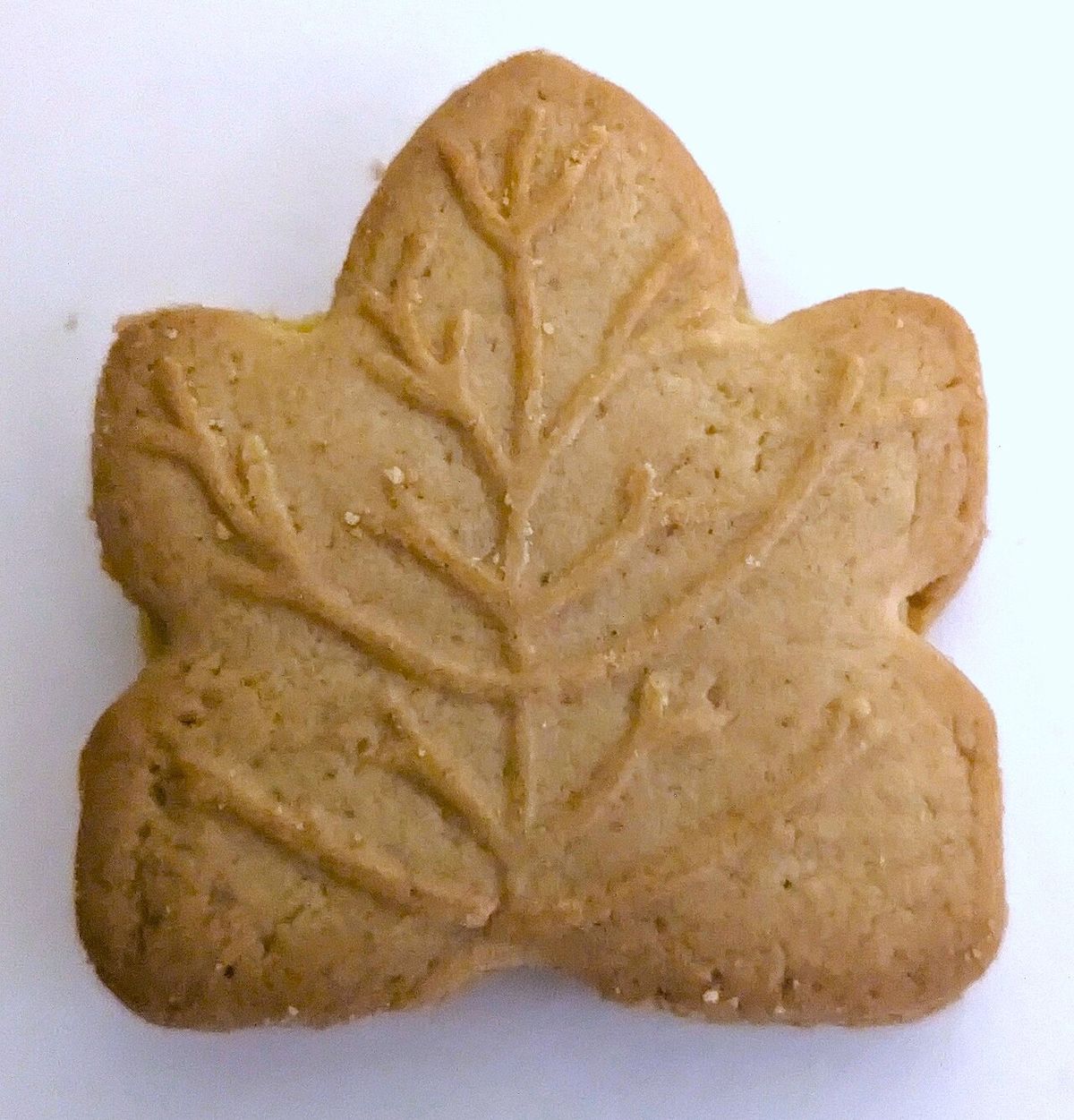
Maple leaf cream cookie
The maple leaf cream cookie is a widely recognized Canadian sandwich cookie, distinguished by its maple leaf shape and a sweet, maple-flavoured cream filling that commonly uses real maple syrup. It connects directly to national symbols and a major domestic product, giving it a notable place in Canadian food culture and making it a frequent souvenir. Its profile has been raised by memorable events, such as a presidential purchase that led to international attention and its inclusion in the meals of Canadian astronauts during space missions. From grocery aisles to the International Space Station, this cookie represents a familiar taste of Canadian tradition and has been featured in media, competitions, and diplomatic exchanges over many years.
Description and Characteristics
Traditional maple leaf cream cookies are characterized by a golden-yellow colour and a soft, often shortbread-like texture. The delicate maple flavour is infused into the cookie dough itself, typically through the addition of maple syrup or maple extract. For an authentic and rich flavour, bakers often recommend using grade two maple syrup, which strikes a balance between the light mildness of grade one and the darker, stronger grade three. To further enhance the maple experience, the baked cookies are frequently sprinkled with maple sugar or glazed with a maple syrup-based icing before being sandwiched together with a creamy maple filling.
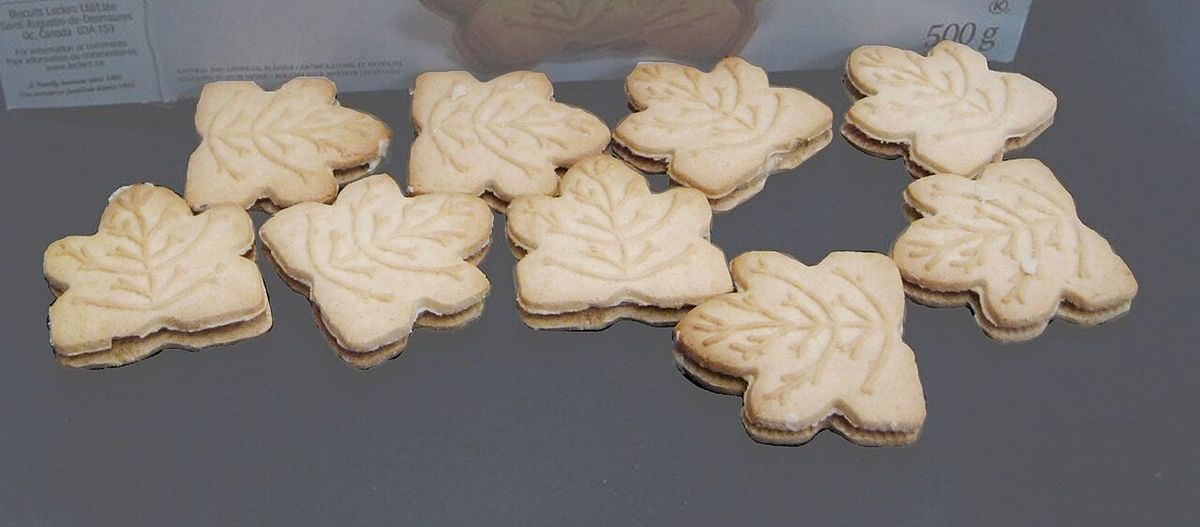
The filling is the defining feature, a smooth cream that is distinctly maple-flavoured. While recipes vary, many commercial and homemade versions use real maple syrup in the cream, contributing to its pure taste. The cookies are almost universally shaped like a maple leaf, directly referencing the national symbol depicted on the Canadian flag. This shape is achieved using a specialized maple leaf cookie cutter. The overall sensory experience combines a buttery, crisp or soft cookie with a sweet, creamy centre that delivers a pronounced maple taste, making it a treat strongly associated with Canadian autumn and winter seasons.
Maple leaf cream cookies are commonly enjoyed on their own as a snack or dessert. According to recommendations, maple cookies go well with hot chocolate or cider, both alcoholic and non-alcoholic. Maple products are considered emblematic of Canada and are frequently sold in tourist shops and airports as souvenirs from Canada. They are an edible piece of Canada.
Ingredients and Preparation
A standard homemade recipe for maple leaf cream cookies involves two primary components: the cookie dough and the maple cream filling. The dough typically starts with a base of all-purpose flour, baking soda, and salt. The wet ingredients creamed together include softened unsalted butter, granulated sugar, and packed light brown sugar for depth of flavour. Eggs, vanilla extract, maple extract, and a tablespoon of pure maple syrup are then incorporated to provide moisture and the signature taste. After the dry and wet mixtures are combined, the dough is usually refrigerated for several hours or overnight to firm up, making it easier to roll out and cut.
The maple cream filling is a simple buttercream or shortening-based frosting. A common recipe combines confectioners' sugar with vegetable shortening or butter, an egg white for stability, and flavourings of vanilla and maple extract. Some recipes enrich the filling further by adding pure maple syrup directly. The filling is beaten until smooth and spreadable. Once the chilled dough is rolled to about a quarter-inch thickness, maple leaf shapes are cut out using a cookie cutter. The cut-outs are baked until lightly golden around the edges, usually for 8 to 12 minutes, and then cooled completely.
The final assembly involves spreading or piping a dollop of the maple cream onto the flat side of one cookie and then sandwiching it with another. For a decorative touch, some bakers drizzle additional maple glaze over the assembled cookie or dust it with powdered sugar. The process, while straightforward, requires attention to detail, particularly in achieving the right dough consistency and ensuring the filling has a pronounced maple flavour that complements the buttery cookie. Many home bakers appreciate the recipe for its manageable ingredient list and the satisfying result of creating a classic Canadian treat from scratch.
Historical and Cultural Context
The maple leaf cream cookie is rooted in Canada's long history with maple syrup, a tradition adopted from Indigenous peoples by European settlers. French colonists in the 1700s began using maple syrup as a locally produced, affordable sweetener, avoiding the need to import expensive cane sugar from Caribbean plantations. The commercialization of maple-flavoured cookies is widely credited to Charles H. Doerr, a German immigrant who anglicized his surname to Dare and founded the business that would evolve into Dare Foods, a major confectionery company and a leading seller of maple cookies today. As a mass-produced item, the maple leaf cream cookie became a staple in Canadian grocery stores and a standard souvenir, capitalizing on the direct link between its shape, flavour, and national symbolism. The cookie represents a successful fusion of a traditional natural resource with modern baking and food manufacturing. Its status is such that it is frequently included in care packages sent to Canadians abroad and is used by diaspora communities as a tangible connection to home. The cookie's cultural resonance makes it a recognizable element of Canadian food culture, often used in promotional material and international events to represent the country's culinary heritage.
The cookie's identity is also shaped by its contrast with similar products elsewhere. In the United States, for instance, recipes for maple cookies sometimes recommend substituting a large portion of maple sugar with sweeter cane sugar, resulting in a confection that is sweeter but less flavourful than its Canadian counterpart. This distinction highlights the Canadian version's commitment to a more authentic maple taste, prioritizing the distinctive flavour of the domestic syrup over mere sweetness. The cookie, therefore, occupies a specific point of national pride within the broader global array of baked goods.
- 1700s: French colonists in Canada begin using maple syrup as a sweetener.
- Late 19th/Early 20th Century: Charles H. Doerr founds the business that becomes Dare Foods, a major seller of maple cookies.
- Ongoing: Maple leaf cream cookies are sold as souvenirs in Canadian tourist shops and airports.
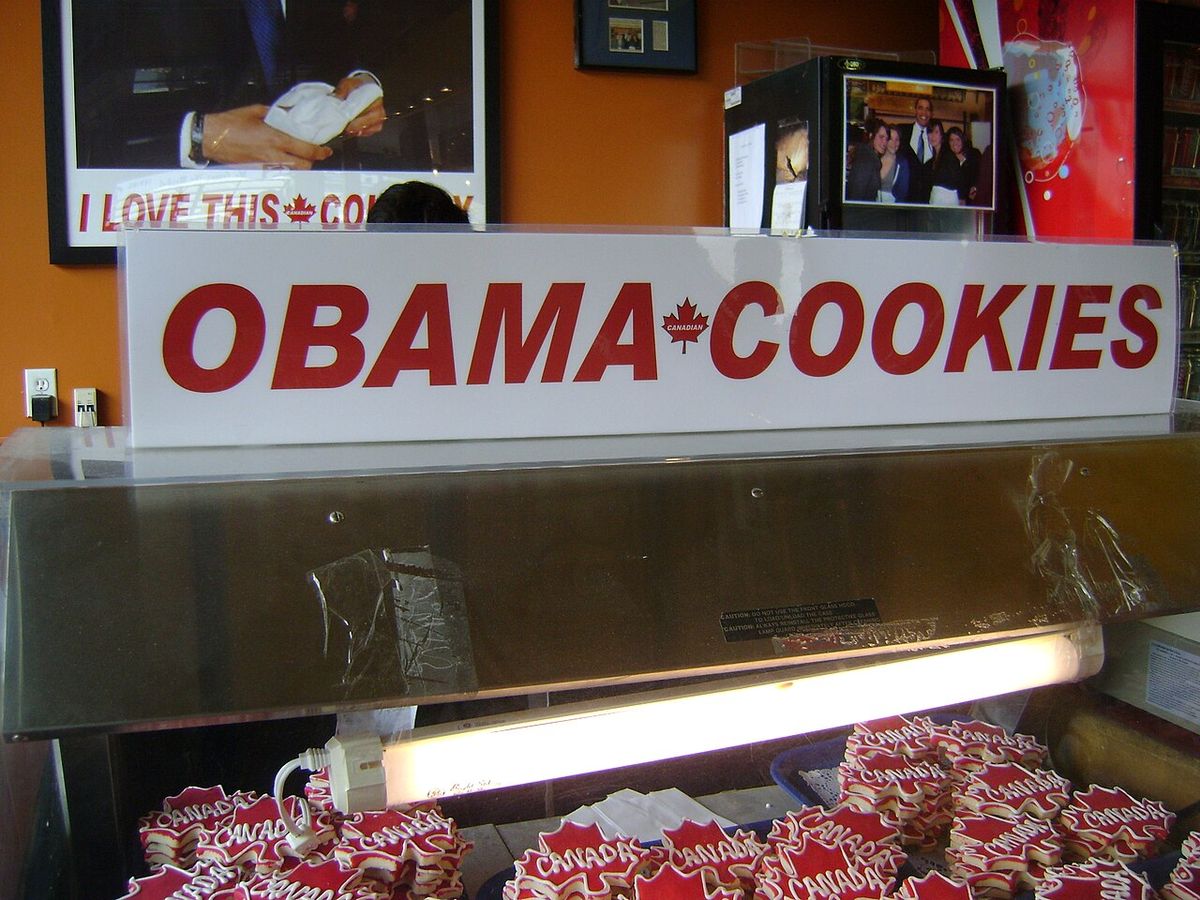
The 'Obama Cookie' Phenomenon
The maple leaf cream cookie achieved a new level of international fame in February 2009 during U.S. President Barack Obama's first state visit to Canada. On February 19, while in Ottawa's ByWard Market, President Obama specifically visited the Le Moulin de Provence bakery to purchase maple leaf-shaped cookies for his daughters. He told the seller he understood why Canadians loved them. The baker and owner, Claude Bonnet, refused payment, offering the cookies as a gift. Immediately after this incident, the bakery's version of the cookie, which featured red icing and the word Canada in white, was dubbed the Obama cookie by media and the public.
The presidential endorsement had an immediate and dramatic effect on the bakery's business. Prior to the visit, Le Moulin de Provence sold approximately 200 to 250 of these cookies per week. In the days following, sales skyrocketed to between 2000 and 3000 cookies per day. The bakery began receiving orders from across the United States and Europe, and local entrepreneurs capitalized on the trend by producing T-shirts featuring images of the cookie. The event turned a local pastry into an international sensation and a must-buy item for tourists visiting the capital. During the same market visit, Obama also purchased a BeaverTail pastry, which similarly gained the nickname Obama Tail.
President Obama's next visit to Ottawa in June 2016 prompted another cookie-related event. The bakery owner created a special, oversized commemorative cookie, not for mass sale, featuring a joint portrait of Obama, Canadian Prime Minister Justin Trudeau, and Mexican President Enrique Peña Nieto, who were meeting for the so-called Three Amigos summit. Liberal Member of Parliament Peter Schiefke purchased the unique cookie with the intention of sharing it with his party colleagues to mark the successful trilateral meeting. These episodes cemented the maple leaf cream cookie's status not just as a sweet treat but as a diplomatic token and a piece of political pop culture history.
- February 19, 2009: U.S. President Barack Obama purchases maple leaf cookies at Le Moulin de Provence in Ottawa.
- Post-visit sales surge: From 200-250 cookies per week to 2000 to 3000 cookies per day.
- June 2016: A special oversized cookie featuring Obama, Trudeau, and Peña Nieto is created for Obama's return visit.
- The cookie's new nickname becomes widely used: the 'Obama cookie'.
Maple Cookies in Space Exploration
Maple leaf cream cookies have been part of several significant Canadian contributions to human spaceflight, serving as a taste of home for astronauts. The journey began in 2007 with the development of Canasnack, an oatmeal cookie with five flavours including maple syrup, created by the Canadian Space Agency and Agriculture and Agri-Food Canada. Its crumb-free design was noted as ideal for the microgravity environment. Canasnack flew on multiple Space Shuttle missions that year, including STS-118 with astronaut Dafydd Williams, who gave it a positive review upon his return. It also travelled on the STS-125 and STS-127 missions in 2009, the latter carrying Canadian astronaut Julie Payette.
In 2011, the Canadian Space Agency held a national competition called Canadian Snacks for Space to select store-bought foods for astronaut Chris Hadfield's six-month mission aboard the International Space Station. Maple syrup cookies were among the twelve popular snacks chosen. These cookies, along with other Canadian foods like Quebec maple syrup and smoked salmon pâté, were delivered to the ISS in two shipments during Hadfield's Expeditions 34 and 35 from December 2012 to May 2013. Hadfield noted that sharing this food would lift spirits and allow him to share elements of Canadian culture with the international crew.
The tradition continued with the Artemis II mission. Under a 2020 agreement, Canadian astronaut Jeremy Hansen was assigned to the crew. In preparation, he stated in November 2023 his intention to bring maple cream cookies to please commander Reid Wiseman, who adored them. In February 2025, the Canadian Space Agency officially announced the Canadian food package for Artemis II, which included maple cookies alongside strawberry lavender cereal, smoked salmon, shrimp rice, and maple syrup. Hansen humorously addressed concerns about crumbs in space, stating he would use common sense when eating them. The cookie's space legacy culminated on April 6, 2026, when the Orion spacecraft entered the Moon's radio shadow, losing contact with Earth for 40 minutes. The crew marked this surreal moment by briefly gathering to share maple cream cookies, as confirmed in mission reports.
- 2007: Canasnack, a maple-flavoured space cookie, is developed and flies on STS-118.
- 2011: The Canadian Snacks for Space competition selects maple syrup cookies for the ISS.
- December 2012, May 2013: Astronaut Chris Hadfield consumes maple cookies on the International Space Station.
- February 2025: Maple cookies are included in the official Canadian food package for Artemis II.
- April 6, 2026: The Artemis II crew shares maple cream cookies during a 40-minute communications blackout.
Commercial Availability and Variations
Maple leaf cream cookies are widely available across Canada in grocery stores, convenience stores, and specialty gift shops. Dare Foods is one of the most prominent national brands, marketing products like Dare Ultimate Maple Crème Cookies, which emphasize the use of real maple syrup and no artificial colours or flavours. Numerous other Canadian confectioners and bakeries, both large and small, produce their own versions. These are often sold in decorative boxes or tins, especially during the tourist season from May to October, with a standard retail package size being 350 grams. The cookies are also exported and sold online, allowing Canadians abroad and international fans to purchase them directly.
While the classic sandwich cookie is the most common form, several variations exist. Some bakeries offer cookies with a red or white maple syrup-based glaze on the outside instead of a cream filling. Other products in the same family include maple cream-filled biscuits that may not be leaf-shaped. The quality of maple flavouring can vary significantly between mass-market products that may use maple extract and premium or artisanal brands that proudly advertise the use of 100 percent pure maple syrup in both the cookie and the cream filling. These premium versions are often marketed as having a more authentic and complex maple taste.
The cookie's popularity has also inspired a range of related consumer activities and recipes. Taste-test comparison videos between brands are common online, such as one featuring employees of a Dare supermarket. Home bakers frequently seek out and share recipes to recreate the cookies, with many recipes offering lighter versions using ingredients like light butter and cream cheese for a reduced-point or calorie-conscious treat. Beyond eating them plain, Canadians have found creative uses for leftover or stale maple cookies, such as crushing them for use in cheesecake crusts or other dessert bases. This versatility and enduring appeal ensure the maple leaf cream cookie remains a dynamic and beloved item in the Canadian pantry.
Questions about Maple leaf cream cookie
What are maple leaf cream cookies?
Maple leaf cream cookies are a classic Canadian sandwich cookie. They consist of two golden, buttery cookies shaped like a maple leaf, sandwiched around a sweet, maple-flavoured cream filling. The filling often contains real maple syrup or maple extract, giving it a distinctive flavour strongly associated with Canada. They are a popular snack, dessert, and souvenir item found throughout the country.
Why are they called 'Obama cookies'?
They earned the nickname 'Obama cookies' after U.S. President Barack Obama purchased them from the Le Moulin de Provence bakery in Ottawa's ByWard Market in February 2009. He bought them as a gift for his daughters during his first state visit to Canada. The specific cookies he bought were iced with red frosting and the word 'Canada' in white. The presidential visit caused sales of the bakery's cookies to increase tenfold almost overnight, making them an international sensation.
Have maple cookies really been to space?
Yes, maple cookies have been part of several space missions. In 2007, a crumb-free oatmeal maple cookie called Canasnack was developed and flown on Space Shuttle missions. Later, store-bought maple syrup cookies were selected for Canadian astronaut Chris Hadfield's stay on the International Space Station from 2012 to 2013. Most recently, maple cream cookies were part of the official Canadian food package for the Artemis II mission in 2026, where the crew shared them during a loss of signal with Earth.
Where can I buy maple leaf cream cookies?
They are widely available across Canada in major grocery stores, supermarkets, and convenience stores, with brands like Dare Foods being very common. They are also sold in many tourist-oriented shops, gift stores in airports, and online retailers that ship internationally. Many local Canadian bakeries, particularly in Ontario and Quebec, produce their own fresh versions. Seasonal availability may vary, but they are generally a year-round product.
Can I make them at home?
Absolutely. Many recipes exist for homemade maple leaf cream cookies. They typically involve making a shortbread or sugar cookie dough flavoured with maple syrup or extract, cutting it into leaf shapes with a cookie cutter, and baking. The filling is usually a simple buttercream or shortening-based frosting flavoured with maple. The dough often requires chilling before baking, and the assembled cookies can be decorated with a maple glaze or sugar. Recipes can be found in cookbooks, food magazines, and online.
What is the best way to eat maple cream cookies?
They are most commonly enjoyed on their own as a hand-held snack or with a hot beverage. They pair exceptionally well with hot chocolate, coffee, tea, or apple cider. For a festive touch, they can be served as part of a dessert platter. Some people also use slightly stale cookies in baking, crushing them for pie crusts or mixing them into other desserts. The key is to appreciate the combination of the crisp, buttery cookie and the smooth, maple-flavoured cream.
Sources and further reading
- Maple leaf cream cookie (Wikipedia)
- Maple Cream Cookies Recipe (Maple Leaf Creme Cookies) (girlversusdough.com)
- Maple Leaf Cream Cookies | Recipes | WW Canada (English) (weightwatchers.com)
- Maple leaf cookies with maple cream filling (lestresorsderable.com)
Checked by the Novello Desserts desk. Last updated 2026-10-29.