Maple syrup
Maple syrup is a concentrated sweetener produced from the sap of maple trees, primarily the sugar maple, black maple, and red maple. It is a traditional Canadian food product with deep historical roots in Indigenous traditions and colonial adaptation. Today, Canada is the world's dominant producer, accounting for over 75 per cent of global supply, with the province of Quebec responsible for the vast majority of this output. The syrup is used as a versatile condiment for breakfast foods and a key ingredient in baking and confectionery, governed by strict grading standards based on colour and flavour.
Historical development
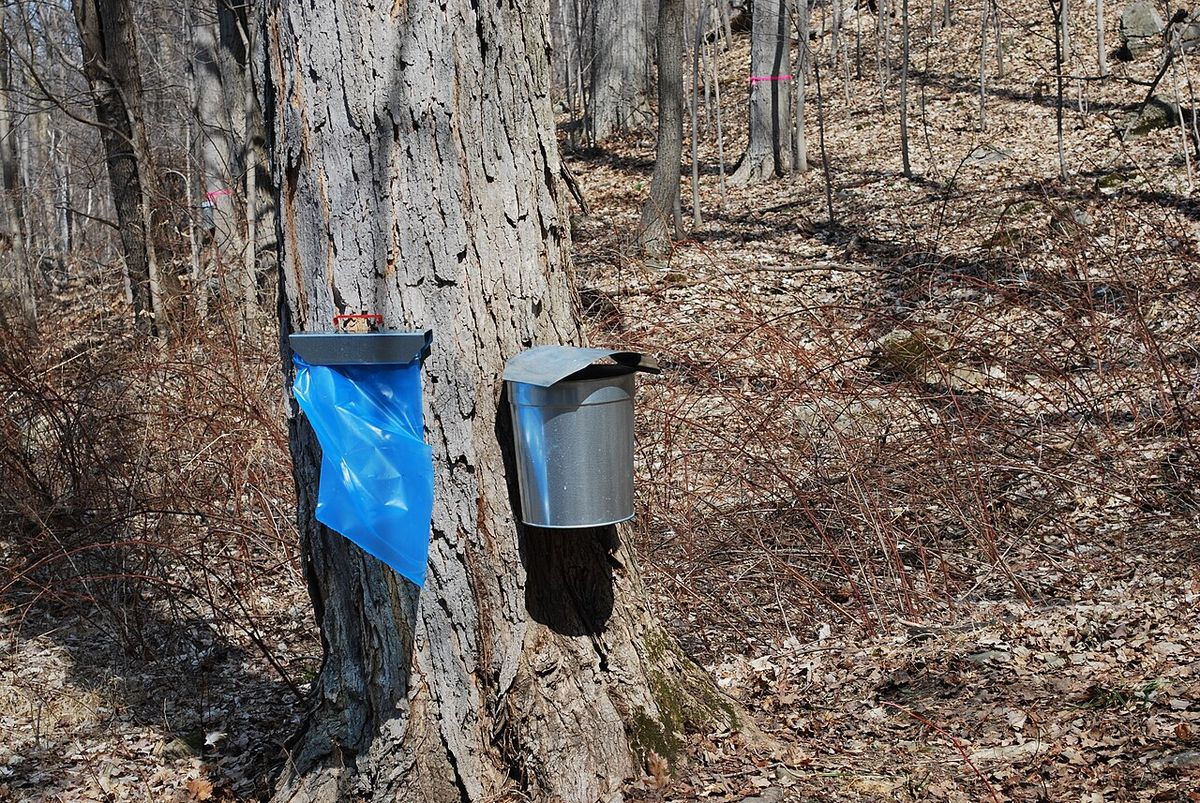
The Indigenous peoples of northeastern North America were the first to produce maple syrup and sugar, with archaeological evidence and oral traditions indicating the practice long predated European contact. Algonquian peoples made V-shaped incisions in maple trunks and used reeds or bark to channel sap into clay pots or birch-bark containers. They concentrated the sap initially by freezing and discarding ice, then boiled it over fires, often using multiple pots in succession. For early settlers, maple sugar was a crucial domestic sweetener before the widespread importation of cane sugar, leading to the tradition of communal maple sugaring parties each spring.
Production methods evolved significantly after 1850. The American Civil War era saw the introduction of large, flat sheet metal pans for more efficient evaporation, and the first evaporator was patented in 1858. By 1872, a two-pan evaporator with a metal firebox was developed, drastically reducing boiling time. The early 20th century brought further refinements like flued pans to increase heating surface area. The 1970s marked a period of major technological change, with the perfection of plastic tubing systems that allowed sap to flow directly from trees to the evaporator house. The adoption of vacuum pumps, reverse-osmosis machines to remove water pre-boiling, and more efficient preheaters revolutionized the industry's productivity and fuel efficiency.
Tree sources and sap collection
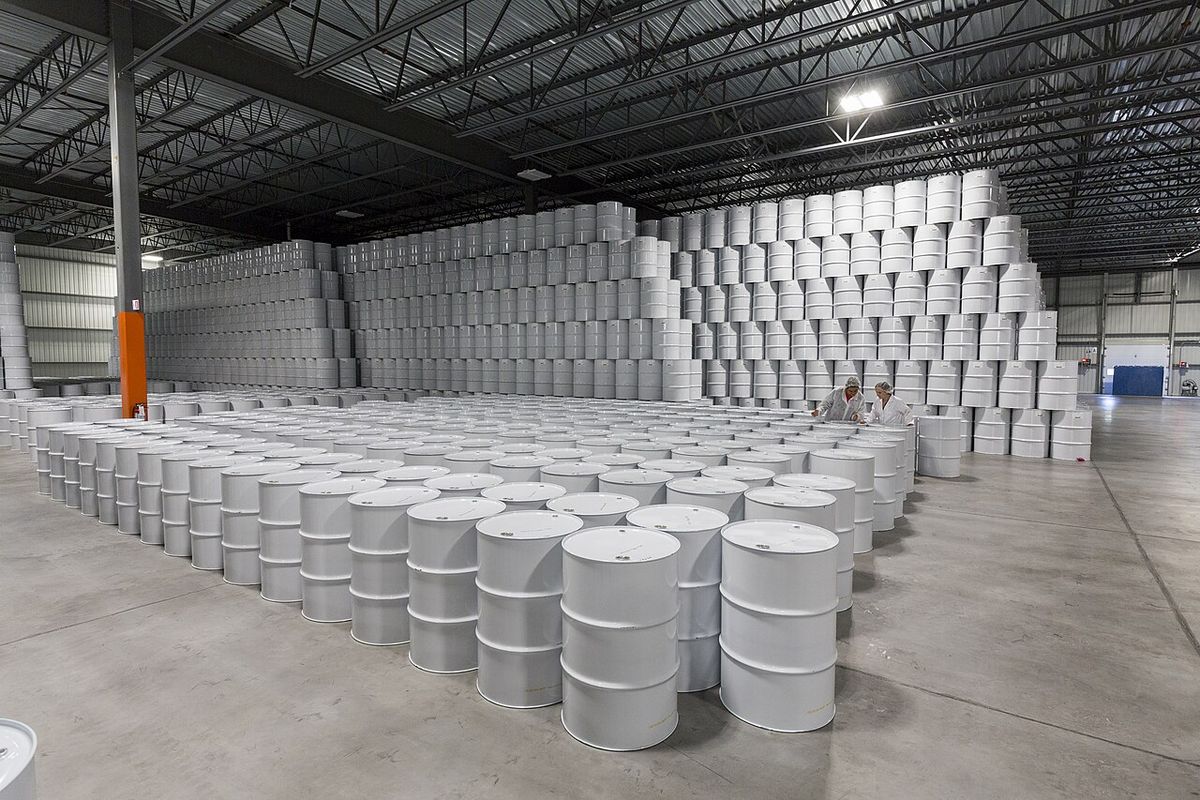
Maple syrup is primarily derived from the sap of three maple species: the sugar maple (Acer saccharum), the black maple (A. nigrum), and the red maple (A. rubrum). The sap of these trees has a sugar content of two to five per cent. Some botanists consider the black maple a subspecies of the sugar maple. The red maple has a shorter tapping season as it buds earlier, which can alter the sap's flavour. Other species occasionally used include the box elder or Manitoba maple (Acer negundo), the silver maple (A. saccharinum), and the bigleaf maple (A. macrophyllum). Similar syrups can be made from walnut, birch, or palm trees, but under Canadian regulation, only syrup made exclusively from maple sap can be labelled as maple syrup.
The production process begins in a sugarbush, where trees are typically tapped at 30 to 40 years of age. The number of taps per tree depends on its trunk diameter, ranging from one to three. An average tree yields 35 to 50 litres of sap per season, with daily flows up to 12 litres during the late winter and spring thaw. The tapping season lasts four to eight weeks, dependent on weather and location. Sap flows during daytime temperatures above freezing. Some producers also tap in autumn, though this is less common. Climate change is impacting production by shifting the sap collection season earlier, reducing sap sugar content due to warmer summers, and affecting forest health through drought and heavy rainfall.
Processing into syrup
Sap is processed in a structure commonly called a sugar shack, sugarhouse, or cabane à sucre. The fundamental process involves boiling sap to evaporate water, a method streamlined but largely unchanged from colonial times. It takes between 20 and 50 volumes of sap, depending on its sugar concentration, to produce one volume of syrup. Boiling occurs at a temperature approximately 4.1 °C over the boiling point of water, which is adjusted for local air pressure. The process is tightly controlled to achieve a finished syrup density of 66° Brix. Under-boiling yields a watery product prone to spoilage, while over-boiling leads to crystallization. Defoamers are often used during boiling.
After boiling, the syrup is filtered to remove 'sugar sand', crystals of sugar and calcium malate that create a gritty texture. Many large producers use reverse osmosis to remove a portion of the water from the sap before boiling, significantly improving fuel efficiency. The filtered syrup is graded and packaged hot, usually at 82 °C or higher, with containers inverted to sterilize the cap. Packaging materials include metal, glass, or coated plastic. Further processing can create other maple products like maple sugar, maple butter, or maple candy. Off-flavours can occasionally develop from contaminants, microorganisms, fermentation, or 'buddy sap' from late-season tapping, though some can be remedied through processing.
Grading and regulations
Maple syrup in Canada is graded based on its colour and taste, with regulations requiring it to be made exclusively from maple sap and have a sugar content of at least 66 per cent. Following efforts by the International Maple Syrup Institute, Canada and the United States have harmonized their grading laws to provide a uniform system for consumers. In Canada, Grade A syrup must have its colour class name displayed on the label in both English and French. Canadian labelling regulations also mandate that containers display the words 'maple syrup', the grade name, and net quantity in litres or millilitres on the main panel with a minimum font size of 1.6 mm. The label must also show the lot number and either the name and address of the producer/packer or the dealer and packing establishment registration number. These standards are enforced to maintain the integrity of one of Canada's most important agricultural exports and to provide transparency for consumers regarding the product's characteristics and origin.
Production and commerce
Maple syrup production is centred in northeastern North America, but Canada dominates the global market. In 2025, Canada produced over 113.4 million kilograms of maple syrup, representing more than 75 per cent of world supply. Canadian maple syrup exports that year were valued at C$844 million, with the United States being the largest export destination at $542.4 million, followed by Germany ($60.4 million), the United Kingdom ($40.2 million), and Australia ($38.2 million). The industry is a significant contributor to the agricultural economy, particularly in eastern Canada.
Within Canada, production is heavily concentrated in Quebec, which accounted for 90 per cent of national output in 2025. The province's industry is managed through a supply system by the Quebec Maple Syrup Producers (QMSP), which allocates quotas and maintains strategic reserves. New Brunswick is the second-largest producing province at 6.1 per cent, followed by Ontario at 3.7 per cent. Ontario had the most syrup farms outside Quebec in 2021, with 389 producers, compared to 114 in New Brunswick and 39 in Nova Scotia. Manitoba and Saskatchewan produce syrup from the box elder tree, with 67 and 24 producers respectively in 2011, while British Columbia has a growing industry using bigleaf maple sap, with 82 producers in 2011.
The United States produces about 25 per cent of the world's maple syrup. Vermont is the leading US state, producing a record 9.5 million litres in 2022. In 2019, other major producers included New York with 3.1 million litres and Maine with 2.2 million litres. Wisconsin, Ohio, New Hampshire, Michigan, Pennsylvania, Massachusetts, and Connecticut all produced marketable quantities of maple syrup. Small-scale production exists in other countries like Japan and South Korea, though in South Korea the tradition focuses on consuming the sap (gorosoe) rather than processing it into syrup.
Uses and culinary applications
Maple syrup is most commonly used as a table condiment, poured over pancakes, waffles, French toast, oatmeal, and porridge. Its unique flavour profile, ranging from delicate to strong depending on grade, makes it a popular natural sweetener. Beyond its role as a topping, maple syrup is a versatile ingredient in cooking and baking. It serves as a sweetening agent in glazes for meats like ham, in salad dressings, and in baked goods such as muffins, cakes, and pies. It can also be used to sweeten beverages like coffee or cocktails.
The syrup is the base for several other traditional maple products. Through further heating and processing, it can be transformed into maple sugar, a granulated sweetener. Maple butter or cream, a spreadable consistency. And maple candy or taffy. These products are especially popular in tourist regions and as gifts. The culinary use of maple syrup extends from everyday home cooking to restaurant cuisine, where it is valued for its complex, caramelized flavour and natural origin. Its applications are broad, covering breakfast, baking, cooking, and confectionery.
- Primary use: Condiment for breakfast foods (pancakes, waffles, oatmeal).
- Baking: Sweetener in muffins, cakes, pies, and granola.
- Cooking: Glaze for meats, component in sauces and dressings.
- Beverages: Sweetener in coffee, tea, and cocktails.
- Processed products: Maple sugar, maple butter, maple candy.
Technological and industry evolution
The maple syrup industry has undergone substantial technological evolution since the mid-19th century. Early improvements focused on boiling efficiency, moving from iron kettles to flat metal pans and then to flued pans with greater surface area. The 1970s were a decisive decade with the widespread adoption of plastic tubing networks and vacuum pumps to move sap directly from trees to the sugar shack. The introduction of reverse-osmosis technology allowed for the removal of a significant portion of water before boiling, saving substantial time and fuel. Modern operations also utilize high-efficiency preheaters to recycle waste heat from steam.
Ongoing research and development continue to shape the industry. Studies focus on pest control, enhanced woodlot management, and improving tap technology. In 2009, University of Vermont researchers unveiled a new tap design that prevents sap backflow, reducing bacterial contamination. Experiments with maple saplings suggest potential for plantation-style production in warmer climates, as younger trees require less extreme temperature swings to trigger sap flow. These innovations aim to increase yield, improve product quality, and ensure the industry's sustainability in the face of environmental challenges like climate change.
Questions about Maple syrup
How is maple syrup made?
Maple syrup is made by collecting sap from maple trees during the late winter and spring thaw. A hole is drilled into the trunk and a spout (spile) is inserted to channel the sap into a collection system. The collected sap, which is mostly water with a small percentage of sugar, is then boiled in an evaporator to remove water until it reaches a sugar concentration of at least 66 per cent. The boiling process is carefully monitored for temperature and density. Finally, the syrup is filtered to remove impurities and packaged hot.
What do the different grades of maple syrup mean?
Maple syrup grades in Canada and the United States are based on colour and flavour, which are harmonized under a uniform system. The grades indicate the syrup's taste profile, which correlates with when it was harvested during the season. Lighter, golden syrups with a delicate taste are typically produced earlier in the season, while darker, amber syrups have a richer flavour. The darkest grade, often used for cooking and baking, has a strong, caramel-like taste. All Grade A syrups are pure and of high quality, differing primarily in flavour intensity.
Why is Quebec the largest producer of maple syrup?
Quebec is the largest producer of maple syrup. Almost all of the world's maple syrup is produced in Canada and the United States, with Quebec alone accounting for 72 percent of global output. Within Canada, Quebec is the largest producer, accounting for 90 percent of maple syrup produced in Canada as of 2025. Canadian exports of maple syrup in 2025 were C$844 million, with Quebec accounting for some 98 percent of this total. Production in Quebec is controlled through a supply management system with the Quebec Maple Syrup Producers.
Can you make maple syrup from any maple tree?
Maple syrup is made from the sap of maple trees. Three species of maple trees are the main sources: the sugar maple, the black maple, and the red maple, because their sap has a high sugar content. A few other species of maple are also sometimes used, including the box elder or Manitoba maple, the silver maple, and the bigleaf maple. In Canada, syrups must be made exclusively from maple sap to qualify as maple syrup.
How does climate change affect maple syrup production?
Climate change impacts maple syrup production in several key ways. Warmer temperatures in late winter and early spring cause the sap flow season to start earlier and potentially become shorter. Increased summer temperatures can reduce the sugar content in the tree's sap for the following season. Extreme weather events, such as droughts and heavy rainfall, can stress maple forests and affect tree health. Producers are adapting through technological innovations and forest management practices, but the shifting climate poses a long-term challenge to the industry's traditional patterns and yields.
What is the economic importance of maple syrup to Canada?
Maple syrup is a major agricultural export for Canada, with exports valued at C$844 million in 2025. The industry supports thousands of producers, particularly in rural Quebec, New Brunswick, and Ontario. It is a significant source of farm income and tourism, with many sugar shacks offering educational visits and meals. The Quebec Maple Syrup Producers organization manages a global strategic reserve to stabilize supply and prices. The product's strong international reputation, especially in markets like the United States, Germany, and the United Kingdom, makes it a valuable commodity and a recognizable symbol of Canadian culture.
Sources and further reading
- Maple syrup (Wikipedia)
- Maple Recipes (ontariomaple.com)
- Sweet & Savory Maple Syrup Recipes to Try at Home (maplegrove.com)
Checked by the Novello Desserts desk. Last updated 2026-10-20.