Miracle Whip
Miracle Whip is a popular condiment and salad dressing manufactured by Kraft Heinz and sold widely across Canada and the United States. It was introduced in 1933 as a more affordable and flavourful alternative to mayonnaise during the economic hardship of the Great Depression. Characterized by its sweet, tangy, and slightly spiced flavour, it is a staple in many Canadian kitchens, used as a sandwich spread and a key ingredient in classic salads and recipes. Its unique identity as a 'dressing' rather than mayonnaise, due to its specific ingredient composition, has secured its place as a distinct and enduring product in North American food culture.
Origins and Development
Miracle Whip was launched to the public at the 1933 Century of Progress World's Fair in Chicago. Kraft Foods developed the product specifically as a less expensive alternative to mayonnaise, a strategic move during the Great Depression when families needed to stretch their grocery budgets. The product was an immediate commercial success, quickly becoming the best-selling salad dressing in the United States by the end of its introductory period. Kraft's in-house development involved a patented emulsifying machine invented by Charles Chapman, which was used to thoroughly blend the dressing's more than twenty spices with a base of mayonnaise and boiled dressing.
While an alternative origin story claims the recipe was invented in Salem, Illinois, and sold to Kraft, the company's archivist has disputed that this specific recipe became Miracle Whip. The machine itself was reportedly dubbed 'Miracle Whip' by Chapman, a name that was then applied to the finished product. This innovation allowed for a consistent, creamy texture that differentiated it from simpler homemade dressings. The original 1930s formula listed ingredients as eggs, salad oil, vinegar, sugar, salt, cereal, and spices, establishing the sweet and tangy foundation that defines the product. The product's rapid adoption demonstrated how a new, affordable condiment could capture market share by offering both value and a distinctive flavour.
Ingredients and Nutritional Profile
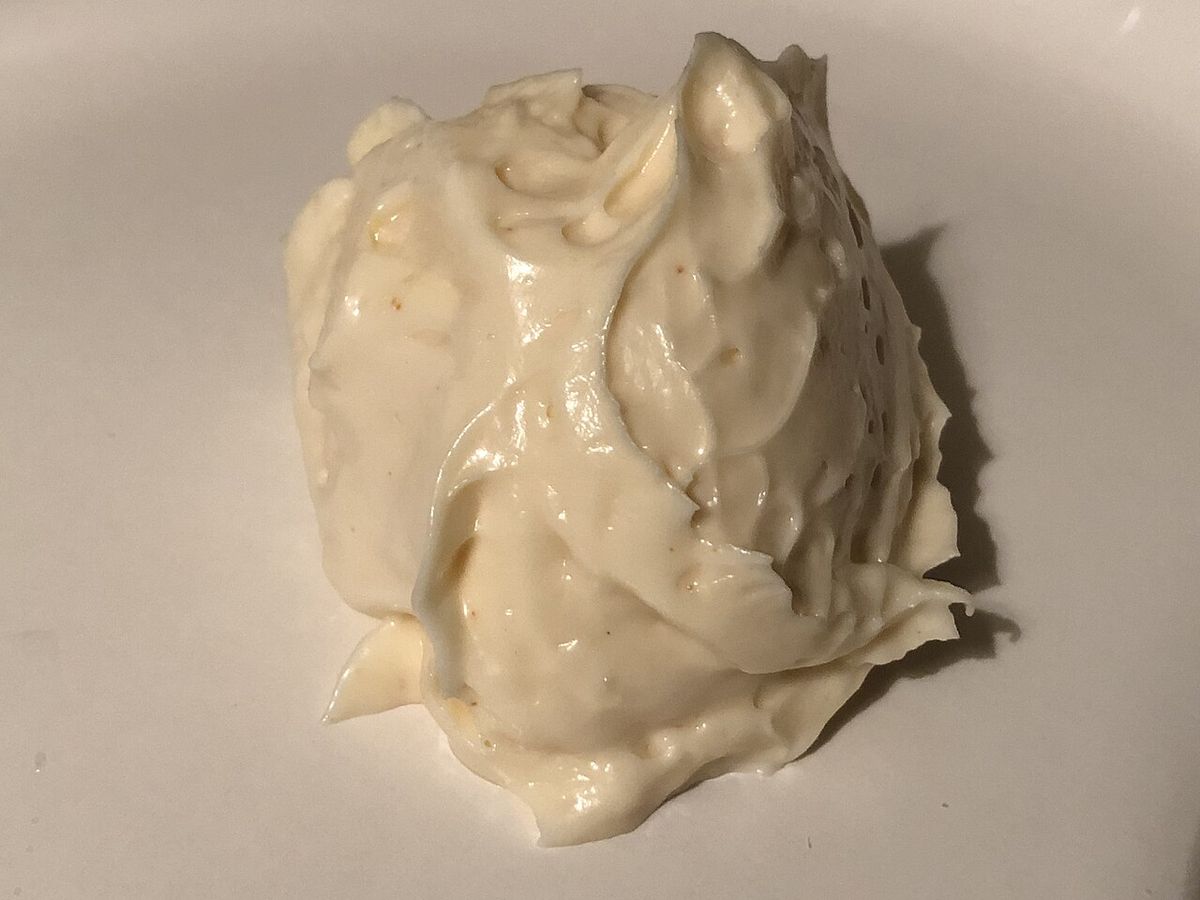
Modern Miracle Whip is formulated with water, soybean oil, and high-fructose corn syrup as its primary ingredients, along with vinegar, modified corn starch, eggs, salt, natural flavour, mustard flour, potassium sorbate as a preservative, spice, and dried garlic. The inclusion of sweeteners like high-fructose corn syrup is a key differentiator, making Miracle Whip notably sweeter than traditional mayonnaise. This sweetness, combined with the tang from vinegar and the savoury notes from spices and garlic, creates its signature taste that many consumers prefer. From a nutritional standpoint, Miracle Whip is marketed as a lower-calorie option compared to standard mayonnaise.
A one-tablespoon serving of Miracle Whip contains approximately 35 calories, whereas the same serving of Kraft mayonnaise contains about 90 calories. This calorie difference is largely due to the higher water and starch content in Miracle Whip, which reduces the overall oil concentration. The product is officially classified as a 'dressing' rather than mayonnaise, a designation influenced by U.S. Food and Drug Administration standards which specify that mayonnaise cannot contain certain added ingredients like sugar and paprika that are present in Miracle Whip. This legal distinction is a fundamental part of the product's identity on store shelves.
Market Presence and Variations
Miracle Whip has maintained a strong presence in North American supermarkets for over nine decades. It is commonly sold in jars ranging from standard sizes to large 1.5-litre containers, often promoted with multi-pack deals for cost-conscious shoppers. In the German market, the product has been sold since 1972 under the slightly altered name 'Miracel Whip', originally produced by Kraft Foods and now manufactured by Mondelēz International at a facility in Bad Fallingbostel. This international branding demonstrates the product's adaptability and recognition beyond its home market.
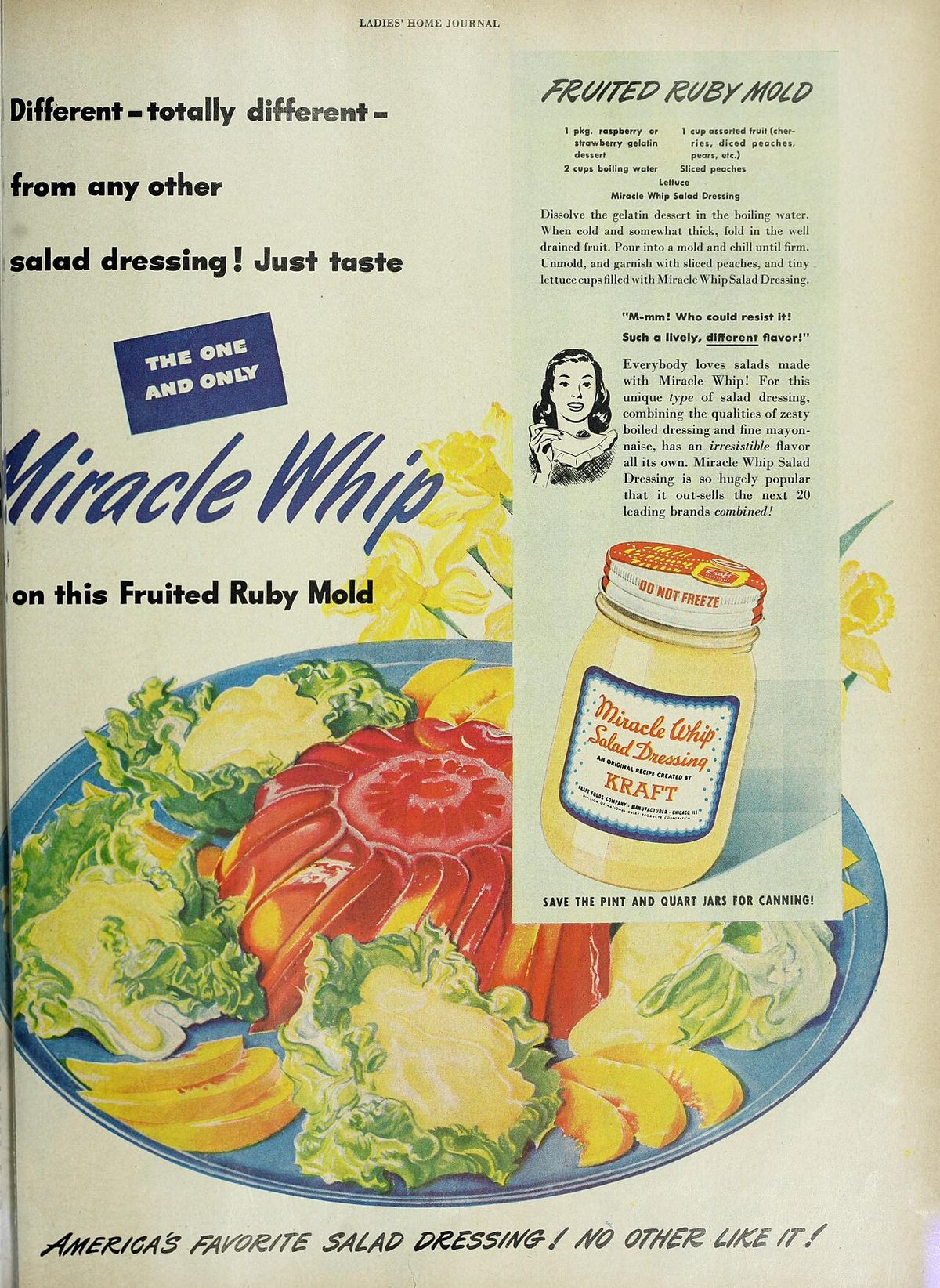
The core product has seen few fundamental changes to its recipe, though Kraft Heinz has occasionally introduced limited-time promotional flavours or partnered with other brands. The condiment's versatility is a major selling point, as it is used not just as a sandwich spread but as a key ingredient in numerous recipes. Home cooks and corporate recipe developers alike utilize Miracle Whip for its ability to add moisture and a tangy-sweet flavour to dishes ranging from layered salads to quiches and sandwich fillings. Its role as a budget-friendly kitchen staple has endured through various economic cycles, supported by consistent availability and targeted advertising.
Advertising and Promotional Campaigns
Kraft has supported Miracle Whip with extensive advertising campaigns throughout its history. Initial promotion in the 1930s included sponsorship of popular radio programs, helping to build household recognition quickly. In more recent decades, the brand has sought to refresh its image and appeal to younger demographics through unconventional marketing strategies. Notable campaigns from the late 2000s and early 2010s included product placement in the video game Skate 3, which featured a dedicated trick and an achievement titled 'Don't Be So Mayo'. The brand also engaged in a public feud with television personality Stephen Colbert after he criticized the product.
Miracle Whip responded by purchasing ad time on his show, The Colbert Report, and publishing an open letter attacking him as a 'mayo lover'. In 2009, a partnership was announced with the Six Flags amusement park chain. One of the most attention-grabbing stunts occurred in 2018 when the town of Mayo, Florida, temporarily changed its name to Miracle Whip as a promotional agreement. These efforts consistently positioned Miracle Whip as a bold, modern alternative to what it termed 'boring' mayonnaise, using humour and controversy to stay relevant in a competitive market.
- 1930s: Heavy radio program sponsorship during launch.
- 2009: Partnership announced with Six Flags amusement parks.
- 2010: Product placement and in-game achievement in EA's Skate 3.
- 2010: Featured in Lady Gaga's 'Telephone' music video through a paid integration.
- Early 2010s: Ad campaign feud with Stephen Colbert on The Colbert Report.
- 2018: Town of Mayo, Florida, temporarily renamed 'Miracle Whip'.
Culinary Uses and Popular Recipes
In Canadian and American home cooking, Miracle Whip is a versatile ingredient that transcends its role as a simple condiment. It is a foundational component in many classic, often retro, recipes that are cherished for potlucks and family gatherings. Its unique flavour profile makes it particularly well-suited for pasta salads, layered salads, and creamy sandwich fillings where a touch of sweetness and tang is desired. Recipes frequently highlight its ability to bind ingredients and add moisture without being overly rich, which is why it remains a go-to for many home cooks.
Popular recipes that specifically call for Miracle Whip include the classic Seven-Layer Salad, which layers crisp lettuce, vegetables, cheese, bacon, and a creamy dressing made from Miracle Whip and buttermilk. The Mustard Mania Meal-in-One Dinner Sandwich is another promoted recipe, featuring the dressing as a key sauce. It is also commonly used in broccoli and cheddar quiche recipes to create a creamy filling. The Kraft Heinz website and affiliated recipe platforms continue to promote these uses, emphasizing make-ahead convenience and crowd-pleasing results. For those seeking to avoid preservatives, numerous homemade copycat recipes exist, replicating the tangy-sweet flavour with pantry staples like egg yolks, oil, vinegar, and sugar.
- Seven-Layer Salad: A make-ahead dish with layers of greens, vegetables, cheese, bacon, and a Miracle Whip and buttermilk dressing.
- Mustard Mania Sandwich: A hot dinner sandwich recipe using Miracle Whip as a base sauce.
- Broccoli and Cheddar Quiche: Miracle Whip is used in the egg custard for added creaminess and flavour.
- Homemade Copycat Dressing: DIY versions using egg yolks, oil, vinegar, sugar, and spices.
- Pasta and Potato Salads: Commonly used as the creamy binding agent in these picnic staples.
- Devilled Eggs: Often preferred over mayonnaise for filling due to its tangy kick.
Homemade Alternatives and Cost Considerations
With rising grocery costs, making a homemade version of Miracle Whip has gained appeal as a way to control ingredients and save money. A typical homemade recipe mimics the commercial product's emulsion of egg yolk and oil, but adds sugar, vinegar, lemon juice, dry mustard, and paprika to achieve the characteristic sweet and tangy flavour. These recipes promise a fresher-tasting product without stabilizers or preservatives, and can be adjusted for personal preference, such as reducing sugar or adding extra spice. The economic argument for homemade dressing is strong, as a standard 1.5-litre jar of Miracle Whip can retail for between $4 and $10.50 depending on promotions.
Multi-packs are sometimes offered at a discount, such as six jars for $8 as seen in some 2026 promotional notes. In contrast, a homemade batch using two egg yolks and common pantry ingredients like oil, vinegar, and sugar costs a fraction of that amount. The process requires an immersion blender or vigorous whisking and takes about ten minutes of active preparation. Homemade dressing must be stored in a sealed container in the refrigerator and typically lasts seven to ten days, a shorter shelf life than the commercial product due to the lack of preservatives. This trade-off between cost, control, and convenience is a key consideration for consumers.
| Factor | Homemade Version |
|---|---|
| Primary Cost (approx.) | Cost of pantry staples (significantly lower) |
| Key Ingredients | Egg yolks, neutral oil, vinegar, sugar, spices |
| Preparation Time | Approx. 10 minutes |
| Shelf Life (refrigerated) | 7 to 10 days |
| Customizability | Adjustable sweetness, tang, and spice |
Cultural Significance and Consumer Perception
Miracle Whip holds a specific cultural niche, particularly in regions of Canada and the United States where it was a pantry staple for generations. Its identity is firmly tied to its origin story as a Depression-era innovation, representing practicality and flavourful economy. For many consumers, its taste is intimately connected to childhood memories and family recipes, creating a strong brand loyalty that often sees households firmly divided between 'Team Mayo' and 'Team Miracle Whip'. This loyalty is why the product maintains shelf space despite the wide availability of mayonnaise and other dressings, as it fulfills a specific culinary role.
The condiment's classification as a 'dressing' rather than mayonnaise is not just a regulatory detail but a point of differentiation that the brand has leveraged in advertising. Marketing has historically emphasized its unique, spiced flavour and versatility, positioning it as a more exciting choice. While it faces competition from a growing array of artisanal mayonnaises and aioli, its value proposition and distinctive taste ensure it remains a relevant choice for budget-conscious cooking and specific traditional recipes. Its occasional forays into pop culture, from video games to town name changes, keep the brand in the public conversation as a familiar yet adaptable product with a dedicated following.
Questions about Miracle Whip
What is the difference between Miracle Whip and mayonnaise?
Miracle Whip and mayonnaise share a base of eggs and oil, but Miracle Whip contains additional ingredients like sugar, vinegar, mustard flour, and spices such as paprika and dried garlic. This makes it sweeter, tangier, and spicier than traditional mayonnaise. Legally, the U.S. Food and Drug Administration requires products labelled as mayonnaise to meet specific standards, and because Miracle Whip contains added sweeteners and spices, it must be marketed as a 'dressing'. Nutritionally, Miracle Whip also has fewer calories per tablespoon due to a lower oil content.
When was Miracle Whip invented and why?
Miracle Whip was invented and first launched to the public in 1933. It was developed by Kraft Foods as a direct response to the economic conditions of the Great Depression. The goal was to create a product that offered the creamy texture of mayonnaise but at a lower cost, making it more accessible to families on tight budgets. Its introduction at the Century of Progress World's Fair in Chicago was a success, and it quickly became the best-selling salad dressing in the country by offering a more flavourful and affordable alternative.
Can I make Miracle Whip at home?
Yes, you can make a homemade version of Miracle Whip using common pantry ingredients. A typical recipe involves creating an emulsion with egg yolks and a neutral oil like canola, then adding vinegar, lemon juice, sugar, dry mustard, paprika, and garlic powder for flavour. The process is similar to making mayonnaise and can be done with an immersion blender in about ten minutes. Homemade Miracle Whip allows for customization of sweetness and spice levels and avoids the preservatives found in the commercial product, though it has a shorter fridge life of seven to ten days.
Is Miracle Whip sold outside of North America?
Yes, Miracle Whip is sold internationally under a slightly different name. In Germany, it has been marketed since 1972 as 'Miracel Whip'. It was originally produced there by Kraft Foods and is now manufactured by Mondelēz International at a plant in Bad Fallingbostel. This demonstrates the product's international appeal and adaptation, though its primary market and strongest cultural foothold remain in Canada and the United States.
What are some classic recipes that use Miracle Whip?
Miracle Whip is a key ingredient in many classic North American recipes. It is famously used in layered salads, such as a Seven-Layer Salad with lettuce, vegetables, cheese, bacon, and a dressing made from Miracle Whip and buttermilk. It is also common in pasta salads, potato salads, and as a binding agent for sandwich fillings like tuna or egg salad. Other promoted recipes include a Mustard Mania hot dinner sandwich and a broccoli and cheddar quiche, where it adds creaminess and a tangy flavour to the custard.
Why did the town of Mayo, Florida, change its name?
In 2018, the town of Mayo, Florida, temporarily changed its name to Miracle Whip as a promotional stunt. This was a marketing campaign designed to generate publicity for the Kraft Heinz brand. The temporary name change brought national media attention to both the town and the product. It was a humourous move that highlighted the product's rivalry with traditional mayonnaise.
Sources and further reading
- Miracle Whip (Wikipedia)
- MIRACLE WHIP Make-ahead Buffet Salad | Canada | Recipes (kraftheinz.com)
- Miracle Whip Dressing Recipe (topsecretrecipes.com)
- Homemade Miracle Whip Recipe (Ready in 10 Minutes) (downtonabbeycooks.com)
Checked by the Novello Desserts desk. Last updated 2026-10-27.