Walleye
The walleye (Sander vitreus) is a highly prized freshwater fish native to most of Canada and the northern United States. Known for its distinctive pearlescent eyes and olive-gold colouration, it is a major focus of recreational and commercial fishing across the country. In Canada, the walleye is a significant culinary item, particularly in the form of fried fillets, and holds official status as the provincial fish of Manitoba and Saskatchewan. Its popularity stems from its challenging catch, excellent flavour, and established cultural roots in communities from the Great Lakes to the Prairie provinces.
Physical Description and Identification
The walleye is named for its unique, opaque-looking eyes, which are caused by a reflective layer called the tapetum lucidum. This adaptation provides the fish with exceptional visual acuity in low-light conditions, influencing its nocturnal feeding behaviour and preference for turbid waters. The body is primarily olive and gold, a colour pattern that earns it the French common name 'doré', meaning golden. This olive-gold hue is broken up by five darker saddles extending down the upper sides, while the belly shades to white. The walleye possesses a large mouth armed with many sharp teeth, and its first dorsal fin, anal fin, and operculum (gill cover) are spinous. It is most easily distinguished from its close relative, the sauger (Sander canadensis), by the white colouration on the lower lobe of its tail fin, a feature absent in the sauger. The two dorsal fins and the tail fin of the sauger are marked with distinctive rows of black dots, which are absent from or indistinct on the same fins of walleyes.
Size, Growth, and Lifespan
Walleye exhibit considerable variation in growth rates across their range, with southern populations often growing faster and larger than their northern counterparts. On average, they reach about 80 centimetres (31 inches) in length and can weigh up to 9 kilograms (20 pounds). The maximum recorded size is a remarkable 107 centimetres (42 inches) and 13 kilograms (29 pounds). Females generally grow larger than males. The species is relatively long-lived, with a maximum recorded age of 29 years, though in heavily fished populations, few individuals older than five or six years are encountered. The typical size of a walleye caught by anglers in North America is between 30 and 50 centimetres (12 to 20 inches), well below its potential maximum size. The mathematical relationship between total length (L) and total weight (W) for walleye is expressed by the formula W = cL^b, where b is approximately 3.180. Using this formula, a 50 cm walleye weighs approximately 1.5 kg, while a 60 cm fish will weigh about 2.5 kg. This predictable growth pattern is used by biologists to model population health and structure.
Habitat, Behaviour, and Diet
Walleye are adaptable fish found in a wide variety of freshwater habitats, including lakes, reservoirs, and large rivers. Their light-sensitive eyes drive much of their behaviour, leading them to avoid bright light and become most active during dawn, dusk, and at night. They also feed actively under cloudy skies or in choppy water conditions, a phenomenon anglers refer to as a 'walleye chop', which is rough water created by winds of 10 to 25 km/h. This behaviour provides them a competitive advantage over their prey, which cannot see as well in low-light environments. Walleye often inhabit deeper areas of lakes, especially during the warm summer months and at night, but will move into shallower waters to feed, particularly on windy nights when oxygen levels are higher around 6 feet deep. In spring and fall, they are commonly located near shallower spawning grounds, and on calm spring days they may be found along deeper shoreline drop-offs. Their diet shifts dramatically as they grow. After hatching and absorbing their yolk sac, the young feed on invertebrates like zooplankton and fly larvae. Within 40 to 60 days, they become piscivorous, meaning they eat fish almost exclusively for the rest of their lives. Common prey includes yellow perch, ciscoes, minnows, crayfish, and leeches.
Reproduction and Population Genetics
Walleye spawning occurs in late winter or early spring when water temperatures reach 6 to 10 degrees Celsius. Males typically mature sexually between three and four years of age, with females maturing about a year later. Adults migrate to tributary streams, reefs, or shoals to lay eggs over gravel, rock, sand, or vegetation. Some populations are known specifically as open-water reef or shoal-spawning strains. A large female can produce up to 500,000 slightly adhesive eggs, which settle into spaces between rocks. No parental care is given. The incubation period is temperature-dependent, lasting from 12 to 30 days. Walleye show a fair amount of genetic variation across watersheds, with fish within a watershed being quite similar and genetically distinct from those of nearby watersheds. However, the species has been artificially propagated for over a century, with stocking programs introducing fish into new waters or on top of existing populations. This widespread hatchery activity has, in some cases, reduced the overall genetic distinctiveness of native populations. The Garrison Dam National Fish Hatchery in North Dakota, the largest walleye hatchery in the world, is also researching hormonal population control methods to provide management options for areas where walleye are considered a nuisance.
Fishing Techniques, Management, and Records
Walleye fishing is a major recreational activity, with techniques tailored to the fish's behaviour. Anglers frequently use live minnows or lures that mimic small fish, fishing at night or during periods of low light. Ice fishing for walleye is also a popular winter pastime across its northern range. The concept of the 'walleye chop' is a key indicator for anglers, as it stimulates feeding activity by reducing light penetration. Fishing regulations, such as quotas and length limits, are common to ensure sustainable populations. For example, in Michigan, walleyes shorter than 38 cm (15 in) may not be legally kept. Because walleyes have excellent vision in turbid waters, they can feed throughout the day in darkly stained or rough conditions, not just at night. The current all-tackle world record for a walleye is held by Mabry Harper, who caught an 11.34 kg (25.0 lb) walleye in Old Hickory Lake in Tennessee on 2 August 1960. LeRoy Chiovitte holds the Minnesota state-record for the walleye he caught on 13 May 1979 on the Seagull River near Saganaga Lake, which weighed 7.9 kg (17 pounds 8 ounces) and was 90.8 cm (35.75 inches) long.
- All-Tackle World Record: Mabry Harper caught an 11.34 kg (25.0 lb) walleye in Old Hickory Lake, Tennessee, on 2 August 1960.
- Minnesota State Record: LeRoy Chiovitte caught a 7.9 kg (17 lb 8 oz), 90.8 cm (35.75 in) walleye on the Seagull River on 13 May 1979.
- Spearfishing Record: The International Underwater Spearfishing Association record is a 6.0 kg (13.3 lb) walleye caught in 2014 on the South Saskatchewan River north of Lake Diefenbaker.
The walleye is highly prized by anglers in North America, and fishing for it is regulated by natural resource agencies. Management practices include the use of quotas and length limits to prevent overexploitation of populations. For example, in Michigan, walleyes shorter than 38 centimetres may not be legally kept. Because walleyes are popular, they are frequently caught while ice fishing, a popular winter pastime in Canada and the northern United States. The current all-tackle world record for a walleye is held by Mabry Harper, who caught an 11.34 kilogram walleye in Tennessee in 1960.
Culinary Significance and Commercial Fishing
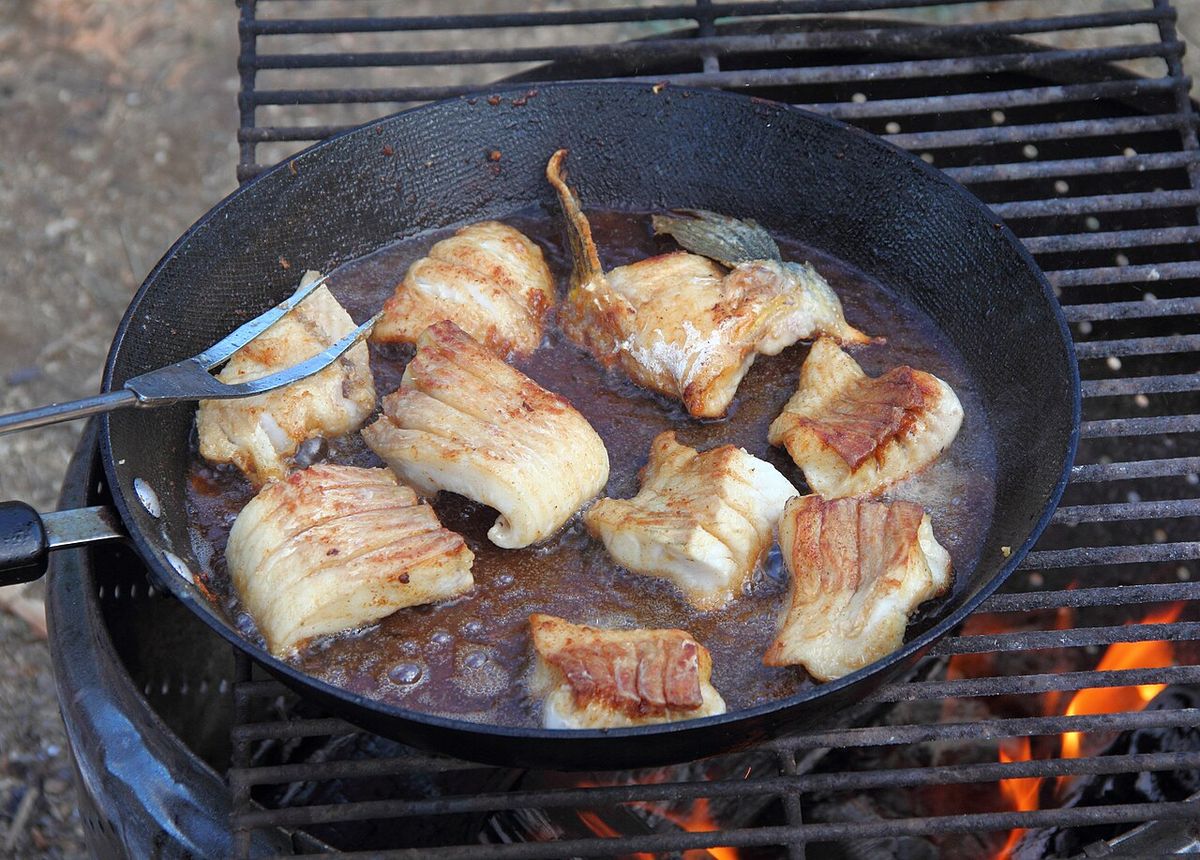
Walleye is renowned for its firm, white, flaky flesh and mild flavour, making it one of the most sought-after freshwater food fish in North America. Its culinary importance is particularly pronounced in Canada, where it is considered a staple of local cuisine. Most commercial walleye fisheries are situated in the Canadian waters of the Great Lakes. The most common preparation is simple pan-frying, often in a light breading or batter, served with lemon. In Minnesota, a walleye sandwich is a common pub offering, and deep-fried walleye on a stick is a standard food at the Minnesota State Fair. The fish's nocturnal habits mean it is most successfully caught for the table at night using live minnows. In South Dakota, the fish only became a popular food item in the 1970s and 1980s, when fishing tournament circuits promoted it and operated walleye contests in the state. Its status as a premium food item supports both local consumption and commercial markets across its range.
Cultural and Official Status
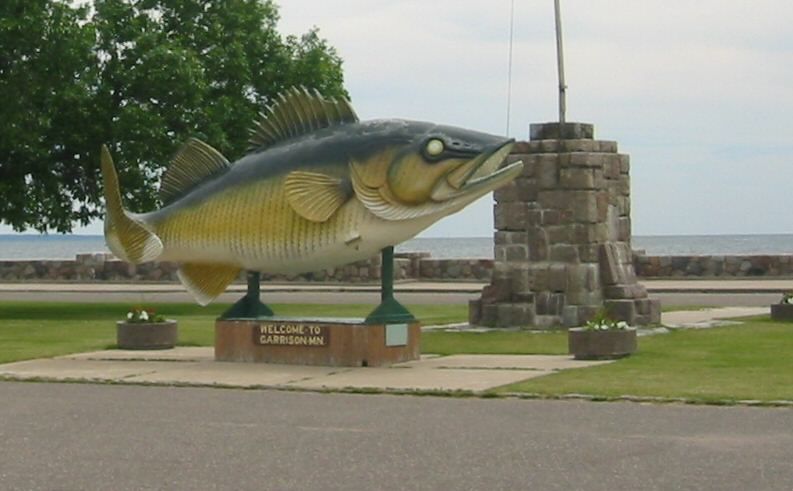
The walleye holds deep cultural and official significance across Canada and the northern United States. It is the official provincial fish of both Manitoba and Saskatchewan, the latter adopting it in 2015 following a public fish emblem contest. In Winnipeg, Manitoba, the walleye, often called 'pickerel' locally, is considered the most important fish, historically supplied by Icelandic fishermen on Lake Winnipeg. Several towns claim the title 'Walleye Capital of the World', including Garrison, Minnesota, Baudette, Minnesota, and Garrison, North Dakota, each featuring large statues of the fish. In the United States, the walleye is the official state fish of Minnesota (since 1965) and South Dakota (since 1982), and the official state warm water fish of Vermont (since 2012). The Minnesota Legislature's 1965 declaration was an early formal recognition of the fish's importance to the region's identity. These designations highlight the fish's role as a regional symbol of natural heritage, community identity, and outdoor lifestyle.
Taxonomy and Related Species
The walleye is part of the North American clade within the genus Sander, alongside the sauger (S. canadensis). Historically, a form known as the blue walleye (Sander glaucus) was described from the Great Lakes, but subsequent taxonomic work showed no consistent differences between it and the yellow walleye. Recent genetic analysis of a preserved blue walleye sample suggests the blue and yellow forms were simply colour phenotypes within the same species, and the blue walleye is now considered a synonym and colour variant, presumed extinct in its former range in southern Ontario and Quebec. The walleye is a North American close relative of the European zander, also known as the pikeperch. The common name 'dory' is sometimes used in British English, mirroring its French name 'doré', but this name is also applied to various other fish species, leading to potential confusion.
Notable Fishing Locations and Consumption Data
Walleye are pursued across their native range, but certain areas are especially famous for their fisheries. The Canadian waters of the Great Lakes, particularly Lake Erie, are hotspots for both commercial and recreational fishing. In Saskatchewan, walleye is the most popular sport fish, found in numerous rivers, reservoirs, and lakes like Lake Diefenbaker. South Dakota's walleye popularity surged in the 1970s and 1980s through fishing tournaments, though the fish is native to the state's Missouri River reservoirs and eastern glacial lakes. The following table provides a comparison of official designations and key records associated with the walleye in North America, illustrating its broad geographic and cultural footprint.
| Jurisdiction | Designation | Year | Notable Fact |
|---|---|---|---|
| Manitoba | Official Provincial Fish | , | Historically supplied Winnipeg market via Icelandic fishers |
| Saskatchewan | Official Provincial Fish | 2015 | Won a public fish emblem contest. Most popular sport fish |
| Minnesota | Official State Fish | 1965 | State record: 7.9 kg, caught 1979; 'walleye chop' fishing common |
| South Dakota | Official State Fish | 1982 | Popularity grew via tournament circuit in late 20th century |
| Vermont | State Warm Water Fish | 2012 | Distinct from the state cold water fish, the brook trout |
| Tennessee | , | , | Location of all-tackle world record catch (11.34 kg) in 1960 |
The walleye is a culturally significant food in the Upper Midwest and is popular in Minnesota, where it was declared the official state fish in 1965. Three towns, Garrison, Minnesota, Baudette, Minnesota, and Garrison, North Dakota, each claim to be the Walleye Capital of the World. The walleye is the official provincial fish of both Manitoba and Saskatchewan. In Saskatchewan, it is the most popular fish for sport fishing and can be caught in many rivers, reservoirs, and lakes.
Questions about Walleye
Why is it called a walleye?
The name 'walleye' comes from the fish's distinctive pearlescent, opaque-looking eyes. This appearance is caused by a reflective layer called the tapetum lucidum, which enhances its vision in low-light conditions. This adaptation allows the walleye to see well at dawn, dusk, and in murky water, giving it an advantage when hunting prey. The unique eyes are a key identifying feature and the direct source of its common name.
What is the difference between walleye and pickerel?
In many parts of English-speaking Canada, walleye are commonly called 'pickerel'. However, this is a regional misnomer, as true pickerels are a different type of fish belonging to the pike family (Esocidae). The walleye is a perch-like fish (family Percidae) and is not related to true pickerels. The similar name often causes confusion, but they are distinct species with different biological classifications.
What is the best way to catch walleye?
Walleye are most effectively caught using techniques that match their low-light feeding habits. Anglers often have success at night, at dawn, or at dusk using live minnows or lures that imitate small fish. Fishing during a 'walleye chop', windy conditions of 10 to 25 km/h that create rough water, is also productive, as it reduces light penetration and stimulates feeding. In winter, ice fishing is a very popular method across the walleye's northern range.
How big can a walleye get?
Walleye can grow to impressive sizes, though most caught by anglers are smaller. The maximum recorded length is 107 centimetres (42 inches), and the maximum recorded weight is 13 kilograms (29 pounds). The all-tackle world record, caught in 1960, weighed 11.34 kg (25.0 lb). Females generally grow larger than males, and growth rates are faster in southern parts of their range. A typical caught walleye is between 30 and 50 cm (12 to 20 inches) long.
Why is walleye so popular to eat?
Walleye is highly popular for eating due to its excellent flavour and texture. It has firm, white, flaky flesh with a mild, sweet taste and very few bones. This makes it versatile and appealing to a wide range of palates. It is a staple of Canadian cuisine, especially in the Great Lakes region and the Prairie provinces, where it is often simply pan-fried. Its status as a prized food fish supports significant commercial and recreational fisheries.
Which Canadian provinces have the walleye as an official symbol?
Two Canadian provinces have designated the walleye as an official symbol. Manitoba recognises the walleye as its official provincial fish, and it is a historically important species for the Winnipeg market. Saskatchewan also declared the walleye its official provincial fish in 2015 after it won a public fish emblem contest. In both provinces, the walleye is the most popular target for sport fishing.
Sources and further reading
- Walleye (Wikipedia)
- Baked Walleye Recipe with Lemon Butter (weekdaypescatarian.com)
- 5 Walleye Recipes That Don't Involve Frying (outdoorlife.com)
- Grilled Walleye with Citrus Butter Sauce (sizzlefish.com)
Checked by the Novello Desserts desk. Last updated 2026-10-22.