Commonwealth Day
Commonwealth Day is the annual celebration of the Commonwealth of Nations, observed on the second Monday in March. In Canada, the day is marked by the flying of the Royal Union Flag alongside the national flag at federal installations and serves as a moment to reflect on the country's membership in this voluntary association of 56 independent states. The celebration traces its origins to Empire Day, which was renamed in 1958 to reflect the modern Commonwealth's focus on partnership and equality. Each year, the day is centred around a specific theme, with the 2026 theme being 'Unlocking opportunities together for a prosperous Commonwealth'.
Historical Origins: From Empire Day to Commonwealth Day
The concept of a day to celebrate imperial unity was first suggested in the 1890s by Thomas Robinson, the honorary secretary for the Royal Colonial Institute based in Winnipeg. Robinson's idea was taken up by the Institute's London council, which petitioned Queen Victoria in July 1894, arguing that while other nations had national celebrations, the British Empire lacked one. The British prime minister, Archibald Primrose, 5th Earl of Rosebery, replied that it was a matter for the community, not the government, as departments already observed the Queen's birthday. The idea gained traction, particularly within educational circles, championed in Canada by Clementina Trenholme. Empire Day was first observed in Ontario schools in 1898, scheduled for the last school day before 24 May, Queen Victoria's birthday. After Victoria's death in 1901, her birthday continued to be celebrated from 1902 as Empire Day, though it was not officially recognised as an annual event in the United Kingdom until 1916.
School observances were central to early Empire Day, with morning lessons devoted to exercises calculated to remind children of their imperial heritage. The day provided schoolchildren with an afternoon off and was marked by community events. The tone of the celebration shifted after the First World War, becoming more sombre and politically charged. In the United Kingdom, the Labour Party passed a resolution in 1926 to prevent its further celebration, while the Conservative Party used it for anti-socialist propaganda. The communist party also exploited it as an opportunity to attack British imperialism. This politicization, along with protests from local Labour groups, pacifist dissenters, and left-wing youth organisations like the Young Communist League and the Woodcraft Folk from 1927 through the early 1930s, disrupted the festival's original unifying purpose. After the Second World War, the event fell into rapid decline, setting the stage for a fundamental rebranding.
The Transition to a Modern Commonwealth Celebration
A significant shift occurred on 18 December 1958 when British Prime Minister Harold Macmillan announced in the House of Commons that Empire Day would be renamed Commonwealth Day. This change reflected the post-war transformation of the British Empire into the modern Commonwealth of Nations, a voluntary association of independent and equal states. The next major evolution concerned the date of observance. In 1973, the National Council in Canada of the Royal Commonwealth Society submitted a formal proposal to Prime Minister Pierre Elliot Trudeau that Commonwealth Day should be observed simultaneously across all member nations. This proposal was included in the Canadian items for the agenda of the 1975 Commonwealth Heads of Government Meeting.
Following that meeting, it was agreed the Commonwealth Secretariat would select a date with no historical connotations for a unified celebration. At a meeting in Canberra in May 1976, senior Commonwealth officials agreed on the second Monday in March. This date was chosen specifically because it was a day when most schools across the Commonwealth would be in session, thereby facilitating student participation in educational activities related to the association. These activities could include mini-Commonwealth Games, simulated Commonwealth Heads of Government Meetings, and studies on the geography, ecology, products, or societies of other Commonwealth countries. The move to this new, common date took effect in 1977.
Global Observances and Traditions
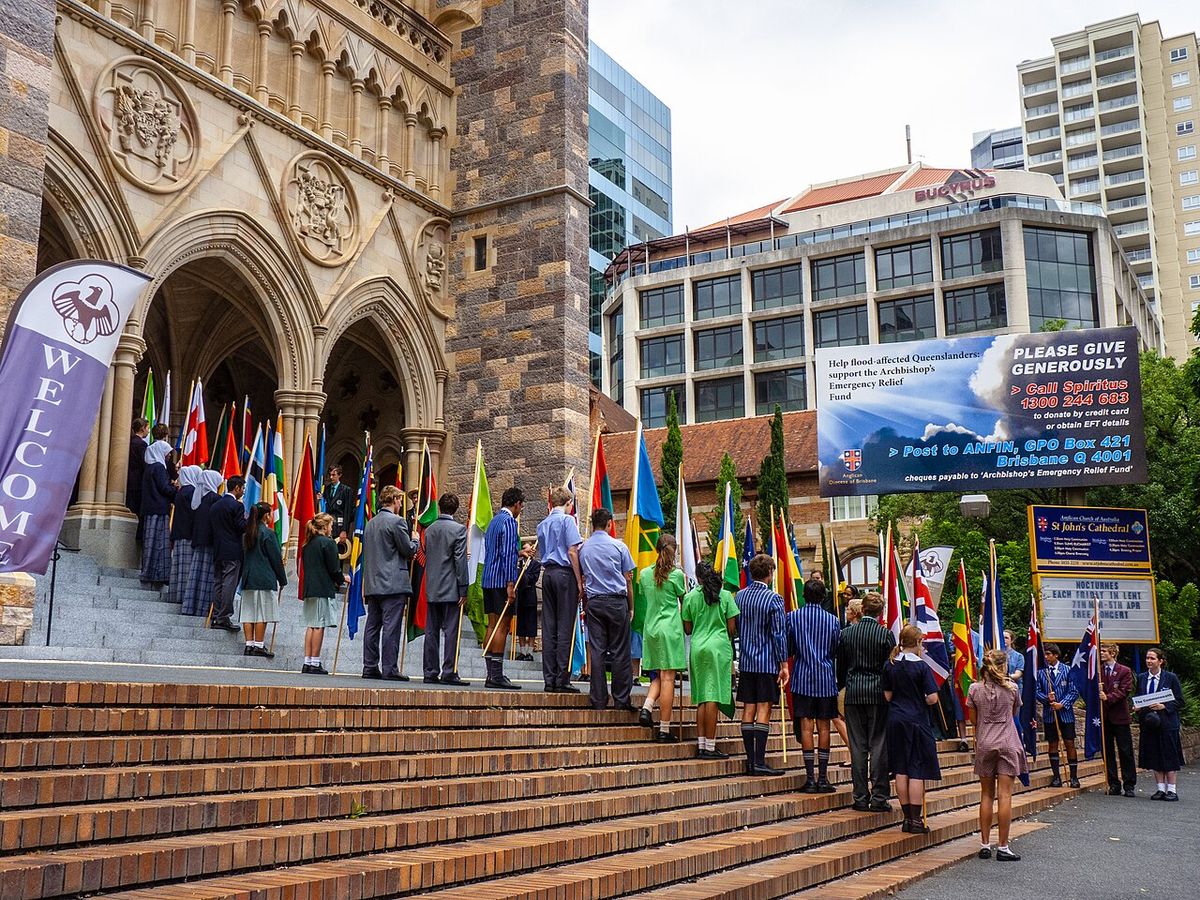
There is no uniform global observance of Commonwealth Day, and it is not a public holiday in most member states. However, several key traditions connect celebrations across the diverse Commonwealth family. A major event is a multi-faith, multicultural service at Westminster Abbey in London, traditionally led by the Head of the Commonwealth and attended by the Commonwealth Secretary-General. During this service, representatives of Commonwealth countries offer the flags of member states for blessing. A wreath-laying ceremony at London's Commonwealth Memorial Gates, commemorating the sacrifice of Commonwealth soldiers and attended by the Secretary-General, is held before the Abbey service. A reception hosted by the Secretary-General follows the service.
Broadcast messages are a fundamental part of the day. The Head of the Commonwealth delivers a message addressed to the people of the Commonwealth, focusing on an issue of importance to the association. Past Commonwealth Day messages by Queen Elizabeth II were always themed after an issue she believed people could have an impact on. The Commonwealth Secretary-General also issues an official statement, which may be read on radio or published in some countries. In some member states, these messages are sometimes augmented by an address from the country's own president, prime minister, or another senior minister. Flag-raising ceremonies for the Commonwealth flag are common in many capitals and cities. The day also sees a variety of other events, including the Commonwealth Africa Summit and numerous cultural and educational programs.
- Westminster Abbey Service: Inter-denominational service with flag blessings, attended by the Head of the Commonwealth and Secretary-General.
- Commonwealth Day Messages: Broadcast by the Head of the Commonwealth and a statement issued by the Commonwealth Secretary-General.
- Flag Protocols: Commonwealth flag raised in member countries. In the UK, member state flags flown in Parliament Square and at Marlborough House.
- Wreath-Laying: Ceremony at the Commonwealth Memorial Gates in London honouring Commonwealth soldiers.
- Receptions and Summits: Official receptions and events like the Commonwealth Africa Summit occur around the UK.
Commonwealth Day in Canada
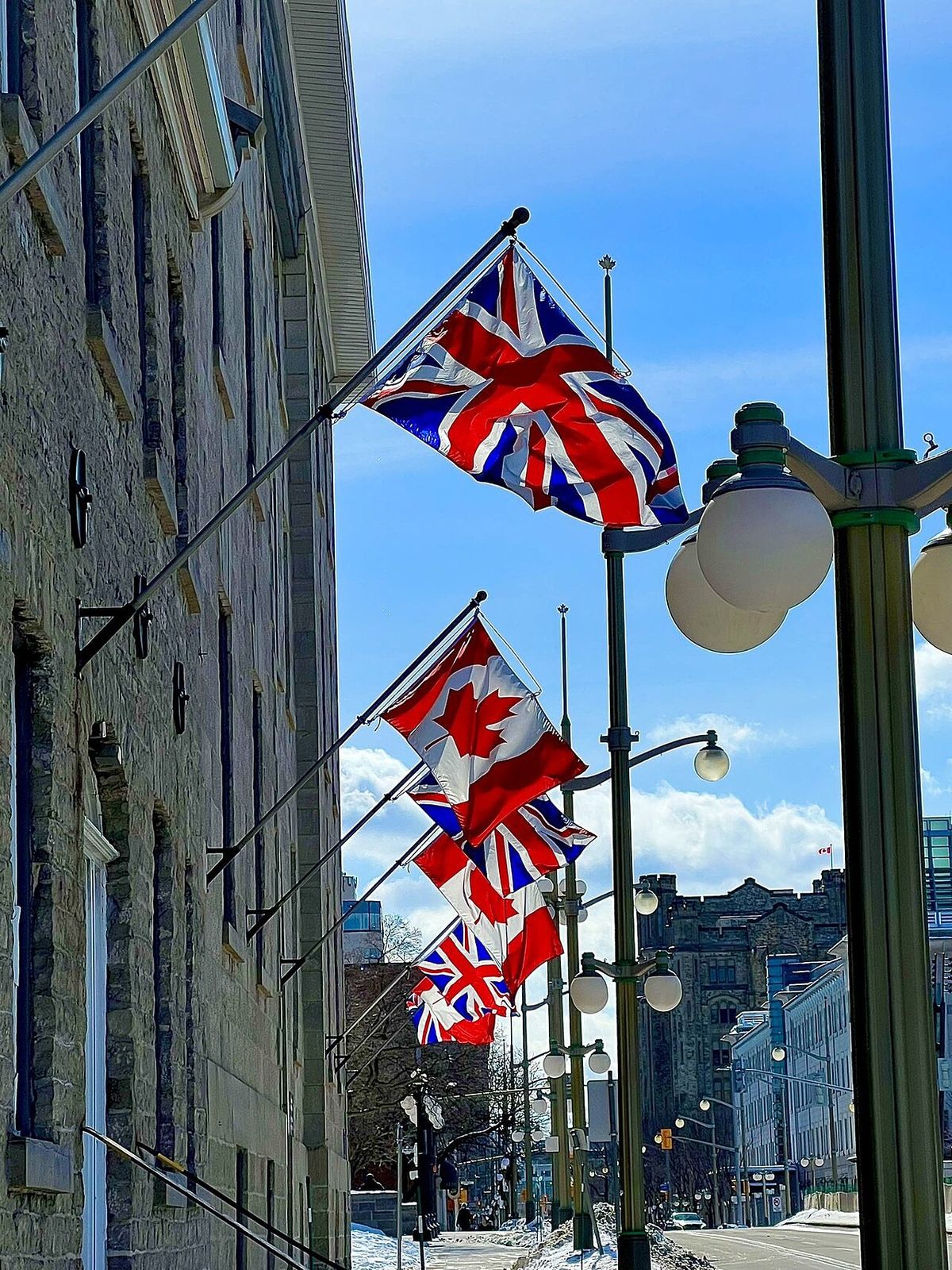
In Canada, Commonwealth Day is observed through specific symbolic acts rather than as a general public holiday. A key national observance is the flying of the Royal Union Flag alongside the Maple Leaf at federal buildings, airports, and military bases nationwide where at least two flagpoles are present. This practice stems from a parliamentary resolution in 1964, enacted after the adoption of the new Canadian flag, which retained the Royal Union Flag as an official symbol of the country's membership in the Commonwealth and allegiance to the Crown. The federal government directive requires it to be flown on certain days, including Commonwealth Day.
Historically, from 1898 to 1976, the observance was tied to Victoria Day. Empire Day, and later Commonwealth Day, was marked on the weekday before the Victoria Day holiday in May. It was not intended to be a general holiday itself, but a day for schools and civic institutions to implement lessons and activities focused on Canada and the British Empire. In 1977, Canada aligned with the rest of the Commonwealth and moved its official observance to the second Monday in March. While no longer a day of widespread public ceremony, the flag protocol ensures a visible, national recognition of Canada's enduring ties to the Commonwealth family. The requirement highlights the unique Canadian tradition of acknowledging both its national symbol and its historical Commonwealth affiliation on the same day.
Observances in Other Selected Nations and Territories
Observance of Commonwealth Day varies significantly across the 56 member states and former territories, reflecting local history and priorities. In the United Kingdom, besides the Westminster Abbey service, the flags of all Commonwealth nations are flown in Parliament Square and at Marlborough House. The UK government's flag-flying guidelines also advise the flying of the Commonwealth flag on public buildings, and the Scottish Government advises flying the Commonwealth and Scottish flags if a building has two or more poles. Several British Overseas Territories formerly observed it as a public holiday. It was a school holiday in British Hong Kong before the 1997 transfer of sovereignty. Gibraltar observed it as a holiday until 2021, when it was moved to February and later replaced by a Winter Midterm Bank Holiday, though the Government of Gibraltar continues to mark the day with events.
In Australia, the governor-general and state governors observe the day, and government departments and agencies fly the national flag per protocol. The Commonwealth Day Council of New South Wales holds an annual lunch at Parliament House in Sydney in the presence of its patron, the governor. In the Bahamas, school assemblies involving flag-raising ceremonies are held. In Belize, the day was formerly known as Sovereign's Day, a public holiday in May originally for Queen Victoria's birthday and later for Commonwealth membership, but it was removed from the official holiday list in 2021. In Tuvalu, Commonwealth Day remains a legislated public holiday under the Public Holidays Act. In Hong Kong, post-1997, observances continue through the Royal Commonwealth Society, featuring a ceremony at the Cenotaph with poppy wreaths for Battle of Hong Kong veterans and an interfaith service where the King's Commonwealth Day Message is read by a rotating Commonwealth consul-general.
| Country/Territory | Observance Details | Public Holiday Status |
|---|---|---|
| United Kingdom | Flags flown in Parliament Square. Westminster Abbey service. Wreath-laying at Memorial Gates. | No |
| Australia | National flag flown. Governor-general observes. NSW holds annual lunch. | No |
| Bahamas | School assemblies with flag-raising ceremonies. | No |
| Belize | Formerly Sovereign's Day in May, removed from holiday list in 2021. | No (since 2021) |
| Tuvalu | Legislated in Public Holidays Act. | Yes |
| Hong Kong (post-1997) | Royal Commonwealth Society ceremony at Cenotaph. Interfaith service. | No (was a school holiday pre-1997) |
| Gibraltar | Events held by government. Was a public holiday until 2021. | No (since 2022) |
Annual Themes and Strategic Focus
Each Commonwealth Day is guided by a specific theme chosen to focus attention on a particular area of cooperation or challenge within the association. These themes provide a framework for events, educational materials, and the messages delivered by Commonwealth leaders. The theme for 2026 is 'Unlocking opportunities together for a prosperous Commonwealth'. This theme acts as a call to action, emphasizing the creation of equitable and high-impact opportunities across member states, particularly in areas like skills development, education, trade, and climate action. Economic development and trade. And climate change and small states, with gender and youth mainstreamed throughout.
Themes have evolved to mirror the Commonwealth's contemporary priorities and global events. For instance, the 1995 theme, 'Our Commonwealth Neighbourhood, Working Together for Tolerance and Understanding', reflected the spirit of collaboration following South Africa's post-apartheid re-entry into the Commonwealth, its first participation in the day. In 2011, the theme 'Women as Agents of Change' coincided with the 100th anniversary of International Women's Day, highlighting gender equality and the realities of inequality impacting women and girls. The themes consistently connect to the Commonwealth's core values as outlined in its Charter: democracy, human rights, the rule of law, and sustainable development. They also often align with the strategic work of the Commonwealth Secretariat and set the tone for related discussions at the biennial Commonwealth Heads of Government Meeting.
The Commonwealth Day Message and Leadership
The Commonwealth Day message from the Head of the Commonwealth is a central feature of the annual observance. Broadcast throughout the member states, this message is directed to the people of the Commonwealth, not their governments, reinforcing the association's people-centred ethos. Past messages by Queen Elizabeth II were consistently themed around issues where she believed individual and collective action could make a difference. The message for 2026 from King Charles III reflects on a time of 'great challenge and great possibility', addressing pressures like conflict, climate change, and rapid transformation. It highlights the Commonwealth's unity across diversity, its potential for prosperous trade between trusting partners, and the duty to steward the natural world for future generations, with nearly two-thirds of the population under thirty.
The Commonwealth Secretary-General also delivers a formal statement on the day. These messages often combine reflection on the past year with a forward-looking vision, expressing support for the Commonwealth's commitment to mutual respect and prosperity. For example, the 2005 statement by Secretary-General Don McKinnon argued that fighting global poverty requires investing in education and skills. The leadership statements are complemented by events like the Commonwealth Heads of Government Meeting (CHOGM), which in 2026 will be held in Antigua and Barbuda from 1 to 4 November. The planned discussions for that summit, 'Accelerating Partnerships and Investment for a Prosperous Commonwealth', are designed to complement and advance the theme set on Commonwealth Day, focusing on what governments and people can achieve together.
Educational Engagement, Youth, and the Future
A foundational reason for selecting the second Monday in March was to ensure schools across the Commonwealth were in session, enabling student engagement. Educational institutions have long been key venues for Commonwealth Day activities. Historically, during the Empire Day era, this included morning lessons on imperial heritage and organised veneration of the Union Flag. In the modern context, schools are encouraged to use the day to teach about the Commonwealth's shared values, its 56 member countries, and global issues like sustainable development. Activities can range from simulated Commonwealth meetings and mini-Commonwealth Games to studies on the ecology and cultures of other member nations. In 1983, a Canadian school sent the Commonwealth Secretary-General a giant letter he described as 'the nicest letter' he had received.
Resources like the booklet 'Our Story, Our World, Our Commonwealth: The story of 56 countries' are designed to help younger students understand the association's shared values and collaborative work. The voluntary and participatory nature of the Commonwealth means its future relevance depends heavily on engaging its youthful population. With nearly two-thirds of Commonwealth citizens under the age of thirty, the association is defined by youth and possibility. Commonwealth Day serves as an annual touchpoint for this engagement, reminding all citizens, especially the young, of their role in a global network. As the association approaches the 50th anniversary of the March observance date in 2026, the day continues to evolve as a platform for celebrating diversity, confronting shared challenges like climate change which disproportionately affects small island states, and unlocking opportunities for collective prosperity through partnership and mutual respect.
Questions about Commonwealth Day
Is Commonwealth Day a public holiday in Canada?
No, Commonwealth Day is not a public holiday in Canada. Businesses, government offices, and schools generally remain open. The primary official observance in Canada is a protocol directive for federal installations to fly the Royal Union Flag alongside the national flag on that day, provided there are at least two flagpoles. This act symbolically acknowledges Canada's membership in the Commonwealth and its historical ties to the Crown. The day was historically observed in conjunction with Victoria Day in May until 1977, but it was never itself a general holiday for the public.
Why was Commonwealth Day moved from May to March?
Commonwealth Day was moved from a date near Victoria Day in May to the second Monday in March in 1977. This change resulted from a 1973 Canadian proposal from the Royal Commonwealth Society to Prime Minister Pierre Trudeau for a simultaneous observance. The proposal was adopted at the 1975 Commonwealth Heads of Government Meeting. The Commonwealth Secretariat then selected the second Monday in March because it had no historical colonial connotations and was a day when most schools across the Commonwealth would be in session. This facilitated educational activities like mini-Commonwealth Games and simulated leaders' meetings for students.
What is the significance of the Royal Union Flag on Commonwealth Day in Canada?
The flying of the Royal Union Flag on Commonwealth Day in Canada is a practice rooted in a 1964 parliamentary resolution. When Canada adopted its new Maple Leaf flag, it retained the Royal Union Flag as an official symbol of the country's membership in the Commonwealth and its allegiance to the Crown. A federal government directive requires it to be flown alongside the Canadian flag at federal buildings, airports, and military bases on specific days, including Commonwealth Day, where facilities have two or more flagpoles. It is a visual reminder of Canada's historical and constitutional ties within the Commonwealth family, distinct from its national identity.
What happens at the Westminster Abbey service on Commonwealth Day?
The multi-faith service at Westminster Abbey in London is a central event for Commonwealth Day. It is traditionally led by the Head of the Commonwealth and attended by the Commonwealth Secretary-General, high commissioners, and other dignitaries. The service features prayers, readings, and performances reflecting the cultural and religious diversity of the member nations. A key moment involves representatives from Commonwealth countries processing to offer their national flags for a blessing. A wreath-laying ceremony at the Commonwealth Memorial Gates precedes the service, and a reception hosted by the Secretary-General follows. The service is often broadcast globally.
What was Commonwealth Day called before 1958 and how was it celebrated?
Before 1958, the observance was known as Empire Day. It was centred on celebrating the British Empire, with school morning lessons on imperial heritage and ritualistic veneration of the Union Flag. Children were given the afternoon off for community events. After the First World War, it became more sombre and politically divisive in the UK. The name was changed by British Prime Minister Harold Macmillan in 1958 to reflect the new, voluntary Commonwealth of Nations.
What is the theme for Commonwealth Day 2026 and what does it mean?
The theme for Commonwealth Day in 2026 is 'Unlocking opportunities together for a prosperous Commonwealth'. This theme is a call to action for member states to collaborate in creating fair, equitable, and high-impact opportunities for all citizens. It focuses on areas such as skills development, education, trade, and climate action. It will be complemented by discussions on 'Accelerating Partnerships and Investment' at the 2026 Commonwealth Heads of Government Meeting in Antigua and Barbuda.
Sources and further reading
- Commonwealth Day (Wikipedia)
- A look at Commonwealth Day from the archives (thecommonwealth.org)
- Message from His Majesty The King on the occasion ... (gg.ca)
- Commonwealth Day 2026: Unlocking Opportunities Together (remitly.com)
- Commonwealth Day 2026 (clgf.org.uk)
Checked by the Novello Desserts desk. Last updated 2026-10-28.