HMCS Haida
HMCS Haida is a Tribal-class destroyer that served as a warship in the Royal Canadian Navy from 1943 to 1963, seeing extensive action in the Second World War and the Korean War. Designated a National Historic Site of Canada in 1984, she is celebrated as the "Fightingest Ship in the Royal Canadian Navy" for sinking more enemy surface tonnage than any other Canadian warship. Today, Haida is preserved as a museum ship operated by Parks Canada, permanently berthed at Pier 9 on Hamilton Harbour in Hamilton, Ontario. As the last surviving Tribal-class destroyer in the world and the ceremonial flagship of the Royal Canadian Navy since 2018, she serves as a powerful monument to Canada's naval history and the service of its sailors.
Wartime Service in the Second World War
HMCS Haida was commissioned into the Royal Canadian Navy in August 1943 and immediately began workups before joining the British Home Fleet at Scapa Flow in October. Her early wartime duties involved escorting vital Arctic convoys to the Soviet Union, a perilous task under constant threat from German aircraft, U-boats, and surface raiders. In December 1943, Haida was part of the ocean escort for convoy JW 55B when the German battleship Scharnhorst was deployed to intercept it. While British cruisers engaged the battleship, Haida and other destroyers successfully shepherded the convoy to safety, contributing to the eventual sinking of Scharnhorst, which highlighted the critical role of destroyers in protecting Allied shipping in some of the war's most dangerous waters.
In January 1944, Haida was reassigned to the 10th Destroyer Flotilla at Plymouth for operations along the French coast, participating in sweeps codenamed Operation Tunnel and Operation Hostile. These missions aimed to disrupt German coastal shipping and secure the western approaches to the English Channel in preparation for the D-Day landings. On the night of 25 April 1944, Haida, in company with the cruiser HMS Black Prince and destroyers including HMCS Athabaskan, engaged three German Elbing-class torpedo boats. In the fierce battle, Haida sank T29, while T27 was damaged and later destroyed. Just three nights later, Haida and Athabaskan encountered T24 and T27 again. Athabaskan was torpedoed and sunk, with Haida rescuing 44 survivors before running T27 aground and setting it ablaze with shellfire.
Haida continued aggressive patrols in the lead-up to and during the Normandy invasion. On 8 June 1944, as part of Task Force 26, she engaged the German 8th Destroyer Flotilla northwest of the Île de Bas. In the Battle of Ushant, Haida and her sister ship HMCS Huron combined to sink the German destroyer Z32. Throughout the summer, Haida maintained pressure on enemy coastal traffic, sinking a German submarine, U-971, in collaboration with HMS Eskimo on 24 June. Further actions in July and August saw the destruction of German submarine chasers, merchant vessels, and minesweepers. During an engagement on 6 August, a shell exploded in one of Haida's turrets, killing two crew members and injuring eight, but the ship remained in the fight. After these intense operations, Haida departed for a refit in Halifax in September 1944.
Post-War Refits and Korean War Service
Following the end of the Second World War, Haida was paid off into reserve in March 1946. She was reactivated in 1947 and underwent a significant modernization refit to adapt her for Cold War duties. This refit saw her armament completely reconfigured. Her original six 4.7-inch guns were removed and replaced with two twin 4-inch gun mounts forward and a twin 3-inch gun mount aft. One turret was replaced by two Squid anti-submarine mortars, and she was fitted with new radars and sonars. After returning to service in May 1947, Haida participated in Atlantic Fleet exercises with NATO allies and, in 1948, was among the first RCN ships to penetrate Hudson Bay.
When the Korean War began in June 1950, Haida was activated once more. Converted to a destroyer escort and recommissioned with the pennant number DDE 215 on 15 March 1952, she departed Halifax for the war zone in September. After transiting the Panama Canal, she arrived in Sasebo, Japan, in early November and began patrols off the Korean coast. Her duties included screening aircraft carriers, conducting inshore patrols, and bombarding enemy coastal positions and infrastructure. Haida joined the exclusive "Trainbusters Club" by destroying enemy trains on two occasions, first north of Riwon on 29 January 1953 and again on 26 May 1953. She completed her first tour in June 1953 and returned to Halifax via the Suez Canal.
Haida departed for a second Korean tour in December 1953, arriving in theatre in February 1954 to help enforce the uneasy ceasefire. She patrolled the Korean coast until September 1954 before returning to Halifax. Following the Korean War, Haida resumed anti-submarine warfare duties with NATO in the North Atlantic and West Indies. However, by the late 1950s, her aging hull began to show significant signs of wear. Surveys revealed extensive corrosion and cracking, leading to repeated and lengthy refits in 1958, 1959, and from 1962 into 1963. These structural issues ultimately led to the decision to retire the venerable destroyer.
Preservation and Museum History
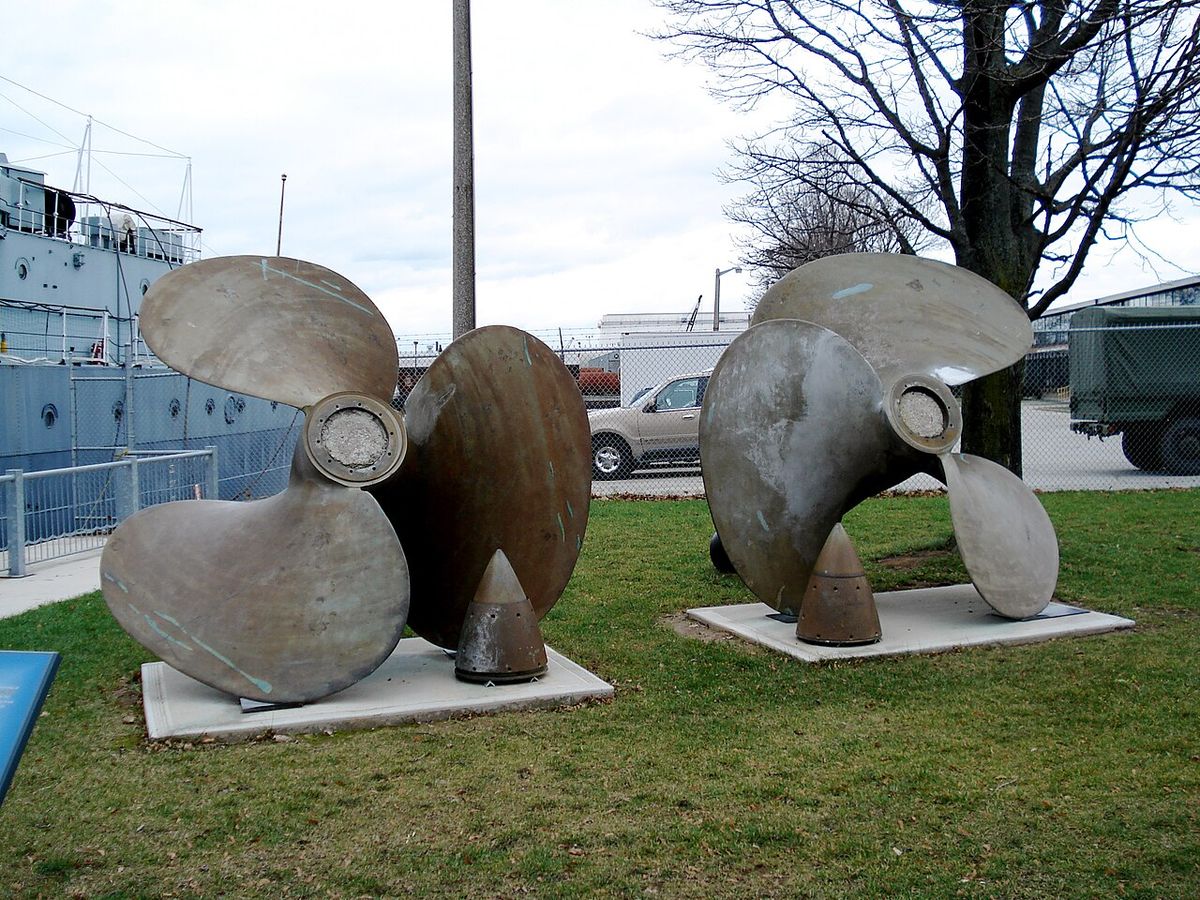
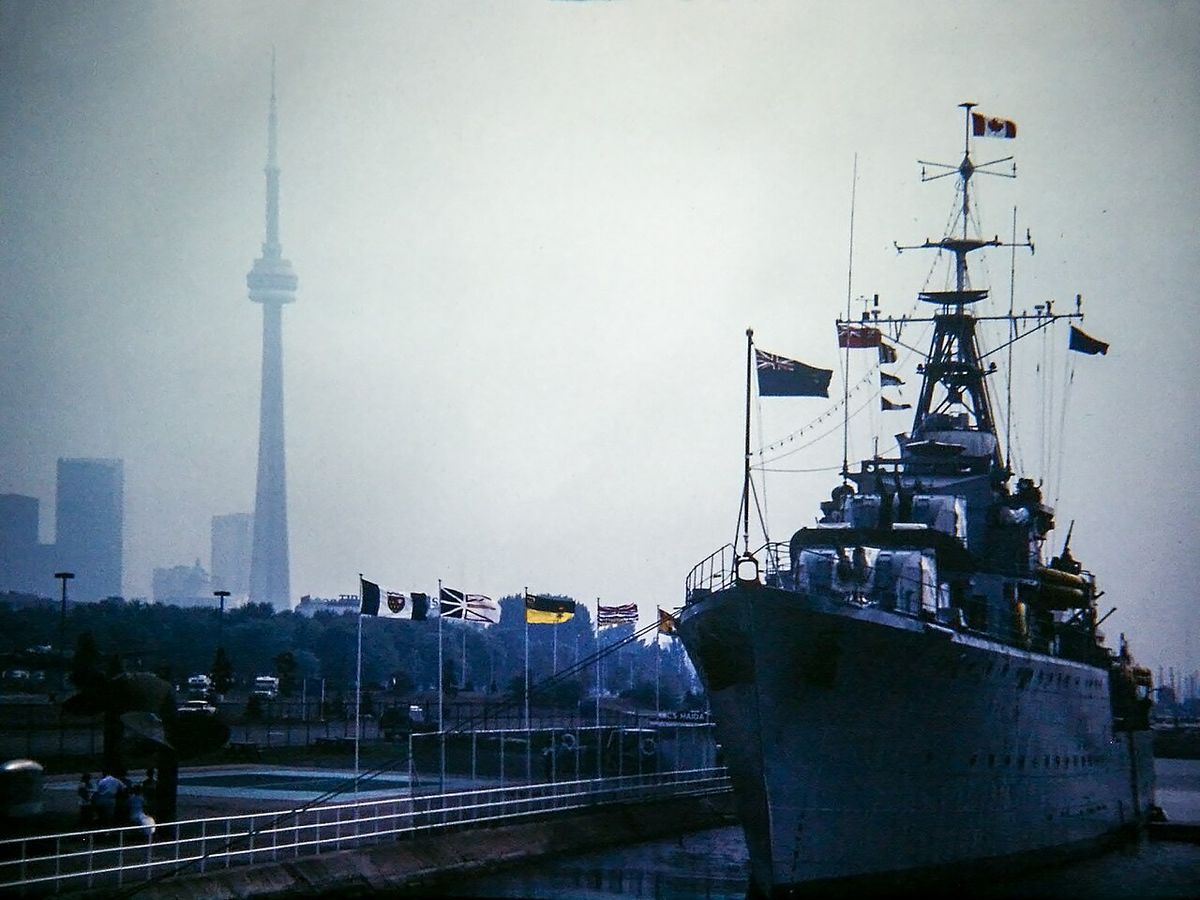
In 1963, Haida undertook a final summer tour of the Great Lakes before being paid off for the last time on 30 April. Crown Assets announced the ship would be scrapped, but a group of citizens, led by former RCN rating Neil Bruce, formed Haida Inc. and successfully bid $20,000 to save her. After preparation, the RCN towed Haida to Toronto, where she arrived in August 1964 and was officially handed over in a ceremony attended by three of her former commanding officers. She opened as a museum ship at Pier 6 in Toronto in August 1965. Financial difficulties plagued Haida Inc., and in 1970 title to the ship was transferred to the Province of Ontario for one dollar. Haida was then moved to a new berth at Ontario Place, where she remained as a public attraction for over three decades.
During her time at Ontario Place, Haida became a familiar Toronto landmark. Her guns were fired during performances of Tchaikovsky's 1812 Overture by the Toronto Symphony Orchestra at the nearby Forum. The ship also served as a seasonal training facility for the Royal Canadian Sea Cadets. In November 1984, the Government of Canada designated Haida a National Historic Site to recognize her combat role and status as the last Tribal-class destroyer. By the late 1990s, however, the ship had fallen into significant disrepair due to inadequate maintenance. A 1998 inspection by Parks Canada engineers estimated she needed $5 million in repairs and had only about five years of safe public use remaining.
The ship's future was secured when Sheila Copps, then Minister of Canadian Heritage and MP for Hamilton, advocated for federal intervention. Parks Canada purchased Haida from the Ontario government in December 2001. A complex operation followed to free the ship, as a causeway at Ontario Place blocked access to Lake Ontario. Parks Canada spent $1 million to dig a channel through the causeway. On 11 December 2002, Haida was towed to Port Weller for a $5 million hull refit.
The HMCS Haida Experience in Hamilton
Now permanently docked at Pier 9 on Hamilton Harbour, HMCS Haida National Historic Site is operated by Parks Canada as a premier destination for naval history. The ship is typically open to the public from late spring until the autumn, with the 2026 season running from 19 June to 6 September. Visitors can explore the authentically preserved destroyer, gaining a tangible sense of life at sea during her active service. Parks Canada offers a range of guided tours and daily programming to enhance the visitor experience. A major highlight is the exclusive Gunnery Experience, a pre-booked program where participants receive historical instruction and then don period gear to load and fire one of the ship's 4-inch guns under expert supervision. This hands-on activity provides a unique and immersive connection to the ship's combat history. For general visitors, a mobile guided tour is available through the Parks Canada app, offering detailed information at their own pace. The site also hosts special events, such as a Marine Career Expo, which in 2026 was scheduled for 25 and 26 September after the regular season closed.
- Explore the Bridge: The ship's command centre with original equipment.
- Tour the Crew Quarters: See the cramped living conditions for sailors.
- Visit the Engine Room: View the machinery that powered the destroyer.
- Walk the Gun Decks: Stand beside the 4-inch and 3-inch gun mounts.
- Participate in the Gunnery Experience: A hands-on program to load and fire a gun (pre-booked).
- Use the Parks Canada App: For a self-guided mobile audio tour.
- Attend Special Events: Such as the Marine Career Expo or historical presentations.
- Learn from Staff: Knowledgeable Parks Canada interpreters are often on hand.
Admission to the site is managed by Parks Canada, with daily tickets and seasonal passes available. Notably, the Canada Strong Pass program offered free admission from 19 June to 7 September in 2026. The location on Hamilton's revitalized waterfront makes it easy to combine a visit with other local attractions, such as the Hamilton Waterfront Trail, Bayfront Park, or the Canadian Warplane Heritage Museum. Visitors should note that as a historic warship, the site features many steep ladders, narrow passageways, and uneven surfaces, making comfortable footwear essential and strollers impractical.
Design and Technical Specifications
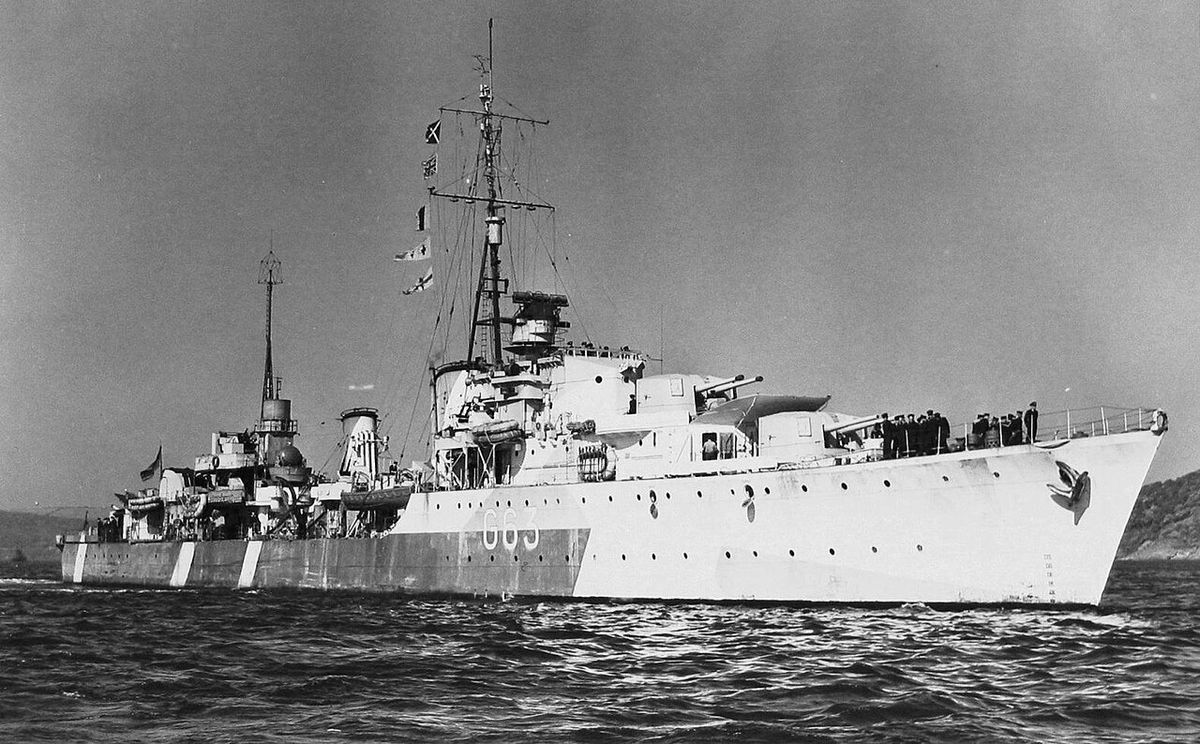
HMCS Haida was one of eight Tribal-class destroyers built for the Royal Canadian Navy, a design chosen for its powerful armament and ability to operate more like a small cruiser than a traditional fleet destroyer. Constructed by Vickers-Armstrongs in Newcastle-upon-Tyne, her keel was laid on 29 September 1941 and she was launched on 25 August 1942. As built, Haida measured 377 feet in length overall with a beam of 36 feet 6 inches and a draught of 13 feet. She displaced 1,927 long tons standard and 2,745 long tons at deep load. Her propulsion plant consisted of two Parsons geared turbines driven by steam from three Admiralty three-drum boilers, generating 44,000 shaft horsepower and enabling a top speed of 36.5 knots.
Her original wartime armament was formidable and tailored for surface combat. It comprised six 4.7-inch guns in three twin turrets, a twin 4-inch gun mount for anti-aircraft defence, four single 2-pounder "pom-pom" guns, and four 21-inch torpedo tubes. This configuration allowed her to engage enemy destroyers and smaller surface vessels effectively. Her complement was 14 officers and 245 ratings. The 1947 post-war refit radically altered her profile and capabilities. The 4.7-inch guns were removed, and new gun mounts were installed: two twin 4-inch guns forward and a twin 3-inch gun aft. A Squid anti-submarine mortar system was fitted on the quarterdeck, and she was equipped with a suite of modern radars, including Type 275 and SPS-6, and sonars like Type 174, transforming her into a specialized anti-submarine escort.
| Specification | As Built (1943) | After 1947 Refit |
|---|---|---|
| Main Armament | 6 x 4.7-inch guns (3 twin turrets) | 4 x 4-inch guns (2 twin mounts), 2 x 3-inch guns (1 twin mount) |
| Anti-Submarine Armament | Depth charges | Two Squid anti-submarine mortars |
| Anti-Aircraft Armament | 4 x 2-pounder "pom-poms", 1 x 4-inch twin mount | Light AA guns, 3-inch mount served dual role |
| Torpedo Tubes | 4 x 21-inch tubes | Removed |
| Radar/Sonar | Basic wartime sets | Type 275, SPS-6, SPS-10, Type 293, 262 radars. Type 140, 174 sonars |
| Primary Role | Surface combatant, fleet destroyer | Anti-submarine warfare, destroyer escort |
HMCS Haida participated in the large surface battles of the Second World War. She was later refitted for the submarine dominated threats of the Cold War. This refit involved replacing her main armament and installing new anti submarine mortars and sensors. Her ability to be refitted and serve effectively in both conflicts demonstrates the robustness and adaptability of the Tribal class design. Her preserved state in Hamilton presents elements from both periods of her service. This allows visitors to see the technological journey of a twentieth century warship.
Significance and Legacy
HMCS Haida holds a unique and honoured place in Canadian naval history. Her combat record is exceptional among RCN vessels, having sunk more enemy surface tonnage during the Second World War than any other Canadian warship, a feat that earned her the enduring nickname "the Fightingest Ship." Her service spanned two major conflicts and the Cold War, making her a symbol of Canada's prolonged and global maritime commitment. As the last surviving Tribal-class destroyer out of 27 built for the Royal Canadian Navy, Royal Navy, and Royal Australian Navy, she is an irreplaceable artifact of naval engineering and wartime service. Her designation as a National Historic Site in 1984 formally recognized these contributions to Canada's story.
Beyond her material legacy, Haida serves as a powerful memorial to the thousands of Canadians who served at sea. The ship embodies the skill, courage, and sacrifice of her crews under commanders like Vice Admiral Harry DeWolf. Her preservation, first by dedicated citizens and later by Parks Canada, represents a successful public effort to save a national treasure from the scrapyard. In 2018, her symbolic importance was further recognized when she was designated the ceremonial flagship of the Royal Canadian Navy, a role that connects the modern navy directly to its storied past. This honour ensures she remains an active part of naval tradition, not just a static museum piece, and continues to inspire current and future generations of sailors.
As a museum ship in Hamilton, Haida provides an immersive, hands-on historical experience that is rare and valuable. She educates new generations about Canada's naval heritage, veterans' service, and the realities of war at sea. Her location on the Great Lakes makes this history accessible to a vast inland population who might otherwise have little connection to maritime military service. Through innovative programs like the Gunnery Experience and partnerships with events like Historic Places Days, Haida continues to engage the public, ensuring that the stories of her service and the broader narrative of the Royal Canadian Navy remain alive and relevant for years to come.
Questions about HMCS Haida
What are the opening hours for HMCS Haida?
HMCS Haida National Historic Site operates on a seasonal schedule. For the 2026 season, the ship was open from 19 June to 6 September, with operating hours from 10 a.m. to 5 p.m., Wednesday through Sunday. The site is closed during the winter months. Visitors should always check the official Parks Canada website for the most current hours and dates before planning a visit, as schedules can change annually.
Is HMCS Haida suitable for young children?
The ship can be engaging for children interested in history or ships, but parents should be aware of specific challenges. The historic vessel has many steep ladders, narrow passageways, and uneven surfaces. Strollers cannot be used onboard, so baby carriers are a better option for infants and toddlers. Parents should supervise children closely and ensure they wear sturdy, comfortable shoes for climbing.
Why is HMCS Haida historically significant?
HMCS Haida is historically significant for several key reasons. She is the last surviving Tribal-class destroyer in the world. During the Second World War, she sank more enemy surface tonnage than any other Canadian warship, earning the title "the Fightingest Ship. She also served in the Korean War and the Cold War. Designated a National Historic Site of Canada in 1984 and the ceremonial flagship of the Royal Canadian Navy in 2018, she is a premier monument to Canada's naval service and sacrifice.
Where is HMCS Haida located?
HMCS Haida is located in Hamilton, Ontario, where she is berthed as a museum ship. Specifically, she is docked at Pier 9 on the Hamilton waterfront next to HMCS Star, an active Royal Canadian Naval Reserve Division. She was designated a National Historic Site of Canada in 1984. In 2018, Haida was further honoured by being designated the ceremonial flagship of the Royal Canadian Navy.
Can you go inside the ship?
Yes, you can go inside HMCS Haida as she is a museum ship open to the public. Operated by Parks Canada as the HMCS Haida National Historic Site, the ship offers tours and special events during its seasonal opening. For example, the site was open from May 16 to September 6 in 2026, offering main deck tours and other in person events. The ship provides visitors a chance to explore Canada's naval history firsthand. It is a key attraction on the Hamilton waterfront where people can climb aboard and learn about its service.
What is the Gunnery Experience?
The Gunnery Experience is a special event where participants can load and fire the 4 inch guns on board HMCS Haida. This activity is guided by a team of expert Parks Canada staff. It offers a rare, hands on opportunity to interact with the ship's historical armament. The experience is part of the public programming at the HMCS Haida National Historic Site. These events allow visitors to engage directly with the operational history of this famed Tribal class destroyer.
Sources and further reading
- HMCS Haida (Wikipedia)
- HMCS Haida National Historic Site, Parks Canada (parks.canada.ca)
- HMCS Haida National Historic Site (historicplacesdays.ca)
- HMCS Haida Gunnery Experience (hmcshaida.com)
Checked by the Novello Desserts desk. Last updated 2026-10-28.