Montmorency Falls
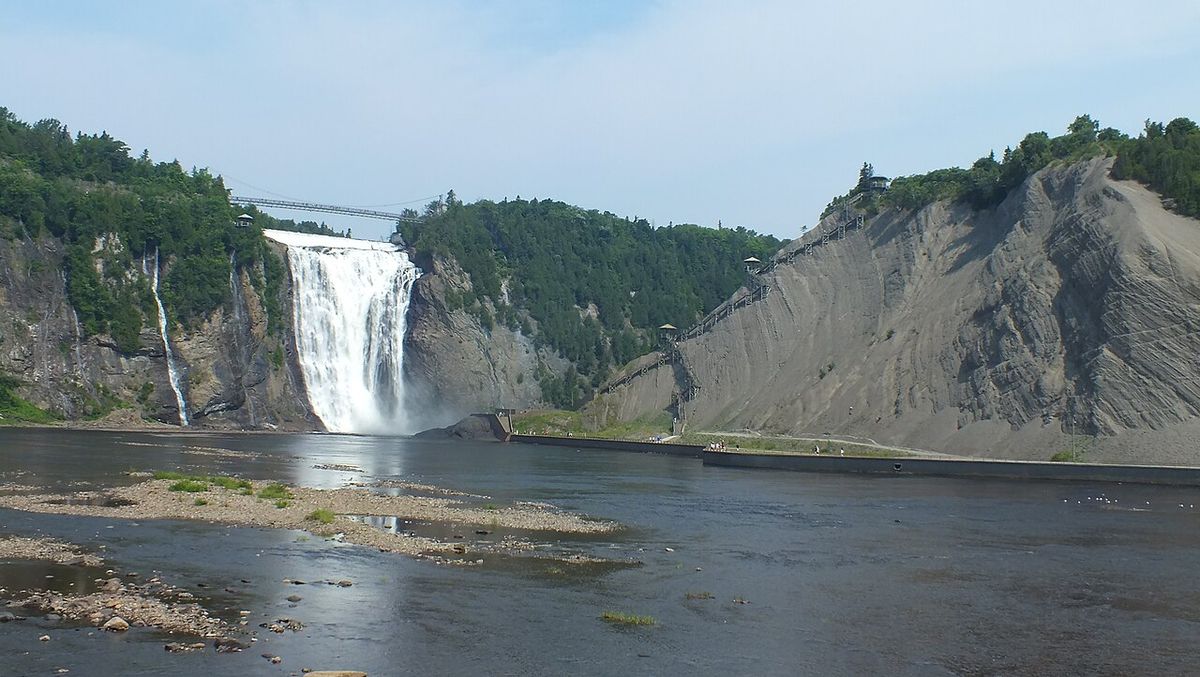
Montmorency Falls is an 83-metre waterfall located on the Montmorency River in Quebec, Canada, approximately 12 kilometres from the historic core of Quebec City. As the centrepiece of the Parc de la Chute-Montmorency, the waterfall stands 30 metres higher than Niagara Falls, making it one of the most dramatic natural attractions in the province. The site draws close to one million visitors annually with its panoramic boardwalks, suspension bridge, cable car, and seasonal adventure activities. Its proximity to Quebec City and its role as a backdrop for cultural events, including an international fireworks competition, cement its status as a premier destination for both domestic and international tourists.
Geography and Formation
The Montmorency Falls are formed where the Montmorency River plunges over a cliff shore directly into the Saint Lawrence River. This dramatic confluence occurs opposite the western tip of Île d'Orléans, creating a powerful visual and auditory spectacle. The waterfall's total drop of 83 metres is a result of the significant elevation change between the river's plateau and the Saint Lawrence. The area surrounding the falls is protected within the boundaries of the Montmorency Falls Park, ensuring the preservation of its natural state. The geological composition of the riverbed, notably high in iron content, contributes to a distinctive yellowish tint in the cascading water during the summer months. The park's location on the boundary between the borough of Beauport and the municipality of Boischatel places it within the broader Côte-de-Beaupré region, an area known for its scenic landscapes and agricultural heritage.
Visitor Infrastructure and Access
Parc de la Chute-Montmorency is designed to provide multiple vantage points and experiences of the waterfall. A network of staircases and panoramic boardwalks, including the Cliff Walk, allows visitors to approach the falls from several different perspectives and elevations. The wooden Cliff Walk boardwalk follows the cliff edge and can become treacherous with ice in winter, requiring caution. The suspension bridge spans the crest of the waterfall, connecting the two sides of the park and offering views straight down the cascade. For easier vertical transit, a cable car system, known as a funitel, carries passengers between the base and the summit. Primary access to the park is by car via Route 138 East from Old Quebec, a drive of 10 to 15 minutes depending on traffic. There are designated parking lots at the base of the falls, at the summit near Manoir Montmorency, and in nearby Boischatel. For those without a car, public transit from Quebec City is available via the local 800 bus line, with a stop at Brideau followed by a ten-minute walk to the park entrance. A dedicated shuttle bus service from Old Quebec offers return trips for about $32, operating with five scheduled return times throughout the day.
Activities and Seasonal Attractions
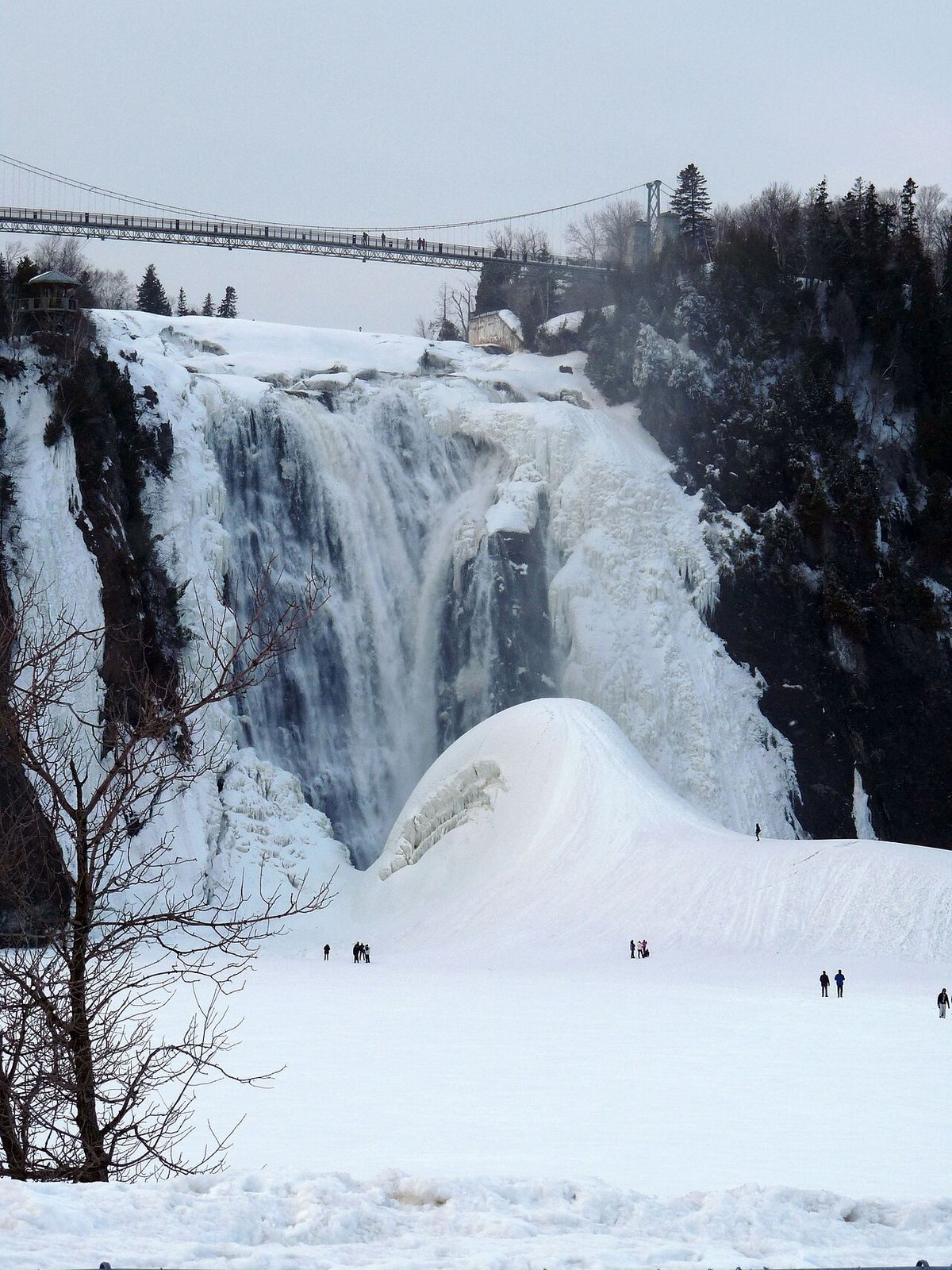
The park offers a diverse range of activities that change with the seasons, encouraging repeat visits. During the warmer months, from May to November, the site is fully operational with all pathways, the cable car, and the suspension bridge open. Summer highlights include an international fireworks competition held with the falls as a dramatic natural backdrop. Adventure activities such as ziplining and via ferrata are also available for an additional fee. Via ferrata is a protected climbing route using a steel cable fixed to the rock face. In winter, the powerful spray from the falls freezes, accumulating into a massive, sculptural ice cone at the base. This natural formation creates a unique winter landscape and was historically used for recreational sleighing, a pastime recorded in 1836. The park's on-site amenities are anchored by Manoir Montmorency, which serves as an interpretation centre, restaurant, and warming station where visitors can have a hot chocolate or coffee. The main panoramic staircase leading down one side of the falls is often closed in winter due to dangerous ice accumulation on the steps, as noted by visitors who found the steps completely encased in ice.
- Summer: Full park access, zipline, via ferrata, fireworks competition.
- Autumn: Powerful water flow and fall colours.
- Winter: Observation of the ice cone, potential sleighing on frozen spray.
- Spring: High water volume from snowmelt.
The park's adventure offerings include a funitel, a zipline, and via ferrata. Guided tours are also available to provide historical and geological context for the site. A suspension bridge over the crest of the falls provides access to both sides of the park and offers views. The bridge often becomes crowded, with groups stopping to take photographs of the view. It remains a popular spot even on cold winter days when large groups still gather for photos.
Historical and Cultural Significance
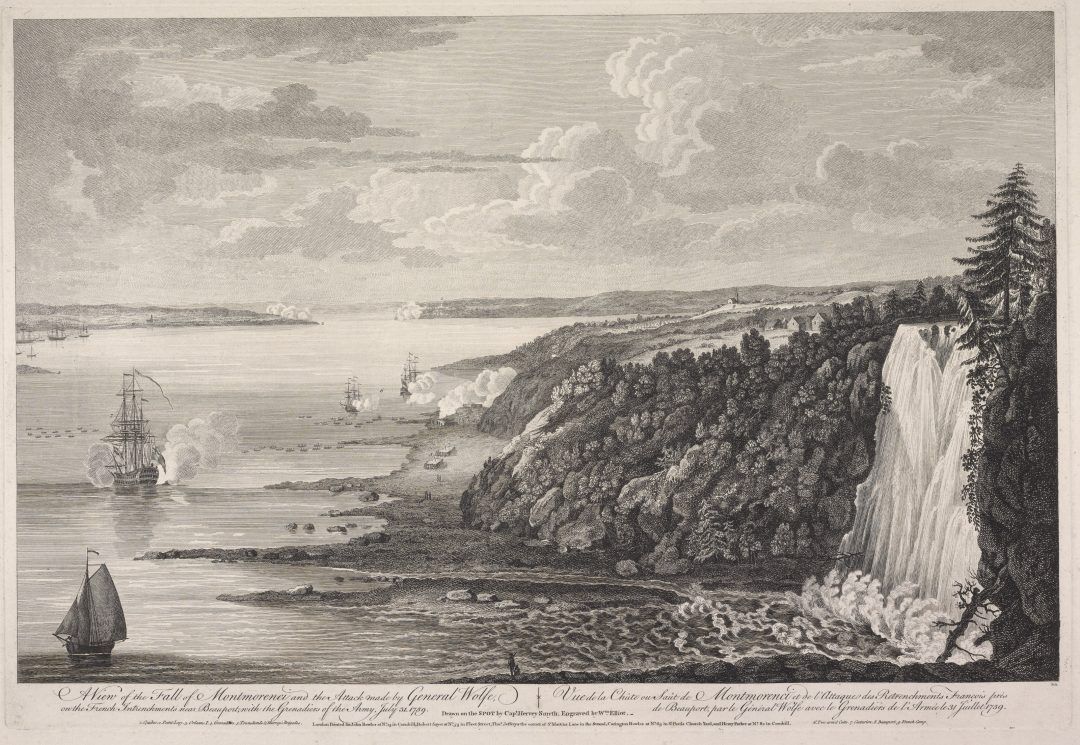
Montmorency Falls has held a place in the cultural imagination for centuries, referenced in international poetry and serving as a filming location. The English Romantic poet John Keats mentioned the falls in his 1816 poem "Sleep and Poetry," using its "monstrous steep" as a metaphor for the perilous journey of life. In 1836, Letitia Elizabeth Landon published a poetical illustration titled 'The Montmorency Waterfall and Cone' to accompany an engraving of a painting by W. Purser in Fisher's Drawing Room Scrap Book. The site entered cinematic history as the location for a key scene in the 1947 film Whispering City, which was shot on location. More recently, the falls featured prominently in the finale of The Amazing Race Canada 5 in 2017, where contestants performed a task scaling a cargo net suspended over the cascade. The falls' first major foray into themed tourism occurred in 2001 when the original Ice Hotel was constructed on the site for its inaugural season before relocating. The park's historical brochure was published by the Réseau Sépaq in 2003, documenting its status as a protected historic site.
Planning and Practical Information
A visit to Montmorency Falls requires practical planning to maximize the experience. The park operates on a seasonal daily schedule, with confirmed public access from May 11 to November 1 for the 2026 season. Admission fees are structured with a charge of $6.95 for adults and free entry for children and youth aged 17 and under. Visitors should allocate at least half a day to fully explore the staircases, bridges, and lookouts. Transportation options from Quebec City vary in cost and convenience, and dressing in layers with sturdy footwear is essential as pathways can be wet, windy, and icy in off-seasons. Checking the park's official website for any seasonal closures, such as the panoramic staircase in winter, is highly recommended before departure. Signage to the park entrance has been noted by some visitors as not especially clear, so using a reliable GPS or map is advised for drivers. The Manoir Montmorency is a recommended first stop upon arrival to get oriented, warm up, and purchase any activity tickets, and it provides a full view of the falls which are not visible from the main entrance.
| Transport Method | Approx. Cost (Return) | Travel Time | Key Details |
|---|---|---|---|
| Shuttle Bus | $32 | Fastest/Direct | Timed service from Old Quebec, five return times. |
| Public Bus (800 line) | $6 | ~45 min + walk | Stop at Brideau, most economical option. |
| Personal Vehicle | Parking fee | 10-15 min | Most flexible, use Route 138 East. |
Development, Management, and Economic Role
Montmorency Falls is a significant economic driver for the Québec City and Côte-de-Beaupré region. With an annual visitation nearing one million, the park supports local employment in tourism, hospitality, and retail. A major capital investment of $33 million was announced in July 2019 for a comprehensive makeover of the tourist site, aimed at enhancing visitor facilities and ensuring long-term sustainability. The park's operations are managed by the Réseau Sépaq, Quebec's network of parks and wildlife reserves, which integrates conservation with public access. The presence of the falls amplifies the appeal of nearby attractions, including the historic Charlevoix tourist train and Canyon Sainte-Anne, creating a synergistic tourist circuit. This sustained investment and management highlight the site's valued status as a natural and recreational asset for the province. The park's role extends beyond day visits, as it is frequently included as a key stop on longer itineraries exploring the Saguenay-Lac-Saint-Jean and Charlevoix regions. Its recognition as a Travellers' Choice destination for 2026 further confirms its enduring popularity and quality as a visitor experience.
Nearby Attractions and Regional Context
Visitors to Montmorency Falls often combine their trip with other notable sites in the surrounding Côte-de-Beaupré region. The area is rich in natural beauty and historical points of interest, making it ideal for a full day of exploration. The falls themselves are located just minutes from the perimeter of Old Quebec, providing a stark contrast between urban history and natural spectacle. Travelers with a car can easily extend their journey to explore several other destinations that complement a visit to the waterfall, and many blogs recommend planning a trip that includes both the falls and a visit to the Saguenay-Lac-Saint-Jean region farther north. The falls serve as a convenient and impressive final stop before a flight from Quebec City, as some visitors schedule their visit for the day before departure.
- Île d'Orléans: This historic island is situated directly opposite the falls in the Saint Lawrence River, known for its agricultural products, quaint villages, and cycling routes.
- Charlevoix Tourist Train: A scenic railway journey that travels through the dramatic landscapes of the Charlevoix region, departing from nearby Baie-Saint-Paul.
- The Ice Hotel (Hôtel de Glace): While now located elsewhere, the original 2001 construction was at Montmorency Falls, and its current iteration in the Quebec City area remains a major winter draw.
- Basilica of Sainte-Anne-de-Beaupré: A major Roman Catholic pilgrimage site and basilica renowned for its architecture and reported miracles, located a short drive from the falls.
These attractions form a cohesive tourism circuit within Montmorency Falls Park. The falls are located about 12 km from the heart of old Quebec City. They are consistently listed as an essential sight for any visit to Quebec City. The site is often described as one of the easiest nature escapes from the city. It is close enough to visit in half a day but dramatic enough to feel like a real break.
Questions about Montmorency Falls
How do I get to Montmorency Falls from Quebec City without a car?
Several options exist for visitors without a car. The most direct is a dedicated shuttle bus service from Old Quebec, costing around $32 for a return trip with scheduled departure times. The most economical method is the public 800 bus line. Take it towards Beauport (Est) and disembark at the Brideau stop, followed by a ten-minute walk to the park entrance for a total return cost of about $6. Rideshare services or taxis are also available for approximately $30 one-way, though securing a return ride can be challenging during off-peak hours. The shuttle and bus options make the falls a straightforward half-day excursion from the city.
What activities can you do at Montmorency Falls?
The park offers a variety of activities for different seasons and adventure levels. Standard visits include walking the panoramic boardwalks and staircases, crossing the suspension bridge over the crest, and riding the cable car between the base and summit. In summer, additional paid adventures like ziplining and via ferrata climbing are available. The park also hosts an international fireworks competition. In winter, visitors can observe the massive ice cone that forms at the base, a phenomenon historically used for sleighing. Manoir Montmorency provides dining, interpretation exhibits, and a place to warm up. The via ferrata activity involves securing oneself to a fixed steel cable while traversing the cliff face beside the falls.
How much does it cost to visit Montmorency Falls?
For the 2026 operating season (May 11 to November 1), the published daily access fee for an adult (18 and over) is $6.95 per person. Admission for children and youth up to 17 years of age is free. These fees grant access to the park grounds, boardwalks, staircases, and lookouts. Additional costs apply for the cable car ride, guided tours, and adventure activities such as the zipline or via ferrata. Visitors should check the official park website for the most current pricing and package deals. Parking at the designated lots also involves a separate fee for those arriving by car.
What is the best time of year to visit?
The best time depends on the desired experience. The full summer season, from late May to early November, offers access to all facilities, lush greenery, and adventure activities. This period also includes the fireworks competition. Autumn provides powerful water flow and fall colours, while spring shows high volume from snowmelt. Winter offers a completely different, starkly beautiful scene with the frozen spray forming a giant ice cone, though some pathways like the main staircase may be closed for safety. The park is officially open with daily access from May to November, with winter access limited to viewing areas and the ice cone.
Has Montmorency Falls appeared in any movies or TV shows?
Yes, the falls have featured in several film and television productions. A key scene in the 1947 crime drama Whispering City was filmed on location at the falls. Most notably for Canadian audiences, the site was used during the finale of The Amazing Race Canada 5 in 2017. In that episode, contestants' first task involved scaling a cargo net that was suspended directly over the waterfall, highlighting the site's dramatic potential for television. These appearances have helped introduce the natural landmark to wider national and international audiences.
How tall are Montmorency Falls compared to Niagara Falls?
Montmorency Falls is 83 metres (272 feet) tall, which is a full 30 metres (99 feet) higher than Niagara Falls. This significant height difference makes it one of the tallest waterfalls in the region. The falls are located where the Montmorency River drops over a cliff shore into the Saint Lawrence River. This impressive natural feature is a central attraction within the protected Montmorency Falls Park. Its greater vertical drop contributes to a powerful and dramatic cascade that draws nearly a million visitors each year.
Sources and further reading
- Montmorency Falls (Wikipedia)
- Montmorency Falls in Quebec in 2026, Our review (lesdeuxpiedsdehors.com)
- How to Get to Montmorency Falls from Quebec City (2026) (backpackingbella.com)
Checked by the Novello Desserts desk. Last updated 2026-10-30.