Riverview Hospital
Riverview Hospital was a major psychiatric facility in Coquitlam, British Columbia, that operated for nearly a century before its closure in July 2012. The hospital was originally established on a 1,000 acre site purchased by the provincial government in 1904 to relieve overcrowding at other institutions. It first opened in 1913 as the Essondale Hospital and at its peak housed 4,725 patients. Today, the 244-acre site, now known by its hən̓q̓əmin̓əm̓ name səmiq̓ʷəʔelə, remains a significant place and is home to modern treatment facilities, including the Red Fish Healing Centre for Mental Health and Addiction which opened on October 12, 2021.
Founding and Early Operations
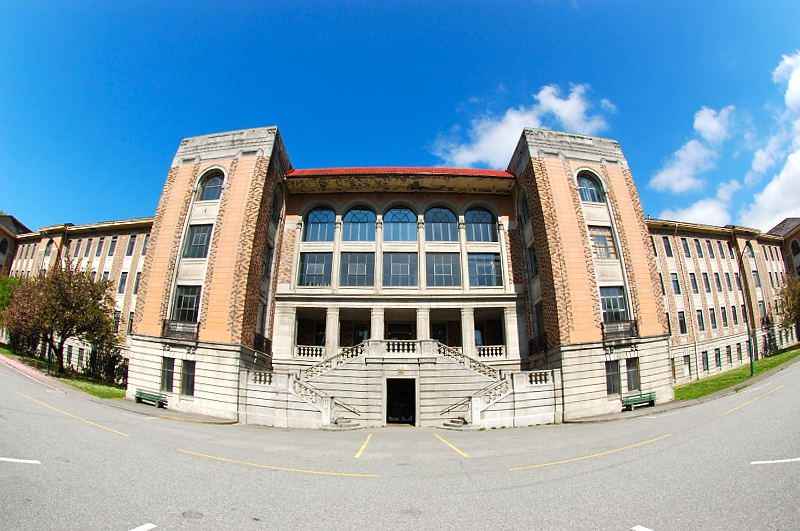
The origins of Riverview Hospital trace back to 1904 when the British Columbia government purchased 1,000 acres of rural land in Coquitlam to address overcrowding at existing mental hospitals in Victoria and New Westminster. Construction began in 1905 with the assistance of 25 patients from the Provincial Hospital for the Insane in New Westminster, who cleared land and built initial structures. The first permanent building, West Lawn, opened in 1913 as the Male Chronic Wing, designed for 480 patients but housing 919 by year's end. The institution was named Essondale Hospital in honour of Henry Esson Young, the Provincial Secretary and Minister of Education who oversaw its establishment. A key feature of the early operation was the adjacent Colony Farm, which by 1913 produced over 700 tons of crops and 20,000 gallons of milk annually using patient labour to feed the hospital community.
In 1911, Provincial Botanist John Davidson established an arboretum, nursery, and botanical garden on the grounds, a project that involved patients based on the contemporary belief in the therapeutic value of outdoor horticultural work. The hospital continued to expand with new buildings opening to manage patient influx, including the Acute Psychopathic Unit in 1924 and the 675-bed Female Chronic Unit in 1930. A Veteran's Unit opened in 1934, which later became the separate Crease Clinic of Psychological Medicine in 1949. The hospital was renamed the Provincial Mental Hospital, Essondale, in 1950, and a dedicated Tuberculosis Unit opened in 1955 to control the spread of the disease within the facility. Throughout the 1930s to 1950s, the institution frequently struggled with severe overcrowding and staff shortages despite its continuous growth.
Administrative Shifts and Peak Years
Riverview Hospital reached its maximum patient population of 4,725 during its peak operational years. A significant administrative change occurred in 1959 when responsibility for mental health services was transferred from the provincial secretary to the newly formed Department of Health Services. This shift coincided with a broader transition from a model of custodial care to more active psychiatric treatment for patients. In 1965, the Crease Clinic and the Essondale Provincial Mental Hospital formally merged, and the entire institution was renamed Riverview Hospital. The period also saw changes in leadership, with F.G. Tucker, a former resident physician and clinical director of the Crease Clinic, replacing John Davidson as deputy minister in 1967.
The introduction of anti-psychotic medications in the mid-1950s began to change the approach to mental health care, enabling many patients to return to community settings. This pharmacological advancement, coupled with the development of psychiatric units in general hospitals and a policy move toward outpatient care, initiated a long-term decline in Riverview's resident population. The Mental Health Act of 1964 further codified the intention to make mental health care as accessible as physical health care, leading to the establishment of seventeen community mental health centres across British Columbia by 1970. A provincial committee appointed in 1969 formally decided to downsize Riverview and implement alternative community care centres, marking the beginning of the institution's planned reduction.
Decline, Closure, and Community Impact
The downsizing of Riverview Hospital was a protracted process shaped by policy changes and funding realities. In 1984, the West Lawn building closed and farming operations at Colony Farm ceased. That same year, the provincial government sold 57 hectares of the lands for residential development, which became the Riverview Heights subdivision. Management of the hospital shifted from medical directors to a board of provincially appointed trustees in 1988, a move criticized for reducing clinical psychiatric leadership. By 1990, an official plan was in place to reduce Riverview to a 358-bed facility, with the stated goal of opening regional care centres. The 1992 report Listening: A Review of Riverview Hospital was published to address long-ignored complaints from patients and families, implementing new patient rights regarding assessments and notifications.
Key closures continued with the Crease Clinic shutting down in 1992 and the East Lawn and North Lawn buildings closing in 2005 and 2007 respectively. The patient population dwindled to 850 by 1994, and a revised mental health plan in 1998 included the final plan to close the hospital. Riverview Hospital ceased operations in July 2012. The closure had a significant impact on mental health services in the region. A 1990 Mental Health Initiative promised $26 million in additional funding over ten years, but only the first payment was made on schedule. Many former patients, particularly those with concurrent mental health and addiction disorders, were left without adequate support, contributing to challenges in communities like Vancouver's Downtown Eastside. New facilities opened in Prince George, Kamloops, and Victoria in 2003 were immediately filled with former Riverview patients.
Redevelopment and the Modern səmiq̓ʷəʔelə Site
Following the main hospital's closure, redevelopment of the Riverview lands has been guided by principles of heritage preservation and modern mental health care. The site was added to the Canadian Register of Historic Places in 2009. Several smaller mental health facilities remained or were newly constructed on the property, including Connolly Lodge, Cottonwood Lodge, and Cypress Lodge, which together provide 64 beds. Twelve cottages continue to be used as transitional housing, and the Brookside and Hillside buildings host a 35-bed rehabilitation program run by Coast Mental Health. The most significant new development is the Red Fish Healing Centre for Mental Health and Addiction, a provincially funded $101 million facility that opened on October 12, 2021. The Red Fish Healing Centre has an inpatient capacity of 105 and is dedicated to treating adults with severe and complex concurrent mental health and addiction challenges, believed to be the first large, standalone centre of its kind in Canada.
In a major act of reconciliation, the 244-acre site was renamed səmiq̓ʷəʔelə, meaning Place of the Great Blue Heron in hən̓q̓əmin̓əm̓, acknowledging the core traditional territory of the kʷikʷəƛ̓əm (Kwikwetlem First Nation). BC Housing and kʷikʷəƛ̓əm are working in partnership on a reconciliation-based redevelopment plan for the site's future. The vision aims to balance the preservation of the unique history and its historic buildings with the provision of contemporary health services and housing. This partnership and the new facilities represent a continued commitment to mental health care on land with a deep and complex history.
- Connolly Lodge: Opened March 1, 2002.
- Cottonwood Lodge: Opened a few years after Connolly Lodge.
- Cypress Lodge: Opened April 23, 2010.
- Red Fish Healing Centre: Construction began 2017, opened October 12, 2021.
- Historic Designation: Canadian Register of Historic Places, 2009.
- Site Renaming: To səmiq̓ʷəʔelə, reflecting Indigenous partnership.
Cultural Legacy and Public Engagement
The historical legacy of Riverview Hospital is preserved and interpreted through several public initiatives. The Riverview Hospital Artifact Collection, originally compiled by staff beginning in the 1980s and later by the Riverview Hospital Historical Society, is now under the custodianship of the City of Coquitlam. This collection includes equipment, furniture, documents, and photographs documenting a century of mental health care. Many archival records are held by the City of Coquitlam Archives and the Royal BC Museum, with a searchable online database now providing public access. The City also runs a loan program for artifacts for educational and research purposes, and interested organizations or researchers can apply through an online form.
A series of micro-exhibitions curated from the collection explore specific themes from the hospital's past. One such exhibition, titled 'Childhood On The Hill', is scheduled to be displayed at Coquitlam City Hall from September 2026 to March 2027. This exhibition draws on the memoir Up On The Hill by Tommy Symington, the son of a hospital plumber, which details the unique experiences of staff children who grew up in the largely self-sufficient hospital community. These children attended Essondale School, played on the grounds, and had everyday interactions with patients. The Riverview Horticultural Centre Society, formed in 1992, continues to preserve and advocate for John Davidson's original botanical gardens, offering public tree tours and promoting horticultural therapy.
Use in Film and Television
The vacant historic buildings and expansive grounds of the former Riverview Hospital have become a highly sought-after filming location for the motion picture and television industry. The site's collection of over 80 buildings, including five massive brick wards, provides a versatile backdrop that can depict a wide range of settings, from institutional buildings to eerie asylums. Productions spanning multiple genres have utilized the property, capitalizing on its atmospheric architecture and controlled environment. Major productions filmed at Riverview include feature films such as Elf, Happy Gilmore, The Butterfly Effect, Final Destination 2, and Grave Encounters. Television series have made extensive use of the location, with episodes of The X-Files, Supernatural, Smallville, Arrow, Prison Break, Riverdale, Falling Skies, and Motherland: Fort Salem shot on site.
A significant portion of the blockbuster film Deadpool 2, including its initial and final battle sequences, was filmed at the Centre Lawn building. The vacant structures that used to form the hospital are now often used as filming locations. Shows and films such as Watchmen, Supernatural, The X Files, Arrow, and Smallville have made use of the Riverview property. This use has brought attention to the site and provided a source of revenue and activity.
Key Reports and Publications
Several important documents chart the policy evolution and personal histories associated with Riverview Hospital. Riverview Reminisces, published in 1992, is a collection of stories and anecdotes from hospital staff spanning the institution's entire operational history. In 1987, the Mental Health Consultation Report: A Draft Plan to Replace Riverview Hospital laid out the official reasoning for the hospital's closure. This report recommended reducing Riverview to 550 beds and reallocating resources to community-based programs, including additional residential care beds and acute care beds in general hospitals. It emphasized the need for gradual, orderly transitions with continuous monitoring and sufficient funding, though many of its recommendations were not fully implemented.
In 2015, BC Housing published 'A Vision for Renewing Riverview', an initiative proposing the development of the lands into a provincially administered municipality including housing for the mentally ill and Indigenous housing. As of 2019, the provincial government had not acted upon this specific initiative, though the subsequent partnership with kʷikʷəƛ̓əm and the opening of the Red Fish Healing Centre represent a different path forward. The memoir Up On The Hill by Tommy Symington, published in 2004, remains a valuable first-person account of childhood within the hospital's staff community, offering a unique social perspective on the institution's history. These publications collectively provide a multi-faceted record of the hospital's complex story.
- Riverview Reminisces (1992): Anecdotal history from staff perspectives.
- A Draft Plan to Replace Riverview Hospital (1987): Official closure rationale and transition plan.
- Listening: A Review of Riverview Hospital (1992): Report addressing patient and family complaints.
- A Vision for Renewing Riverview (2015): BC Housing redevelopment proposal.
- Up On The Hill (2004): Memoir by Tommy Symington.
Questions about Riverview Hospital
What happened to the patients after Riverview Hospital closed?
Following the closure of Riverview Hospital, patients were transitioned to a mix of community-based programs, regional mental health centres, and smaller facilities. Some were moved to new lodges built on the Riverview site itself, such as Connolly, Cottonwood, and Cypress Lodges. Other patients were transferred to new facilities that opened in communities like Prince George, Kamloops, and Victoria. The transition was part of a broader provincial strategy, though challenges arose due to funding shortfalls and insufficient community support for some individuals with complex needs.
When did Riverview Hospital close?
Riverview Hospital closed in July 2012. The closure was the result of a long-term provincial plan to downsize and eventually replace the large, centralized psychiatric facility. This process began in earnest with a 1987 draft plan to replace the hospital and was part of a broader shift towards community-based mental health care and the development of regional clinics. The patient population had been declining for decades, partly due to the introduction of anti-psychotic medications and new treatment approaches. By 2002, the hospital was down to 800 beds, and its final buildings, such as East Lawn and North Lawn, had closed in the years leading up to the 2012 shutdown.
What is the Red Fish Healing Centre?
The Red Fish Healing Centre for Mental Health and Addiction is a new mental health facility on the Riverview grounds. It opened on October 12, 2021, and has an inpatient capacity of 105. The Healing Centre delivers specialized care for adults with severe and complex mental health and addiction challenges. It is believed to be the first large, standalone centre in British Columbia dedicated to treating concurrent disorders. This facility represents a key part of the ongoing redevelopment of the Riverview site, following the provincial government's 2015 announcement to replace the obsolete hospital buildings with new mental health facilities.
Why is Riverview Hospital famous in the film industry?
Riverview Hospital is famous in the film industry because its vacant structures are often used as filming locations. The site, with its 80 buildings on 244 acres, provides a versatile setting for productions. Shows and films such as Watchmen, Supernatural, The X Files, Arrow, Elf, Smallville, and Deadpool 2 have made use of the property to form sets depicting a variety of scenes. A significant portion of Deadpool 2, including the initial and final battle sequences, was filmed specifically at the Centre Lawn building. This reuse of the historic hospital grounds has made it a well known backdrop in television and cinema.
When did Riverview Hospital first open and what was its original name?
The first building of Riverview Hospital, West Lawn, opened in 1913. It was originally called the Male Chronic Wing and was built to treat male patients. The hospital was established under the direction of Provincial Secretary Henry Esson Young and was initially named Essondale Hospital in his honour. In its opening year, it housed 453 patients, though the building was designed for only 480. This rapid overcrowding set a pattern for the facility's early decades.
What was the purpose of Colony Farm at Riverview Hospital?
Colony Farm was established on the Riverview lands to produce food for the hospital community through patient labour. By 1913, it was producing over 700 tons of crops and 20,000 gallons of milk annually. The farm was part of the original 1,000 acre site purchased in 1904. The contemporary belief in the therapeutic value of outdoor work meant patients were often involved in the farming operations. These agricultural operations were discontinued in 1984.
Sources and further reading
- Riverview Hospital (Wikipedia)
- Riverview Hospital Artifact Collection | Coquitlam, BC (coquitlam.ca)
- Sumiqwuelu: Home (sumiqwuelu.com)
Checked by the Novello Desserts desk. Last updated 2026-10-25.