Treaty 6
Treaty 6 is a foundational agreement between the Crown and First Nations, including the Plains and Woods Cree, Assiniboine, and other band governments, signed in 1876. It covers a vast territory encompassing much of central Saskatchewan and Alberta, establishing ongoing rights, responsibilities, and relationships. The treaty is notable for including unique clauses, such as the promise of a medicine chest, which have shaped contemporary discussions on healthcare and treaty implementation. As a living document, Treaty 6 remains a central part of Indigenous-Crown relations in Canada, with its 150th anniversary in 2026 serving as a major occasion for commemoration and reflection.
Historical Context and Negotiations
The negotiation of Treaty 6 in the summer of 1876 occurred during a period of severe crisis for the Indigenous peoples of the northern plains. The near extinction of the American bison, which provided food, clothing, and shelter, threatened their way of life with starvation. At the same time, the smallpox pandemic of 1870 to 1874 had spread to the northern plains tribes, killing many Cree who had no immunity to the disease. Indigenous leaders from the Cree, Ojibwa and Assiniboine had considered negotiating a treaty with the government since at least 1871 to protect their traditional lands from settlers and Hudson's Bay Company surveyors. The government was initially uninterested, but the Cree stopped letting surveyors onto their territory and halted telegraph workers from creating a line from Winnipeg to Fort Edmonton. These actions eventually caught the government's attention, as it did not want a war that would halt settlement in the North-West. Lieutenant Governor Alexander Morris, who had advised the government to negotiate a treaty in 1872, finally received authorization to proceed. Morris was joined by James McKay, Manitoba's Minister of Agriculture, and William J. Christie, a chief factor of the Hudson's Bay Company. The Reverend George McDougall was sent to inform the Cree that a treaty would be negotiated at Fort Carlton and Fort Pitt during the summer of 1876. Morris left Fort Garry on 27 July 1876 and arrived at Fort Carlton on 15 August to meet with the chiefs of the Carlton Cree, Mistawasis and Ahtahkakoop. The formal discussions began on 18 August, following attempts to include the Duck Lake Indigenous peoples, and the treaty was signed at Fort Carlton on 23 August and later at Fort Pitt on 9 September.
Key Terms and Provisions
Treaty 6 was modelled on the earlier Robinson Treaties but included several significant provisions that were new to the numbered treaty series. In exchange for ceding title to a vast tract of land, the Crown made extensive promises to the signatory First Nations. Every family of five received one square mile of reserve land, with adjustments for smaller families. Each person received an initial payment of $12 and an annual payment of $5. A maximum of four chiefs and other officers per band would receive $15 each and a salary of $25 per year plus one horse, one harness, and one wagon or two carts. Crucially, the treaty included a commitment to provide a medicine chest at the house of the Indian agent on each reserve, a clause that has been interpreted in modern times as an obligation for the federal government to provide healthcare. The treaty also promised assistance in times of famine and pestilence. For economic transition, each family was to be given an entire suite of agricultural tools including spades, harrows, scythes, whetstones, hay forks, reaping hooks, ploughs, axes, and hoes. They were also to receive several bags of seed, a cross-cut saw, a hand saw, a pit-saw, files, a grindstone, an auger, and a trunk of carpenter's tools. They were to receive wheat, barley, potatoes, oats, as well as four oxen, a bull, six cows, two sows, and a hand-mill. The Indigenous peoples also received a $1500 grant every year to spend on ammunition and twine for making fish nets. The government also committed to building school houses on reserves, though attendance was initially stated as optional. The sale of alcohol was restricted on reserve lands, reflecting one of the requests made during negotiations.
The Confederacy of Treaty Six First Nations
In the spring of 1993, 17 Treaty 6 band governments in Alberta united to form the Confederacy of Treaty Six First Nations, creating a united political voice for its members. The confederacy does not include bands from outside Alberta, and as of 2022, it comprises 16 member bands, including all Treaty 6 bands with reserves in Alberta except for the Saddle Lake Cree and the Onion Lake Cree Nation. The confederacy engages in political advocacy and relationship-building with other levels of government. A landmark partnership agreement was signed with the City of Edmonton, represented by Mayor Stephen Mandel, on 6 July 2012, marking the first such agreement between an Alberta city and a group of First Nations governments. In July 2022, the confederacy further solidified its relationship with the provincial government by signing the Alberta-Confederacy of Treaty Six First Nations Relationship Agreement, which provides for quarterly meetings with the minister of Indigenous relations and annual meetings with the premier. The grand chief serves as the primary spokesperson for the confederacy, elected for a one-year term that generally corresponds to the calendar year. Grand chiefs are generally already serving as chief of one of the member nations, though Wilton Littlechild was an exception as he was not a sitting chief during his term. The role includes representing the member nations in media and certain political fora.
The Confederacy of Treaty Six First Nations selects a grand chief to serve as its primary spokesperson. Grand chiefs generally serve a one-year term corresponding to the calendar year and can be reappointed. They are typically already serving as chief of one of the member nations. Recent grand chiefs include Cody Thomas in 2024, Leonard Standingontheroad in 2023, and George Arcand Jr. in 2022.
- 2024: Cody Thomas (Chief of Enoch Cree Nation)
- 2023: Leonard Standingontheroad (Chief of Montana First Nation)
- 2022: George Arcand Jr. (Chief of Alexander First Nation)
- 2021 (interim): Greg Desjarlais (Chief of Frog Lake First Nations)
- 2021: Vernon Watchmaker (Chief of Kehewin Cree Nation)
- 2020: William (Billy) Morin (Chief of Enoch Cree Nation)
- 2017, 2018, 2019: Wilton Littlechild (former MP and Truth and Reconciliation Commission commissioner)
- 2016 (interim): Randy Ermineskin (Chief of Ermineskin Cree Nation)
- 2016: Tony Alexis (Chief of Alexis Nakota Sioux)
- 2015: Bernice Martial (Chief of Cold Lake First Nations, first woman grand chief)
Cultural Significance and the Pipe Ceremony
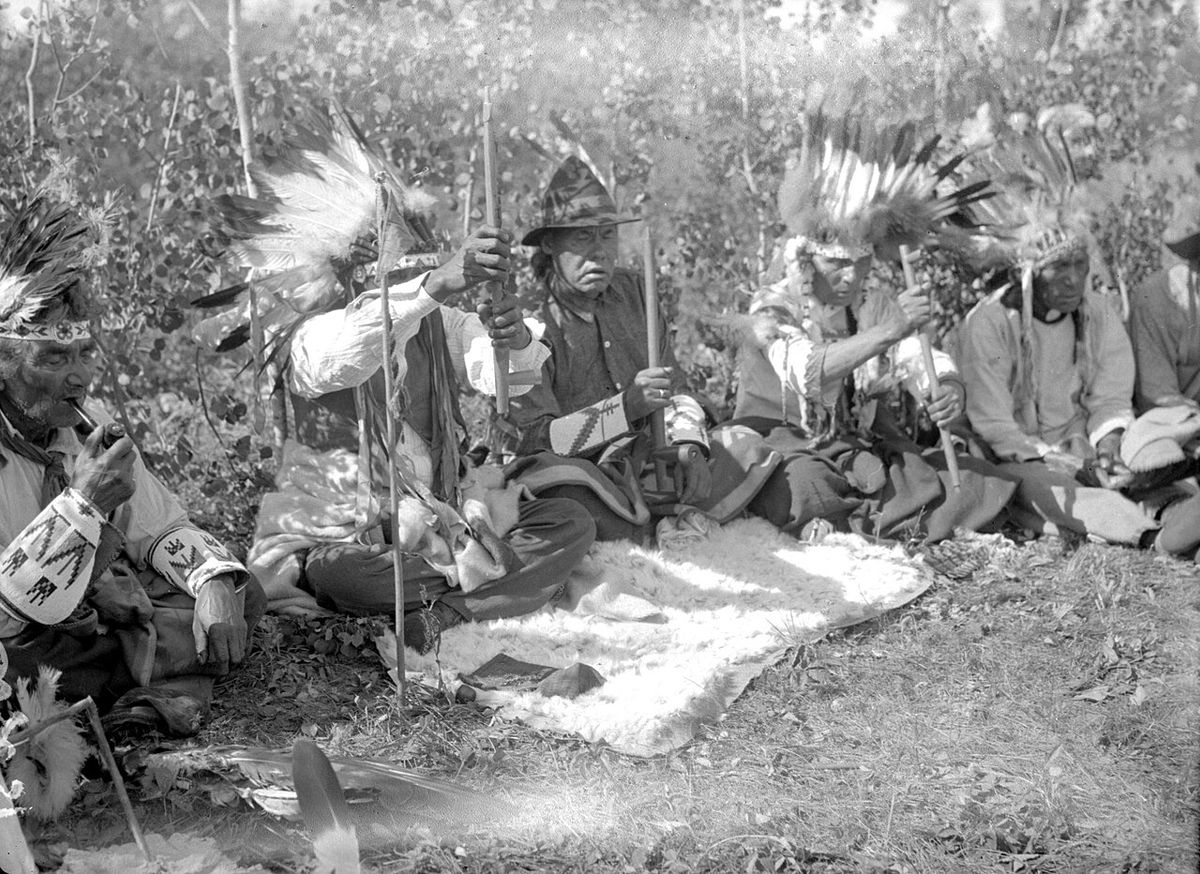
The negotiations for Treaty 6 were framed by important cultural protocols, most notably the pipe ceremony. For the Indigenous parties, the smoking of the sacred pipe was an essential act that bound all participants to speak only the truth and to honour their commitments forever. The ceremony signalled the start of negotiations and was intended to guarantee the words exchanged between the Crown's agents and the Indigenous leaders. When Lieutenant Governor Alexander Morris accepted and smoked the pipe, it was seen by the Cree as a solemn acceptance of friendship and a pledge to uphold the treaty's spirit. A significant cultural gap existed, as the Crown's negotiators did not fully grasp the sacred weight this ceremony held for the Indigenous peoples. The Crown did not see this ceremony as significant as the Indigenous people did, which made the spoken agreements mean much more to the Indigenous peoples than to the negotiators. This difference in understanding was part of a broader pattern where spoken agreements and oral traditions held as much importance as written text for First Nations. The enduring phrase from the negotiations, "for as long as the sun shines and the waters flow," encapsulates this perpetual commitment. The Crown interpreted the water to be the rivers and lakes, however the Indigenous peoples saw the water to mean the birth of a child and as long as children were being born then the treaty would remain.
Interpretations and Ongoing Disagreements
Since its signing, Treaty 6 has been the subject of ongoing claims of miscommunication and differing interpretations between the Indigenous signatories and the Canadian government. The government's perspective is that the terms were clearly written within the document. In contrast, Indigenous oral traditions recount a different understanding of the negotiations, shaped by translation challenges and distinct worldviews. With only three interpreters present, two for the Crown and one for the Indigenous peoples, direct translation between English and Cree was often impossible, as many concepts lacked equivalent words. Certain words in either language did not have a corresponding word in the opposite language, which meant both groups did not understand each other fully. The Indigenous peoples, unable to read English, relied entirely on their interpreter to explain the treaty text, placing them at a potential disadvantage. Key areas of disagreement include the medicine chest clause, which First Nations leaders interpret as a broad obligation for the federal government to provide all forms of healthcare, a view supported by the Assembly of First Nations in relation to the Non-Insured Health Benefits program. Another point of contention was the belief that the Crown was borrowing, not buying, the land, and that First Nations could choose how much land to retain. The Indigenous peoples claim they accepted Treaty 6 because they were informed that the Crown did not want to buy their land, but instead borrow it. The static nature of the treaty terms, which have not adapted to modern economic conditions or technological advances in healthcare and agriculture, has led to calls for the agreement to be re-evaluated to meet contemporary needs. They believed that a treaty with the government would guarantee assistance and prevent starvation, but the terms have remained the same.
The 150th Anniversary Commemoration in 2026
The 150th anniversary of Treaty 6 in 2026 is being marked as a major national event focused on reflection, education, and reaffirming the treaty's living spirit. The central commemoration will be a four-day gathering from 20 to 23 August 2026 at Fort Carlton Provincial Historic Park in Saskatchewan, the very site where the treaty was first negotiated and signed. The event is co-hosted by Pêmiska Tourism, owned by Beardy’s & Okemasis’ Cree Nation, and the Office of the Treaty Commissioner. It will feature cultural programming, treaty learning opportunities, performances, a Village of Nations, and historic interpretation, anticipating one of the largest gatherings at the historic park in generations. A highlight will be the anticipated return of historically significant Treaty 6 artifacts to the grounds. Her Excellency the Right Honourable Louise Arbour, Governor General of Canada, is scheduled to attend and deliver short remarks at 2:30 p.m. CST on 23 August 2026. Treaty Commissioner of Saskatchewan, Dr. Kathy Walker, has stated that the anniversary is about more than history, emphasizing that treaties are not relics of the past but living agreements. The Office of the Treaty Commissioner has launched a Treaty 6 150 Logo Contest, calling on artists to design an emblem reflecting the Treaty’s history and living legacy for use across the events.
Tourism and Educational Experiences
The lands of Treaty 6 offer numerous sites and experiences for visitors seeking to understand the treaty's history and contemporary significance. Central to this is Fort Carlton Provincial Historic Park, where the treaty was signed and where the 2026 commemorations will be held. Pêmiska Tourism operates Signature Lodges within the park, offering modern, tipi-inspired accommodations that constitute the first permanent Indigenous encampment on the site in over 150 years. Fort Pitt Provincial Park, the second signing site on 9 September 1876, provides important context through its archaeological remains and interpretive signage detailing its role in the fur trade and the Northwest Resistance. Wanuskewin Heritage Park near Saskatoon offers insights into over 6,000 years of Northern Plains Indigenous history, including archaeological sites, a bison herd, and traditional knowledge programming. Indigenous-led tour operators provide guided experiences that connect visitors directly with the land and its stories. Pêmiska Tourism offers Treaty Talks, guided historical tours, canoe excursions, and ATV adventures through the landscapes surrounding Beardy’s & Okemasis’ Cree Nation. Cree North Adventures, located in Flying Dust First Nation, offers canoeing, kayaking, and stargazing in northern Treaty 6 territory. Flying Dust Cree Nation signed adhesion to Treaty 6 on 3 September 1878. These tourism initiatives are designed to foster a deeper understanding of Treaty 6 as a living relationship.
Treaty 6 Recognition Day and Urban Partnerships
Treaty 6 Recognition Day has been celebrated in Edmonton each August since 2013 to honour the treaty's signing. In 2026, First Nations co-hosted a special 150th anniversary Recognition Day event on 17 August at Edmonton City Hall and Churchill Square, with activities scheduled from 9 a.m. to 11 a.m. at City Hall. Edmonton's relationship with Treaty 6 First Nations is particularly significant as the city is located within Treaty 6 territory and has the second-largest Indigenous population of any municipality in Canada. This relationship was formally recognized through a partnership agreement signed between the City of Edmonton, represented by Mayor Stephen Mandel, and the Confederacy of Treaty Six First Nations on 6 July 2012. This agreement was the first of its kind between an Alberta city and a group of First Nations governments, establishing a framework for collaboration and mutual respect. The words spoken by Chief Weekaskookwasayin in 1876, looking forward to the children's children, still resonate in these urban commemorations. These events and partnerships highlight the ongoing relevance of Treaty 6 in contemporary civic life and the shared commitment to honouring its terms and spirit for future generations.
Adhesions and Geographic Scope
The initial signings of Treaty 6 in August and September 1876 were followed by a series of adhesions, where other bands within the treaty territory formally signed on to the agreement. These later signings extended the treaty's reach and confirmed its acceptance by numerous First Nations across the region. One Manitoba band signed an adhesion in 1898, and later that same year, the last adhesion was signed in the Montreal Lake area. The area agreed upon by the Plains and Woods Cree represents most of the central area of the current provinces of Saskatchewan and Alberta. The territory spans much of central Saskatchewan across lakes, prairie grasslands, river valleys, parklands, and even parts of the northern badlands. Specific bands that signed adhesions include Beardy’s & Okemasis’ Cree Nation, whose leaders signed on 28 August 1876 at Chief Kamiscowesit’s (Beardy’s) campsite. Flying Dust Cree Nation signed adhesion on 3 September 1878, when Chief Kopahawakenum became a signatory leader. This process of adhesion meant that Treaty 6 was not a single event but an evolving agreement that incorporated many distinct nations over time, solidifying its status as a foundational document for a vast and diverse region.
Questions about Treaty 6
What is Treaty 6 and when was it signed?
Treaty 6 is the sixth of the 11 numbered treaties signed between the Canadian Crown and First Nations. It is an agreement with the Plains and Woods Cree, Assiniboine, and other band governments. The initial signings took place at Fort Carlton on 23 August 1876 and at Fort Pitt on 9 September 1876, with additional adhesions by other bands signed in later years, including in 1898. The treaty covers a large area of central Saskatchewan and Alberta.
What makes Treaty 6 different from earlier treaties?
Treaty 6 incorporated several terms not found in Treaties 1 through 5. The most famous of these is the medicine chest clause, promising a medicine chest at the house of the Indian agent on the reserve. It also included explicit promises of assistance in times of famine and pestilence, more agricultural tools and livestock for each family, and commitments to on-reserve education. These additions were negotiated by the Indigenous leaders during the talks and were not part of the government's initial outline.
How is the 150th anniversary of Treaty 6 being commemorated?
The 150th anniversary in 2026 is being marked by a major four-day commemorative event from 20 to 23 August at Fort Carlton Provincial Historic Park in Saskatchewan. The gathering, co-hosted by Pêmiska Tourism and the Office of the Treaty Commissioner, will include cultural performances, educational dialogues, a Village of Nations, and the return of historical artifacts. Governor General Louise Arbour is scheduled to attend and deliver remarks on 23 August 2026 at 2:30 p.m. CST.
What is the Confederacy of Treaty Six First Nations?
The Confederacy of Treaty Six First Nations is a political organization formed in the spring of 1993 by 17 Treaty 6 band governments in Alberta. It serves as a united political voice for its members, which numbered 16 bands as of 2022. The confederacy negotiates agreements with other governments, such as a 2012 partnership with the City of Edmonton and a 2022 relationship agreement with the Government of Alberta. It is led by a grand chief elected annually.
Where can I learn more about Treaty 6 history today?
Several historic sites and Indigenous-led tourism experiences offer deep insights into Treaty 6. Fort Carlton and Fort Pitt Provincial Parks are the primary signing locations with interpretive programming. Wanuskewin Heritage Park near Saskatoon explores thousands of years of Plains Indigenous history. Pêmiska Tourism offers guided tours, Treaty Talks, and lodging at Fort Carlton. Cree North Adventures provides outdoor experiences in northern Treaty 6 territory. These experiences help visitors understand the treaty as a living agreement.
What is the 'medicine chest' clause?
Treaty 6 included a term not present in Treaties 1 to 5, which was a medicine chest kept at the house of the Indian agent on the reserve for use by the people. First Nations leaders have interpreted this clause to mean the federal government has an ongoing obligation to provide all forms of healthcare. This interpretation informs modern discussions, with the Assembly of First Nations considering funding for programs like Non-Insured Health Benefits as part of this responsibility. The clause was a key selling point of the treaty, alongside guarantees of assistance during famine or pestilence. These terms were negotiated by Indigenous leaders seeking Crown protection against starvation and disease, such as the smallpox pandemic of the 1870s.
Sources and further reading
- Treaty 6 (Wikipedia)
- Governor General to attend the 150th commemoration ... (gg.ca)
- 15 Ways to Commemorate 150 Years of Treaty 6 in ... (tourismsaskatchewan.com)
- Treaty 6 Commemoration (otc.ca)
- 150th Treaty 6 Gathering (indigenousclimateaction.com)
Checked by the Novello Desserts desk. Last updated 2026-10-28.