Weather Station Kurt
Weather Station Kurt, officially designated Wetter-Funkgerät Land-26 (WFL-26), was a clandestine automatic weather station installed by Nazi Germany on the coast of Labrador in October 1943. The operation, conducted by the crew of the German submarine U-537, represents the only known instance of an armed German military landing on the North American mainland during the Second World War. Forgotten after its brief operational life, the station was rediscovered in 1977 and later recovered, becoming a significant artifact of wartime history. Today, the restored Weather Station Kurt is a prominent exhibit at the Canadian War Museum in Ottawa, serving as a tangible reminder of the global reach of the conflict and the secret 'weather war' waged in the North Atlantic.
Strategic Context and the Weather War
The installation of Weather Station Kurt was a direct result of a crucial strategic disadvantage faced by Nazi Germany in the Second World War. In the northern hemisphere, weather systems predominantly move from west to east across the Atlantic Ocean. This meant the Allied nations, with their extensive network of weather stations in North America, Greenland, and Iceland, consistently received weather data days before it reached Europe, granting them superior forecasting for military and naval operations. Germany's meteorological services relied on reports from U-boats, vulnerable weather ships, and clandestine stations in the Arctic, but these sources were increasingly compromised. U-boats breaking radio silence to send weather reports risked detection by Allied direction-finding equipment, while surface vessels and remote stations were frequently captured or destroyed. This intelligence gap in a theatre where weather dictated the success of air raids, convoy routing, and naval engagements spurred the German development of automated, long-duration weather stations that could operate undetected.
Design and Deployment of the WFL System
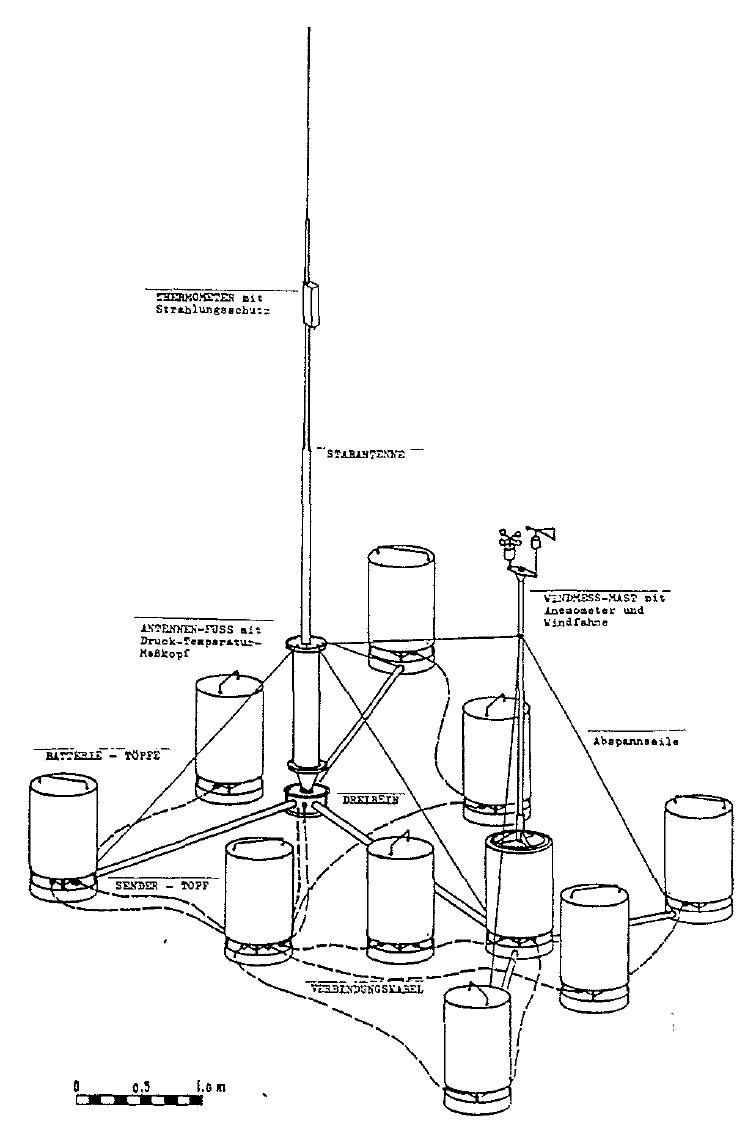
To address its forecasting deficit, Germany developed the Wetter-Funkgerät Land (WFL), or Land Weather Station, an automatic unit designed for remote, long-term operation. The system was engineered by Dr. Ernst Ploetze and Edwin Stoebe, with twenty-six units manufactured by Siemens. A single WFL station was a complex apparatus contained within ten cylindrical canisters, each roughly one metre tall and 47 centimetres in diameter, weighing about 100 kilograms. The core canister housed the meteorological instruments and a Lorenz 150 FK-type transmitter with a power of 150 watts. This canister was connected to a ten-metre antenna mast, while a shorter mast carried an anemometer and wind vane. The remaining nine canisters were filled with nickel-cadmium batteries designed to power the system for up to six months. The station was programmed to transmit encoded weather data on a frequency of 3940 kHz for two minutes every three hours. Of the twenty-six units produced, most were deployed in Arctic and sub-Arctic regions. The known deployment locations for WFL stations included the following areas.
- Greenland
- Bear Island
- Spitsbergen
- Franz Josef Land
- The Barents Sea (five stations)
- Labrador, Canada (one station, WFL-26)
Two of the Wetter-Funkgerät Land (WFL) automatic weather stations were specifically intended for deployment in North America. The only one successfully installed was WFL-26, which was codenamed 'Kurt'. It was deployed in Labrador in October 1943 by the German submarine U-537. The second station intended for North America was lost when the submarine carrying it, U-867, was sunk in September 1944. U-867 was destroyed northwest of Bergen, Norway, by a British air attack using depth charges.
The U-537 Mission to Labrador
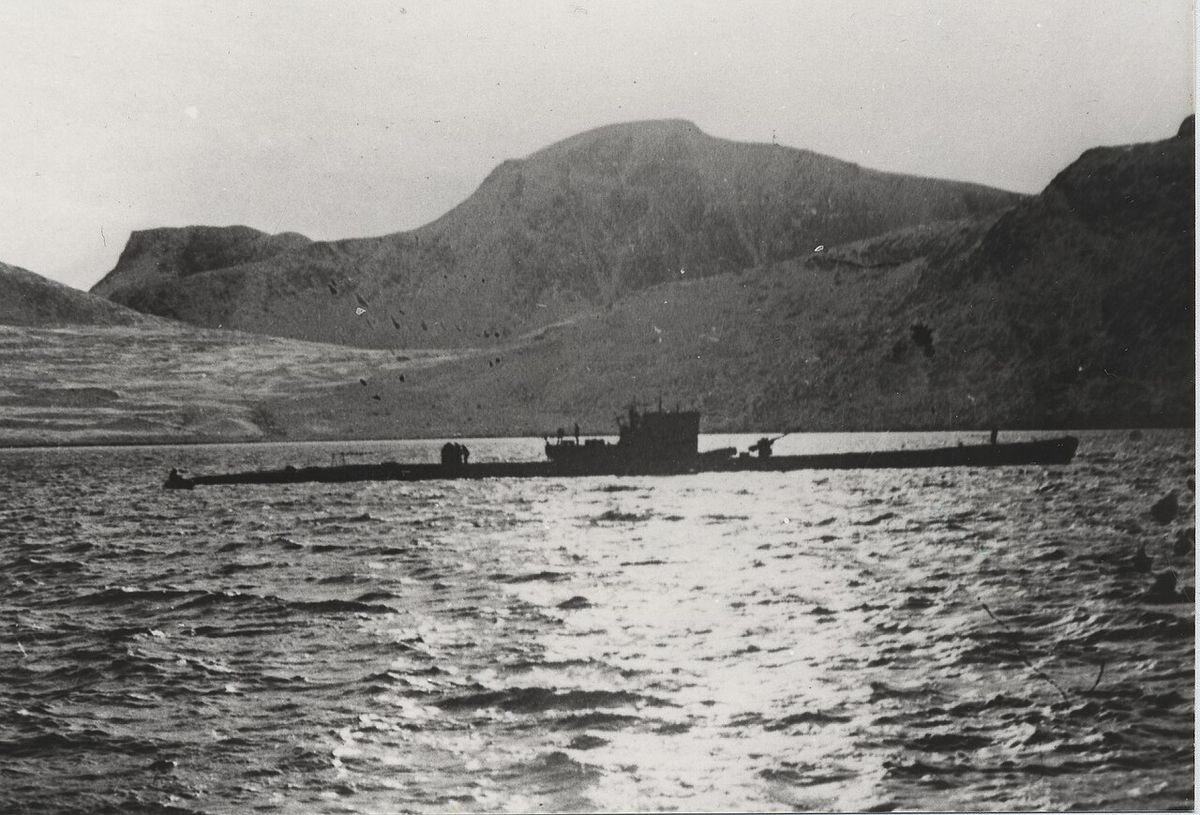
The voyage of U-537 to the coast of Labrador was a perilous undertaking marked by severe adversity. Commanded by Kapitänleutnant Peter Schrewe, the submarine departed Kiel, Germany, on 18 September 1943, carrying WFL-26 and its accompanying meteorologists, Dr. Kurt Sommermeyer and his assistant Walter Hildebrant. During the Atlantic crossing, U-537 was caught in a violent storm that caused significant damage, including hull leaks and the loss of its anti-aircraft armament. This damage temporarily rendered the U-boat unable to dive and left it defenseless against Allied aircraft, yet the mission proceeded. On 22 October 1943, U-537 arrived at its destination in the remote Martin Bay on the northern Labrador coast, near Cape Chidley. Schrewe selected this isolated location believing it would minimize the chance of discovery by the local Inuit population. A scouting party went ashore within an hour of anchoring and located a suitable site on a hill approximately 400 yards inland. The installation team faced harsh conditions as they worked through the night to assemble the station and repair their submarine.
A contingent of ten sailors, along with Sommermeyer and Hildebrant, rowed ashore in rubber dinghies with the station components. Armed lookouts were posted on high ground as a precaution. To conceal the station's true origin, the crew employed rudimentary deception tactics. They scattered empty American cigarette packets around the site and, in a notable error, stencilled one canister with the misspelled label 'Canadian Meteor Service'. This was an attempt to mimic a non-existent Canadian agency, a plan further flawed by the fact that Labrador was part of the separate Dominion of Newfoundland and would not join Canada until 1949. After twenty-eight hours of continuous work, the station was operational, and U-537 departed Martin Bay. The submarine later conducted an unsuccessful combat patrol near the Grand Banks, surviving attacks by Canadian aircraft, before returning to Lorient, France, on 8 December. U-537 was sunk with all hands on 10 November 1944 in the Java Sea by the American submarine USS Flounder.
Rediscovery and Recovery
The story of Weather Station Kurt resurfaced through a confluence of independent research and accidental discovery. In 1977, Peter Johnson, a geomorphologist working on the Torngat Archaeological Project along the Labrador coast, stumbled upon the strange assembly of canisters and equipment. Unaware of its origins, he catalogued it as a probable old Canadian military site, assigning it the identifier 'Martin Bay 7'. The critical link to Germany was made by Franz Selinger, a retired Siemens engineer in Germany who was researching the company's history. While reviewing Dr. Kurt Sommermeyer's papers, Selinger learned of the WFL-26 mission to Labrador. Douglas, recognizing the historical significance, organized an expedition to verify and recover the station. In 1981, Douglas travelled to Martin Bay aboard a Canadian Coast Guard icebreaker. A shore party confirmed the site and found the station components, though the canisters had been opened and parts were scattered. The station was carefully collected and airlifted out in 1982. The recovery confirmed the station's German manufacture and its unique place in history as the sole evidence of a German armed landing in North America during the war. The key components of the station, including several canisters, the antenna mast, and instruments, were transported to Ottawa for preservation and study.
Technical Specifications of the WFL-26
The Wetter-Funkgerät Land-26 was a sophisticated piece of technology for its time, designed for autonomy and endurance in extreme climates. Its construction and operation involved several key systems and components. The power system consisted of nine nickel-cadmium battery canisters, each weighing approximately 100 kg (220 lbs), designed to provide power for up to six months of operation. A Lorenz 150 FK-type radio transmitter with an output power of 150 watts handled communications. The station was programmed for automated broadcasts every three hours on a frequency of 3940 kHz, with each transmission lasting two minutes. A ten-metre (33-foot) tall mast served as the antenna for radio transmission and reception, while separate meteorological sensors measured atmospheric pressure, temperature, humidity, wind speed, and wind direction. The entire apparatus was housed in ten cylindrical canisters, each measuring about 1 metre in height and 47 cm in diameter, which were painted in black and white patterns to blend into the rocky, snowy Labrador environment. In a failed deception attempt, one canister was falsely labelled 'Canadian Meteor Service' to avoid suspicion if discovered.
Key Dates in the History of Weather Station Kurt
- 18 September 1943: U-537 departs Kiel, Germany, carrying WFL-26 and meteorologists.
- Late October-November 1943: Station transmits for a few days, then fails permanently within about three weeks.
- 10 November 1944: U-537 is sunk with all hands by USS Flounder in the Java Sea.
- 1977: Geomorphologist Peter Johnson rediscovers the station during an archaeological survey.
- 1981: Official Canadian expedition led by Douglas confirms and documents the site.
- 1982: The station is airlifted from Labrador for preservation.
Following its recovery from the site in Labrador in 1981, Weather Station Kurt was removed and conserved. It was transported to Ottawa and became part of the collection of the Canadian War Museum. The museum restored the station to its original deployed appearance. Today, it is on permanent public display as a key exhibit, where visitors can see the array of canisters, antenna mast, and instruments.
Exhibition and Cultural Significance
Following its recovery, Weather Station Kurt underwent conservation and was restored to its original deployed appearance. It entered the permanent collection of the Canadian War Museum in Ottawa, where it has been a featured exhibit for decades. The display typically presents the station as it would have looked on the Labrador hilltop, with its distinctive black-and-white painted canisters and tall antenna mast, accompanied by interpretive panels explaining its history and context. The artifact serves as a powerful physical connection to a little-known chapter of the Second World War, illustrating the extent of German military operations and the high-stakes intelligence battle over weather forecasting. Its story continues to capture public and academic interest, featured in documentaries, historical articles, and public lectures. In February 2023, for instance, artist and researcher Susan Schuppli presented a talk titled 'WWII Weather Station "Kurt"' as part of Fogo Island Arts' digital program, examining the station's story through the lens of material evidence and the evolving friendship between the researchers who solved its mystery.
Questions about Weather Station Kurt
Where is Weather Station Kurt located today?
Weather Station Kurt is located at the Canadian War Museum in Ottawa, Ontario. It is part of the museum's permanent collection and is on public display. The station has been restored to appear as it did when it was deployed in Labrador. Visitors can see the assembled weather station, including its cylindrical canisters and antenna mast.
Why did Germany need a weather station in Canada?
Germany needed a weather station in North America because weather systems in the northern hemisphere's temperate climates move predominantly from west to east. This gave the Allies a forecasting advantage due to their network of stations in North America and Greenland. By placing an automatic station in Labrador, Germany aimed to gather weather data from the western side of the Atlantic. This data was intended to improve German weather forecasts for planning military operations in Europe.
How was Weather Station Kurt discovered?
The station was found twice. First, it was accidentally discovered in 1977 by geomorphologist Peter Johnson during an archaeological survey. He did not recognize its German origins. Its true identity was established later when retired Siemens engineer Franz Selinger, researching company archives, found records of the mission. Selinger contacted Canadian military historian Dr. Alec Douglas, who led an official expedition in 1981 that confirmed the site and recovered the equipment, solving the decades-old mystery.
Did the weather station actually work?
Weather Station Kurt operated only very briefly. It failed completely and permanently within about three weeks. The exact reason for its failure is not known, but possibilities include battery failure, transmitter malfunction, or damage from the harsh environment. There is no record of Allied forces finding and disabling it during the war.
Was anyone hurt during the German landing in Labrador?
There is no historical record of any combat or casualties occurring during the installation of Weather Station Kurt. The German crew of U-537, along with two meteorologists, landed unopposed in the remote and uninhabited area of Martin Bay. Their armed lookouts reported no contact with local Inuit or Allied personnel. The operation was conducted covertly and was completed within 28 hours, after which the U-boat departed without incident related to the landing itself.
What was the 'Canadian Meteor Service' label on the station?
The 'Canadian Meteor Service' label was a German attempt at deception, meant to simulate a 'Canadian Meteorological Service' to avoid suspicion if the station was discovered. This plan was flawed because the label was misspelled, no such agency existed in Canada at the time, and the station was erected in the Dominion of Newfoundland, which was a separate British dominion and did not join Canada until 1949. The crew left empty American cigarette packets around the site for further camouflage. Despite these efforts, the station's true origins were eventually confirmed through historical research. The station now resides in the Canadian War Museum in Ottawa.
Sources and further reading
- Weather Station Kurt (Wikipedia)
- “Weather Station Kurt”: The Only Armed German Operation ... (veteransbreakfastclub.org)
- WWII Weather Station “Kurt”: a talk by Susan Schuppli (fogoislandarts.ca)
Checked by the Novello Desserts desk. Last updated 2026-10-28.