Barbecue
Barbecue, often abbreviated as BBQ, is a culinary tradition centred on cooking food with live fire and smoke. The term encompasses a variety of cooking methods, the equipment used, the resulting cuisine, and the social gatherings where such food is enjoyed. In Canada, barbecue is a popular warm-weather activity that blends influences from American regional styles with local preferences, often featuring grilled meats, vegetables, and distinctive sauces. The practice has deep historical roots, originating with Indigenous cooking techniques in the Americas before spreading globally and evolving into numerous regional variations. Its dual nature as both a specific slow-cooking technique and a broader social event makes it a versatile and enduring part of food culture worldwide.
Etymology and Spelling
The word barbecue has a complex linguistic history tracing back to Indigenous languages of the Caribbean. Etymologists believe it is derived from the word 'barabicu' found in the language of the Arawak people of the Caribbean and the Timucua of Florida, which referred to a framework of sticks. The Spanish adopted the term as 'barbacoa' after encountering the Taíno method of roasting meat over a wooden framework resting on sticks above a fire. This word was successively loaned into Portuguese, French, and finally English, with an early English form 'barbacado' appearing in 1648. The first recorded use in its modern English form was in 1661, in Edmund Hickeringill's 'Jamaica Viewed'. The first known use as a noun was by the English buccaneer William Dampier in 1697, describing frames of sticks for sleeping. The standard modern English spelling is 'barbecue', though common variants include 'barbeque' and the truncations 'bar-b-q' or 'BBQ'. While 'barbeque' is listed as a variant in some dictionaries like Merriam-Webster, it is often considered a non-standard spelling or a misspelling to be avoided in formal writing.
Historical Development
Gonzalo Fernández de Oviedo y Valdés printed the word 'barbacoa' in Spain in 1526, describing the Taíno framework used for roasting meat, storing food, and sleeping. Another early form involved digging a hole in the ground, burning logs, and placing heated stones to cook large cuts of meat, often a whole goat or lamb wrapped in leaves like maguey. By the 1730s, the practice was familiar in colonial New England, as evidenced by a 1731 diary entry from Joshua Hempstead of New London, Connecticut, mentioning a 'Barbaqued' entertainment. Early European accounts sometimes falsely associated the method with cannibalism, giving it 'savage connotations', as seen in Hickeringill's work and the engravings of Theodor de Bry. However, by 1755, Samuel Johnson's dictionary defined it simply as 'a hog dressed whole', and it eventually became a staple of North American culinary culture, associated in the modern US with 'classic Americana'.
Cooking Techniques and Definitions
Barbecue encompasses two primary cooking techniques, which vary significantly by region and culinary tradition. Smoking, or indirect barbecuing, involves cooking food with smoke at low temperatures, typically between 116 and 138 degrees Celsius, for several hours. This method is closely associated with American barbecue traditions and is used to flavour, cook, and preserve foods like meat, fish, cheeses, vegetables, and even ingredients for beverages. Grilling, in contrast, involves the direct application of dry heat at high temperatures, usually over 260 degrees Celsius, for a few minutes. This fast-cooking technique is common worldwide and is what many Canadians refer to when they talk about having a barbecue. The terminology can be confusing, as in British usage 'barbecuing' refers to the fast grilling process, while in American English it specifically denotes the slow smoking process. In the American context, grilling is a fast process over high heat on a grate directly over charcoal, while barbecuing uses indirect heat with coals dispersed to the sides or at a large distance from the grate. Both techniques can utilize various fuel sources including wood, charcoal, gas, electricity, or manufactured pellets. In practice, the lines can blur as cooks adapt temperatures, but the core distinction between fast direct heat and slow indirect heat remains fundamental.
Major Regional Styles in North America
Barbecue is not a monolithic cuisine but a collection of distinct regional styles, particularly within the United States, each with its own preferred meats, woods, and sauces. These styles have influenced barbecue culture in Canada, where enthusiasts often experiment with different regional approaches. South Carolina is the only state featuring all four major sauce types: mustard-based, vinegar-based, and light and heavy tomato-based sauces. North Carolina styles vary from the vinegar-based sauce of the east to the ketchup and vinegar Lexington style in the centre, and a heavier ketchup base in the west. Memphis barbecue is renowned for its tomato and vinegar sauces, and for dry-rubbed meats smoked over hickory wood without sauce, served with sauce on the side. Kansas City barbecue, originating in the early 20th century, is known for slow-smoked meats including pork, beef, chicken, turkey, lamb, and sausage, served with a thick, sweet, tomato-based sauce made from brown sugar, molasses, and tomatoes. Texas is famous for its emphasis on beef, particularly brisket, often with a simple salt and pepper rub. St. Louis-style barbecue refers specifically to spare ribs from that area, which are grilled rather than slow-smoked, using a rectangular cut of meat with excess cartilage trimmed off for a uniform appearance and more meat compared to baby back ribs. In recent years, these regional variations have blurred as restaurants and consumers adapt styles from other regions.
Key characteristics of prominent US regional styles include variations in sauces and cooking methods. South Carolina is known for its four recognized barbecue sauces, which are mustard-based, vinegar-based, and light and heavy tomato-based. North Carolina sauces vary by region, with eastern parts using a vinegar-based sauce, the center using a Lexington-style ketchup and vinegar combination, and western parts using a heavier ketchup base. Memphis barbecue is famous for tomato- and vinegar-based sauces, and sometimes meat is served with dry rubs and sauce on the side. Kansas City barbecue features slow-smoked meats with a thick, sweet, tomato-based sauce, while St. Louis-style barbecue refers specifically to grilled spare ribs.
- Carolina Styles: Focus on pork, with sauces ranging from vinegar-pepper in the east to mustard-based in South Carolina and tomato-vinegar blends in the west.
- Memphis Style: Known for pork ribs and pulled pork, often served dry with a spice rub or wet with a tangy tomato-based sauce, sometimes cooked over hickory wood.
- Kansas City Style: Features a wide variety of meats (pork, beef, chicken, etc.) smoked over various woods with a dry rub, served with a sweet, thick, molasses-and-tomato-based sauce.
- Texas Style: Centres on beef, especially brisket and beef ribs, smoked over post oak or mesquite, often with minimal sauce.
- St. Louis Style: Distinguished by the spare rib cut, trimmed into a rectangular, meaty shape, and typically grilled with a sweet, tomato-based sauce.
- Alabama Style: Notable for its unique white barbecue sauce, a mayonnaise-based condiment often served with chicken.
- Kentucky Style: Often features mutton and the use of dry rubs for seasoning meat before smoking.
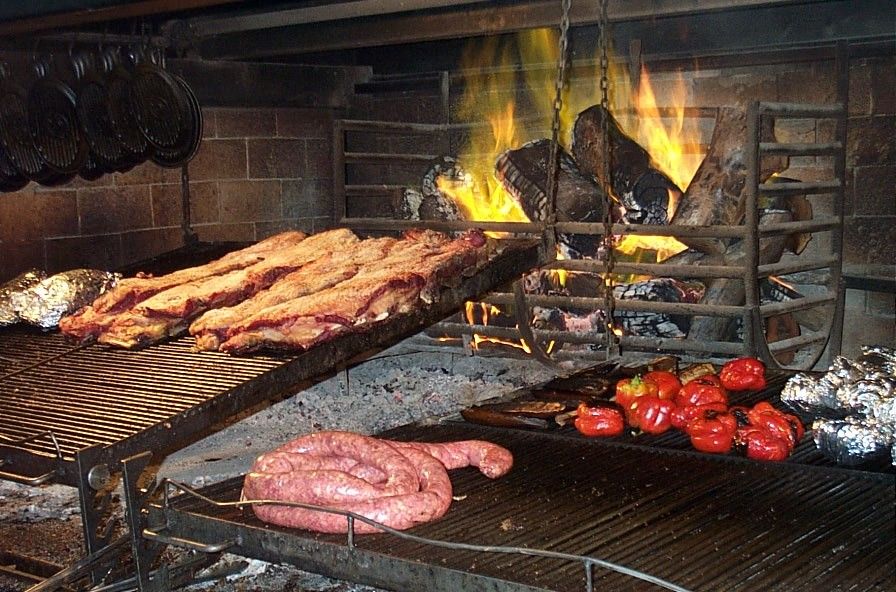
Outside the US, notable styles include the Brazilian churrasco and the Argentine asado, which are South American versions of barbecue. The South African braai is an informal gathering where people convene around an open fire to grill food. At a braai, it is common for attendees to bring snacks, drinks, and meat in a potluck-like activity known as 'bring and braai'. Cooking on the braai is often a bonding experience, and typical meats include lamb, steaks, spare ribs, sausages, chicken, and fish, often served with a side dish like mielie pap.
International Traditions and Social Context
Beyond a cooking method, barbecue is fundamentally a social activity, often serving as the centrepiece for gatherings, celebrations, and community events across the globe. In Canada, backyard barbecues are a staple of summer, bringing friends and family together. This social aspect is mirrored in traditions worldwide with deep cultural significance. In South Africa, the braai is an integral part of the culture, an informal gathering where people convene around an open fire for any occasion, linked to the country's warm weather. Attendees typically bring snacks, drinks, and meat to share in a potluck-style event known as a 'bring and braai'. The cooking itself is often a bonding ritual, particularly among fathers and sons, while women may prepare salads and side dishes away from the grill. Examples of meat prepared for a braai are lamb, steaks, spare ribs, sausages, chicken, and fish, often served with mielie pap (crumbled cornmeal). Similarly, in the Southern United States, barbecue has long been associated with church picnics, political rallies, and family reunions. The slow, hands-on process of smoking meat fosters a sense of community and shared anticipation, turning the meal into an all-day event that strengthens social bonds. In South America, the asado and churrasco serve similar communal functions, where the act of cooking and eating together is as important as the food itself.
Fuel, Equipment, and Technical Considerations
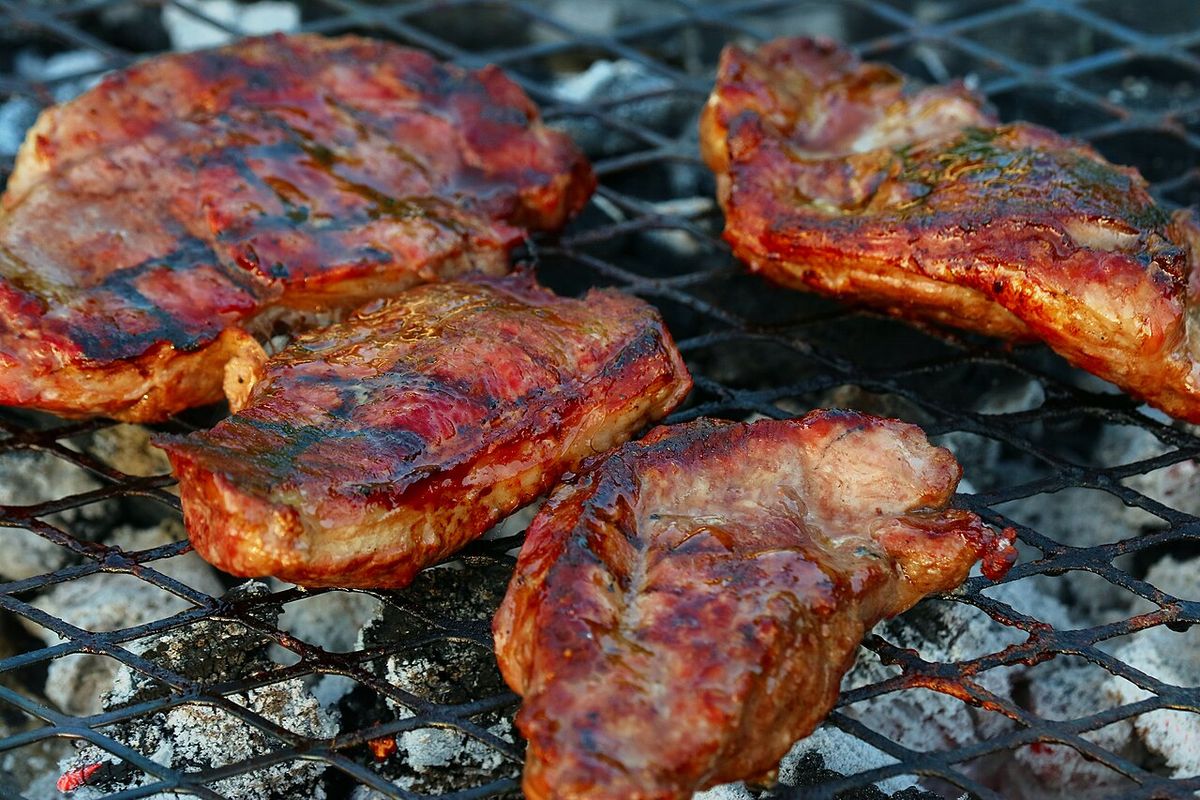
The choice of fuel and equipment significantly impacts the flavour, texture, and character of barbecue, leading to strong preferences among practitioners. Traditionalists often favour natural fuels for the distinct flavours they impart. Wood, such as hickory, mesquite, oak, or fruitwoods, is highly prized, especially in smoking, as it provides both heat and aromatic smoke that penetrates the food. Charcoal, made from burned wood, offers a more consistent and controllable heat source than raw wood and is widely used for both grilling and smoking. In modern contexts, propane or natural gas grills offer convenience and precise temperature control, though some purists argue they lack the authentic smoky flavour, a sentiment echoed in South Africa where gas grills are often frowned upon for a braai. Electric smokers and pellet grills, which use compressed wood pellets fed automatically, are popular for their set-and-forget ease and consistent smoke production. The equipment itself ranges from simple portable hibachis and kettle grills to elaborate offset smokers, ceramic cookers, and built-in outdoor kitchens. The technical difference between smoking and grilling equipment in the US is notable: a typical home grill cooks food on a grate directly over hot charcoal, while a barbecue setup for smoking disperses the coals to the sides or at a distance from the grate to allow for indirect heating with smoke.
Common Foods, Flavourings, and Commercial Influence
While meats are the most prominent barbecue foods, the cuisine includes a wide array of items cooked with or flavoured by smoke and fire. Meats commonly prepared include pork (ribs, shoulder, chops), beef (brisket, steaks, ribs), chicken, turkey, lamb, sausages, and fish. These are often seasoned before cooking with dry rubs, mixtures of spices, herbs, salt, and sugar applied to the meat's surface. Alternatively, or in addition, they may be basted with wet sauces during cooking or served with sauce on the side after cooking. The composition of these sauces is a major differentiator between regional styles, from the vinegar and pepper sauces of eastern North Carolina to the sweet, molasses-laden sauces of Kansas City. Side dishes are essential components of a complete barbecue meal. Popular sides vary by region but often include coleslaw, baked beans, cornbread, potato salad, macaroni and cheese, and grilled or roasted vegetables. The influence of barbecue extends far beyond the grill into commercial food production. The term also designates a flavour added to food items, the most prominent of which are potato chips, which attempt to capture the smoky, sweet, tangy, and spicy notes associated with barbecue sauces and rubs. This commercial adoption demonstrates the widespread recognition and appeal of barbecue flavours in the broader food market.
Typical barbecue dishes and accompaniments vary by region. In the United States, barbecue often involves pork or beef, cooked with methods like smoking or grilling, and served with regional sauces. In South Africa, a braai features meats like lamb, steaks, spare ribs, sausages, chicken, and fish, accompanied by side dishes such as salads and mielie pap. The term barbecue can also refer to a flavor added to food items, such as barbecue-flavored potato chips.
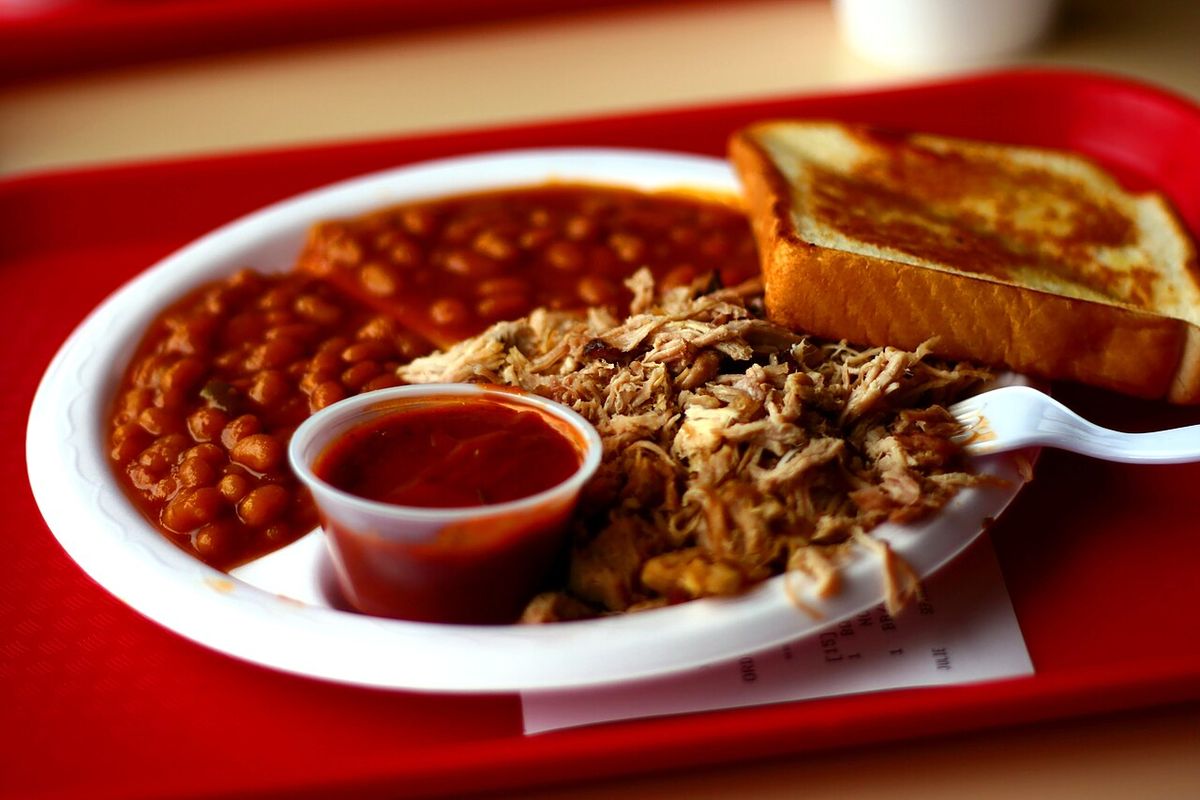
- Pulled Pork: Slow-smoked pork shoulder, shredded and often mixed with sauce, a mark of Carolina and Memphis styles.
- Beef Brisket: A tough cut of beef from the lower chest, transformed by long, slow smoking over oak or mesquite into a tender, flavourful centrepiece, essential to Texas barbecue.
- Spare Ribs & Baby Back Ribs: Pork ribs cooked until the meat is tender and pulls easily from the bone, prepared as 'wet' (with sauce) or 'dry' (with rub).
- Grilled Chicken: Often marinated or brined before being grilled over direct heat, sometimes served with Alabama white sauce.
- Smoked Sausages: Such as kielbasa or andouille, common in Texas and Louisiana styles, often smoked as a secondary meat.
- Burnt Ends: Crispy, flavourful pieces cut from the point of a smoked brisket, a specialty of Kansas City.
- Cornbread: A sweet or savoury bread made from cornmeal, a classic Southern side often served with butter or honey.
- Coleslaw: A salad of shredded cabbage, often with a mayonnaise-based or vinegar-based dressing, providing a cool, crunchy contrast to rich meats.
- Baked Beans: Stewed beans, often cooked with bacon or pork, onions, and a sweet, tomato-based sauce, frequently served at barbecue gatherings.
Lexical and Cultural Associations
The word barbecue carries historical and cultural associations that have evolved over centuries. Because the word came from Indigenous groups, early European colonists often gave it 'savage connotations', a perception strengthened by sensationalized accounts like those in Edmund Hickeringill's 'Jamaica Viewed' and the engravings in Theodor de Bry's 'Great Voyages', which falsely linked the cooking method to cannibalistic violence. Scholar Andrew Warnes notes these depictions presented smoke cookery as a custom central to an underlying savagery that everywhere contains within it a potential for cannibalistic violence. However, this negative association faded as the technique was adopted and adapted by European settlers. Lexically, the word also demonstrates how culinary terminology can vary. In the Southeastern US, 'barbecue' is used predominantly as a noun referring specifically to roast pork, while in Southwestern states it more often refers to beef. This regional specificity highlights how the same term can have localized meanings within a broader national cuisine, a phenomenon also seen in the varied definitions of grilling versus barbecuing between North American and British English.
Questions about Barbecue
What is the difference between grilling and barbecuing?
In North American culinary terminology, the terms have distinct meanings. Barbecuing typically refers to a slow cooking process using indirect heat and smoke at low temperatures (116 to 138°C) over several hours, often to cook tougher cuts of meat. Grilling is a fast cooking method using direct, high heat (over 260°C) for a few minutes to sear and cook foods like steaks, burgers, and vegetables. In British and some other international contexts, 'barbecuing' is synonymous with this fast grilling process, while 'grilling' refers to cooking under a source of overhead heat, known in the US as broiling.
What are the main regional barbecue styles in the United States?
The main US regional styles are defined by their preferred meats, cooking woods, and signature sauces. Carolina styles focus on pork with vinegar-based or mustard-based sauces. Memphis style is known for pork ribs with dry rubs or tangy tomato sauces, smoked over hickory. Kansas City style features a variety of meats served with a thick, sweet, tomato-based sauce made with molasses. Texas style centres on beef, especially brisket, often with simple seasoning and smoked over post oak. Other notable styles include St. Louis-style spare ribs, which are grilled, and Alabama's white mayonnaise-based sauce for chicken.
What is a South African braai?
A braai is a South African social gathering centred around cooking food on an open fire. It is a significant cultural event, not just a meal, often held in warm weather. Attendees often bring their own meat, snacks, and drinks in a 'bring and braai' potluck format. Traditionalists prefer cooking over wood fires, though charcoal is accepted, and the use of a gas grill is often frowned upon. Common meats include lamb, steaks, sausages, chicken, and fish, served with a side like mielie pap (cornmeal). The braai emphasizes community, with cooking seen as a bonding experience.
What types of wood are best for smoking meat?
The choice of wood imparts distinct flavours to smoked foods. Hickory provides a strong, bacon-like flavour, excellent for pork and ribs. Mesquite offers a very intense, earthy taste, best used in moderation for beef. Oak gives a medium-strong, versatile smoke good for red meats and pork. Fruitwoods like apple and cherry produce a milder, sweeter smoke, ideal for poultry, pork, and fish. Pecan wood is similar to hickory but milder and slightly sweet. The wood is often used in the form of logs, chunks, chips, or compressed pellets, with different woods being traditional in different regions, such as hickory in Memphis.
Is the spelling 'barbeque' correct?
The standard and most widely accepted spelling in English is 'barbecue'. The spelling 'barbeque' is a common variant, particularly in informal usage, in Australia, New Zealand, and the US, and in some brand names. However, it is often considered a non-standard or phonetic spelling. The Oxford Dictionaries explain it as a misspelling not accepted in standard English. Truncations like 'BBQ', 'Bar-B-Q', or 'bar-b-que' are also widely used, especially in advertising and casual writing. For formal writing, 'barbecue' is the recommended spelling.
Where did barbecue originate?
Barbecue originated in the Americas with Indigenous peoples. Spanish explorer Gonzalo Fernández de Oviedo y Valdés first printed the word 'barbacoa' in Spain in 1526 after encountering the Taíno people, who roasted meat over a wooden framework resting on sticks above a fire. This framework was used for cooking, storing food, and sleeping. The term barbacoa comes from a Taíno word, with etymologists tracing it to 'barabicu' from the Arawak people of the Caribbean and the Timucua of Florida. Another form of barbacoa involved pit cooking, documented by Olaudah Equiano among the Miskito people. The word and technique were subsequently loaned into Spanish, Portuguese, French, and English.
Sources and further reading
- Barbecue (Wikipedia)
- 10 Barbecue Recipes That Aren't Burgers (farmboy.ca)
- 74 Barbecue Sides Perfect for a Potluck (tasteofhome.com)
Checked by the Novello Desserts desk. Last updated 2026-10-20.