Crush
Crush is a brand of carbonated soft drinks originally created in 1911 as an orange soda by beverage chemist Neil C. Ward. It is one of the oldest soft drink brands in North America, predating The Coca-Cola Company's Fanta by nearly three decades. In Canada, the brand is known for its classic Orange flavour as well as regional specialties like Pineapple Crush in Newfoundland and Labrador. The Crush trademark is owned internationally by Keurig Dr Pepper and distributed in North America by PepsiCo bottlers, making it a familiar presence in Canadian grocery stores, restaurants and vending machines.
Origins and early history
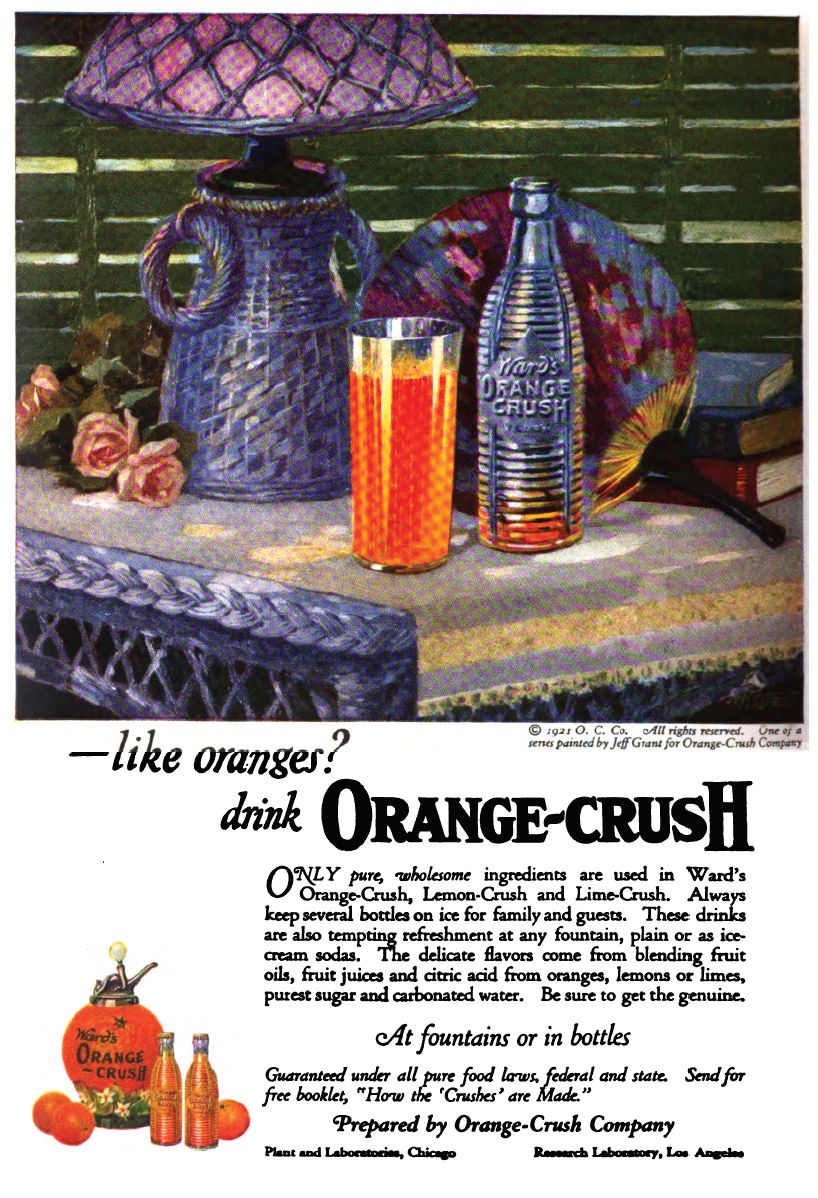
The Crush brand originated in 1911 when Clayton J. Howel, president and founder of the Orange-Crush Company, partnered with chemist Neil C. Ward and incorporated the company. Ward developed the original recipe for the orange soda, which was first premiered as Ward's Orange-Crush. Howel had previous experience in the soft drink business, having earlier introduced a product called Howel's Orange Julep. A distinctive early feature of Orange Crush was the inclusion of orange pulp in the bottles, which was added to create a "fresh squeezed" illusion, though this pulp was not a byproduct of actual juicing. This pulp was included for decades but has not been present in the bottles for many years.
The early bottles were a key part of the brand's identity. Initially, Orange Crush came in a clear, ribbed glass bottle known as the "Krinkly" bottle. In 1937, the company introduced an amber brown glass version of this ribbed bottle, which became known as the "Krinkly Brown" bottle. This distinctive packaging helped the product stand out on store shelves during the first half of the 20th century. The bottle design underwent a major change in 1955 when the company moved away from both the amber glass and the ribbed texture, introducing a new design marketed as "the Big New Bottle" intended to give the product a larger and more graceful appearance.
Corporate ownership and distribution
The ownership of the Crush brand has changed hands several times over its long history. In 1980, the multinational consumer goods corporation Procter & Gamble purchased the Crush brand, though it did not acquire the Canadian rights until 1984. Under Procter & Gamble, the company only manufactured a "bottler's base," which was a concentrate of flavour and colour. One millilitre of this concentrate was combined with syrup and carbonated water to produce a standard 12-ounce bottle of the finished drink. In 1989, Cadbury Schweppes acquired the Crush USA operations from Procter & Gamble.
The current international owner of the Crush trademark is Keurig Dr Pepper, based in Frisco, Texas. This entity was formed after Cadbury Schweppes spun off its United States beverage business as the Dr Pepper Snapple Group in 2008, which later merged with Keurig. Despite this ownership, the brand's distribution in North America is handled by PepsiCo and its network of bottlers, with the Pepsi Bottling Group being the largest distributor in the United States. In Canada, various Pepsi bottlers distribute Crush, and this arrangement has allowed for the continuation of regional flavour distributions that are unique to certain areas.
Flavours and Canadian regional availability
While Orange Crush remains the flagship and most widely available flavour, the brand has expanded to include a variety of other fruit flavours. Across North America, common varieties found in most stores include Diet Orange, Grape, Strawberry, Peach and Pineapple. The brand is notable for having many flavours that are caffeine-free, appealing to consumers seeking soda without stimulants. The distribution of certain flavours, however, is highly regional, creating local favourites that are not available nationwide.
In Canada, the most famous regional Crush flavour is Pineapple Crush, which is particularly associated with the province of Newfoundland and Labrador. In that province and in Fort McMurray, Alberta, consumers can find Pineapple Crush, Birch Beer Crush and Lime Crush in both cans and single-serving bottles. These flavours are considered local delicacies and are often sought out by visitors. Changes in bottling rights since 2009 have allowed some previously regional flavours to be distributed more widely in the United States by the Pepsi Bottling Group, but the distinct Canadian regional offerings remain a fixture.
- Orange: The original and most common flavour across Canada.
- Diet Orange: A sugar-free version of the original.
- Grape: A popular purple-coloured grape soda.
- Strawberry: A widely available red fruit flavour.
- Peach: A stone fruit flavour found in many markets.
- Pineapple: A key regional flavour in Newfoundland and Labrador.
- Birch Beer: A regional flavour available in Newfoundland and Labrador and parts of Alberta.
- Lime: Another regional flavour found in the same limited markets.
International presence
Beyond North America, the Crush brand is sold in numerous countries across Latin America and the Middle East. Key markets include Argentina, Colombia, Chile, Guatemala, Lebanon, Mexico, Panama, Paraguay, Peru, Syria and Uruguay. The brand has also been sold in the past in Nicaragua, Costa Rica, Ecuador and Bolivia. The international distribution network varies by country and often involves partnerships with major local bottlers. In Chile, for example, Crush has been distributed by Compañía de Cervecerías Unidas since the 1940s.
An interesting aspect of Crush's international business is its relationship with major beverage rivals. In several Latin American countries, the Crush brand is distributed not by PepsiCo but by The Coca-Cola Company. In these markets, Coca-Cola often uses the same bottle designs and colour schemes for Crush as it does for its own Fanta brand, creating a visual similarity on shelves despite the different brand ownership. This arrangement highlights the complex licensing and distribution agreements that characterize the global soft drink industry.
Crush in Canadian culture and media
The Crush brand maintains a presence in Canadian digital and social media through entities like Crush Canada, a food and beverage company with an official Instagram account that engages with followers. The brand is often associated with nostalgic and romantic sentiments in popular culture, as seen in social media posts describing the feeling of drinking a purple grape Crush with one's crush as a peak romantic experience. Beyond the soda brand, the term "crush" is widely used in Canadian food media and publishing, such as in Crush Magazine, a monthly food and wine publication free to subscribers that features articles on recipes, restaurants and culinary trends. The concept of a "crush" also appears in other culinary contexts in Canada, including the agricultural sector, where Statistics Canada regularly publishes data on the Canadian oilseeds monthly crush, referring to the process of crushing oilseeds like canola to produce oil and meal.
Related products and promotional activities
The Crush brand and its associated imagery have inspired various related products and promotional campaigns over the years. In the digital space, a mobile game titled "Cooking Crush 2026" was released, taking players into culinary action with over 500 levels, each introducing new dishes and challenges. Promotional contests have also been launched, such as the "Level Up Summer with Crush Contest" which began on July 5, 2026 and was scheduled to run until December 31, 2026. Community and event marketing also play a role, as evidenced by the 2026 Crush Party, an evening event that highlighted food, wine, prizes and networking opportunities. The brand's connection to food culture is reinforced through recipe content and meal planning services that use the "Crush" name, offering weekly meal plans and grocery lists to help consumers save time and money.
Questions about Crush
Who invented Crush soda?
Crush soda was invented by beverage and extract chemist Neil C. Ward in 1911. He created the original recipe for Orange Crush. The brand was launched in partnership with Clayton J. Howel, the president and founder of the Orange-Crush Company, and was first premiered under the name Ward's Orange-Crush. Howel had previous experience in the soft drink industry with a product called Howel's Orange Julep.
What is the most popular Crush flavour in Canada?
Orange Crush is the original and most popular flavour in Canada. Other widely available flavours across the country include Grape, Strawberry, Peach, and Diet Orange. Pineapple Crush is a notable regional favourite found in Newfoundland and Labrador. Birch Beer and Lime Crush are also available in that province and in Fort McMurray, Alberta.
Does Crush have caffeine?
Most flavours of Crush are caffeine-free. This is a characteristic feature of the brand's product lineup. The formulation does not include caffeine as a standard ingredient. This applies to the common flavours available in stores.
Who owns and distributes Crush in Canada?
The Crush brand is owned internationally by Keurig Dr Pepper. In North America, including Canada, the brand is marketed by PepsiCo. The drink is distributed by various Pepsi bottlers, such as the Pepsi Bottling Group. Keurig Dr Pepper is based in Frisco, Texas.
Why is Pineapple Crush associated with Newfoundland?
Pineapple Crush is distributed in the Canadian province of Newfoundland and Labrador. It is found there in both cans and single serving bottles. Birch Beer Crush and Lime Crush are also available in that region. These flavours are examples of varieties distributed within smaller markets in Canada.
What was unique about early Crush bottles?
Early Crush bottles were distinctive for their ribbed glass design, known as "Krinkly" bottles. Originally clear, the company introduced an amber brown version of this ribbed bottle in 1937, called the "Krinkly Brown" bottle. Another unique early feature was the inclusion of orange pulp in the bottles to create a "fresh squeezed" look, though this practice was discontinued decades ago. The bottle design was modernized in 1955 with a smoother, larger bottle.
Sources and further reading
- Crush (Wikipedia)
- Fresh Grapefruit Crush (lifeisbutadish.com)
Checked by the Novello Desserts desk. Last updated 2026-10-30.