Honeycomb toffee
Honeycomb toffee, known in Canada as sponge toffee or tire éponge, is a classic confectionery made from a cooked sugar syrup combined with baking soda. The chemical reaction between the hot syrup and the baking soda creates carbon dioxide, forming a rigid, porous, and airy structure with a signature crunch. In Canada, it is a beloved treat often associated with childhood nostalgia and is commercially popular as the chocolate-covered Crunchie bar. Its simple, fast-paced recipe makes it a popular homemade candy, especially during holidays like Halloween and Bonfire Night.
Composition and Culinary Science
The fundamental recipe for honeycomb toffee requires only a few core ingredients, primarily a sugar syrup and a leavening agent. The sugar component is typically granulated white sugar, though some recipes call for brown sugar, corn syrup, molasses, or golden syrup. These syrups are invert sugars that help prevent the crystallization of the granulated sugar, which is crucial for achieving a smooth, glassy toffee rather than a grainy one. A liquid, usually water, is combined with the sugar and syrup in a heavy-bottomed saucepan and heated until the sugar fully dissolves. The mixture is then cooked without stirring to a specific temperature, most commonly 150°C (300°F), at which point it turns a golden amber colour. The leavening agent is almost always baking soda, known chemically as sodium bicarbonate.
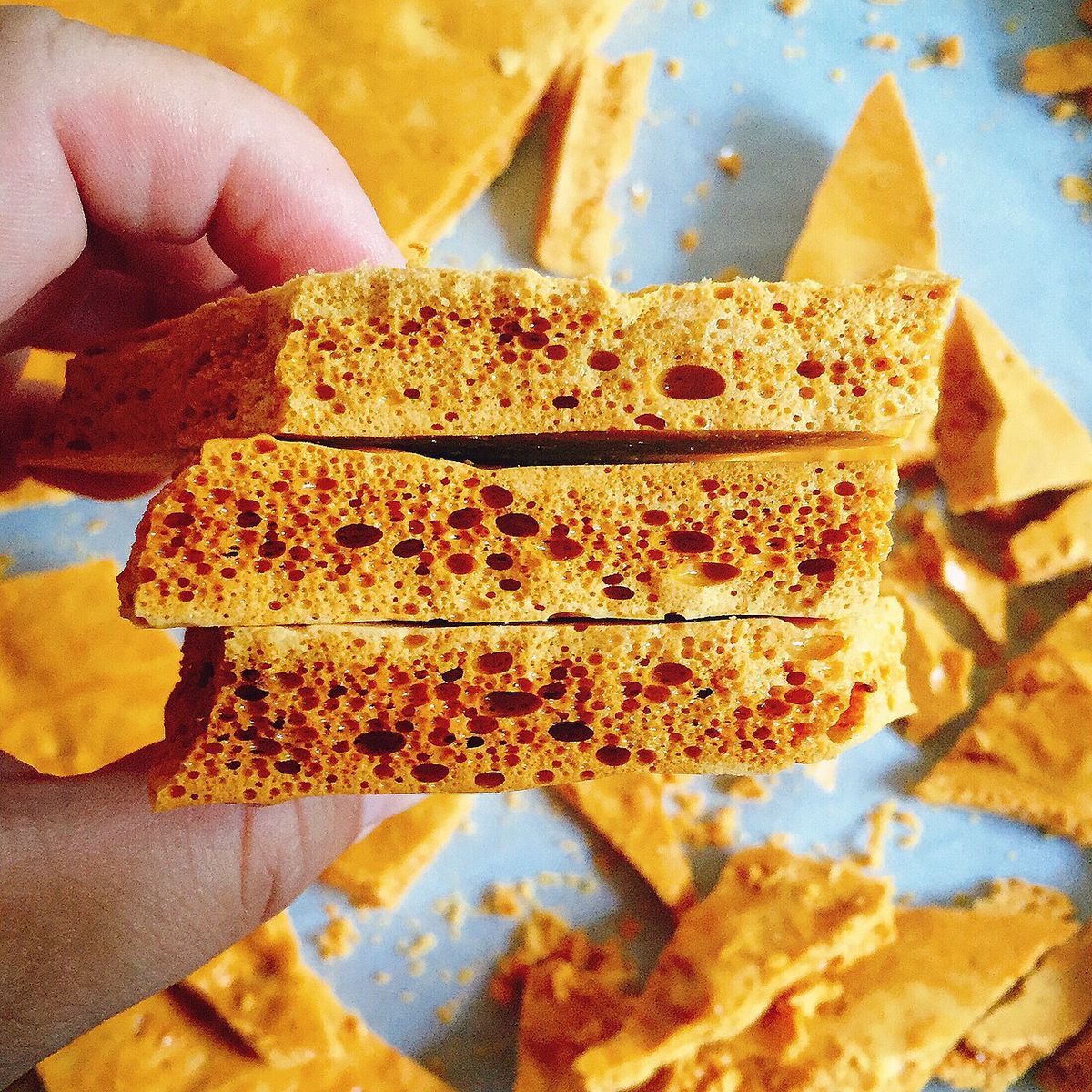
When the baking soda is whisked into the hot sugar syrup, a rapid chemical reaction occurs. If an acid like vinegar, cream of tartar, or the natural acidity in golden syrup is present, it reacts with the baking soda to produce carbon dioxide gas. In the absence of added acid, the intense heat causes the thermal decomposition of the baking soda, which also releases carbon dioxide. This sudden release of gas is trapped within the highly viscous, molten sugar mixture, causing it to foam and expand to four or five times its original volume. The mixture is then quickly poured into a prepared pan to set. As it cools, the sugar hardens around the many tiny gas bubbles, creating the candy's characteristic light, rigid, and sponge-like cellular structure. The entire process from stovetop to setting is fast-paced, often taking less than fifteen minutes of active cooking time.
Regional Names and Cultural Variants
This confection is known by a wide array of names across the English-speaking world and beyond, often reflecting local ingredients and traditions. In the United Kingdom, it is commonly called cinder toffee or honeycomb toffee, with cinder toffee sometimes denoting a version cooked longer for a richer, more caramelized flavour. In New Zealand, the name hokey pokey is predominant, famously used for a vanilla ice cream flavour containing lumps of the candy. Australia also uses the terms honeycomb and hokey pokey. In the United States, regional names include sponge candy in areas like Milwaukee, St. Paul, Northwest Pennsylvania, and Western New York, where it is typically chocolate-coated, and fairy food or angel food candy in Wisconsin.
In Canada, the most common term is sponge toffee, with the French name tire éponge also in use. Beyond the Anglosphere, the candy appears in numerous other culinary traditions with distinct characteristics. In Japan, it is known as karumeyaki, a street food often made with egg whites to create a puffed dome shape. In South Korea, the nearly identical candy is called dalgona, a retro street snack popular in the 1970s and 1980s. Hungary knows it as törökméz, or Turkish honey, commonly sold at fairs. In China, it is called fēngwōtáng, meaning honeycomb candy, and is associated with childhood memories for those born in the 1980s. Taiwan refers to it as swollen sugar or péngtáng.
Honeycomb Toffee in Canadian Context
In Canada, sponge toffee holds a particular place in the confectionery landscape, both as a homemade treat and a commercial product. It is a classic Quebec treat, appreciated for its light and crispy texture. The most famous commercial incarnation is the Crunchie chocolate bar, a British import that became a staple in Canadian candy aisles. The bar consists of a core of honeycomb toffee entirely enrobed in milk chocolate, offering a definitive contrast between the creamy chocolate shell and the brittle, airy interior. Many Canadians associate the flavour and texture of Crunchie bars with their childhood, which has inspired numerous home cooks to recreate their own versions, often using dark chocolate and a sprinkle of sea salt to balance the sweetness.
The homemade version follows the same basic scientific principles but allows for regional and personal adaptations. Canadian recipes may use golden syrup, which imparts a buttery, caramelized flavour, or corn syrup, which is widely available. A modern twist that has gained popularity is coffee sponge toffee, which incorporates a shot of espresso or strong coffee concentrate into the sugar syrup. This addition introduces a bitter, aromatic depth that complements the candy's inherent sweetness, creating a sophisticated treat often enjoyed alongside a cup of coffee. Whether made for family gatherings, as festive holiday gifts, or as a nostalgic project, sponge toffee remains a beloved and dynamic part of Canadian sweet-making traditions.
Key Ingredients and Their Roles
Every ingredient in honeycomb toffee plays a specific and critical role in achieving the final product's texture, flavour, and stability. The primary ingredient is granulated white sugar, which provides the candy's structure and sweetness. Substituting with brown sugar is generally discouraged because its molasses content adds extra moisture and can alter the boiling point and final reaction, potentially leading to a sticky result. An inverted sugar syrup is essential to prevent crystallization. Golden syrup is the traditional choice in Commonwealth countries like Australia, New Zealand, and Britain, prized for its caramelized, buttery flavour and light acidity. In North America, light corn syrup is a common and effective substitute, while recipes sometimes also use honey or molasses for distinct flavour profiles.
Water is used to dissolve the sugar and syrup at the beginning of the cooking process, and it must evaporate as the temperature rises. Baking soda is the non-negotiable leavening agent that creates the candy's signature puff and porous texture. Optional ingredients can modify the outcome. A small amount of an acid like vinegar or cream of tartar can ensure a more vigorous reaction with the baking soda. Salt is sometimes added to balance the sweetness. For coating, tempered bittersweet or dark chocolate is preferred by many home cooks over sweeter milk chocolate or candy melts, as it provides a pleasing contrast. A final sprinkle of sea salt flakes on the chocolate adds a savoury crunch and improves the presentation.
- Granulated White Sugar: Forms the hard, glassy matrix of the candy.
- Golden Syrup or Corn Syrup: Inverted sugars that prevent crystallization and contribute flavour.
- Water: Dissolves the sugar to create a workable syrup.
- Baking Soda: Reacts to create carbon dioxide, forming the airy structure.
- Acid (e.g., vinegar, cream of tartar): Optional catalyst for the baking soda reaction.
- Chocolate (dark, milk, or tempered): Common coating for a balanced, indulgent treat.
- Sea Salt: Optional garnish to cut sweetness and add texture.
The Cooking Process and Critical Techniques
Successfully making honeycomb toffee requires careful preparation, precise temperature control, and swift execution. Before heating begins, all ingredients must be measured and equipment readied, including a heavy-bottomed saucepan, a candy thermometer, a whisk, and a baking pan lined with parchment paper. The sugar, syrup, and water are combined in the saucepan over low heat and stirred gently just until the sugar crystals completely dissolve. It is vital to test for dissolved sugar by examining a small amount on a spoon. Any remaining crystals can seed crystallization in the entire batch. Once dissolved, the heat is increased to medium, and the syrup must not be stirred again. To prevent sugar crystals from forming on the sides of the pan, a pastry brush dipped in water can be used to wash them down.
The syrup is cooked without disturbance until it reaches the target temperature, which is most commonly 150°C (300°F). This temperature is critical for achieving a brittle, non-sticky texture with a good caramel flavour. Cooking to a lower temperature results in a softer, chewier candy, while exceeding the temperature can lead to a burnt, bitter taste. The pan is immediately removed from the heat, and the baking soda is added all at once and whisked in briskly. The mixture will foam and expand dramatically within seconds. It must be poured quickly into the prepared pan without spreading or manipulating it, as overmixing can collapse the bubbles. The candy is then left undisturbed at room temperature for several hours to cool and harden completely before being broken into pieces.
Common Challenges and Troubleshooting
Several common issues can arise when making honeycomb toffee, most related to temperature, crystallization, or humidity. A frequent problem is candy that remains sticky or chewy instead of hardening properly. This usually occurs because the sugar syrup did not reach a high enough temperature before the baking soda was added. Conversely, if the candy is too hard or tastes burnt, the syrup was likely cooked beyond the ideal range. Using an accurate candy or digital thermometer is the best defence against these temperature-related failures. Another issue is the formation of sugar crystals within the toffee, resulting in a grainy texture. This is caused by sugar crystals either not fully dissolving initially or forming on the sides of the pan during cooking. Ensuring a completely dissolved syrup and using the water brush technique on the pan sides are effective preventive measures.
If the candy does not puff up sufficiently or collapses, the cause is often overmixing after adding the baking soda, which releases the carbon dioxide gas before it can be trapped. The baking soda should be whisked in just until incorporated. Once made, honeycomb toffee is highly susceptible to moisture from the air, which will cause it to become soft and sticky over time. Storage is therefore crucial. Pieces must be kept in an absolutely airtight container at room temperature, away from heat and humidity. Coating the candy in chocolate provides an excellent moisture barrier, significantly extending its shelf life from a few days to two or three weeks. For best results, the candy should be broken into pieces only when ready to serve or coat, as exposing the porous interior increases the surface area vulnerable to moisture.
Serving, Storage, and Modern Variations
Honeycomb toffee is versatile in its uses, enjoyed plain as a sweet snack or incorporated into other desserts. In its simplest form, broken shards make a delightful treat on their own. A very popular preparation, especially in Canada, the UK, and parts of the US, is to coat the pieces entirely or partially in chocolate. This creates a homemade version of a Crunchie or Violet Crumble bar. For a gourmet touch, the chocolate-coated pieces can be sprinkled with flaky sea salt. The candy is also commonly used as a topping or mix-in, crushed and sprinkled over ice cream, folded into buttercream, or used as a garnish for cakes and puddings. In New Zealand, small lumps are a defining feature of Hokey Pokey ice cream and are also used in biscuits.
Modern variations on the classic recipe continue to emerge, appealing to contemporary palates. The coffee sponge toffee variation, which adds espresso to the syrup, has become popular for its sophisticated bitterness that cuts the sweetness. Some recipes experiment with adding flavours like vanilla extract or spices to the syrup. For structural variation, a small amount of gelatin dissolved in water can be added with the baking soda, resulting in a finer, denser honeycomb with smaller, more uniform bubbles. Regardless of the variation, proper storage remains paramount. The table below outlines the primary factors affecting the candy's quality and shelf life.
| Factor | Ideal Condition | Consequence of Deviation |
|---|---|---|
| Storage Container | Airtight, non-reactive | Exposure to air causes softening and stickiness |
| Ambient Humidity | Low, dry environment | High humidity rapidly degrades texture |
| Temperature | Cool room temperature (approx. 20°C) | Heat can cause chocolate coating to bloom or melt |
| Coating | Chocolate enrobing (tempered preferred) | Uncoated candy has a much shorter shelf life |
| Form | Kept in large pieces until serving | Pre-crushing increases surface area exposed to air |
Questions about Honeycomb toffee
What is the difference between honeycomb toffee and sponge candy?
There is no substantive difference in the confection itself. The terms are largely regional synonyms. In Canada and parts of the northern United States like Buffalo and Pennsylvania, it is commonly called sponge candy or sponge toffee. In the United Kingdom, terms like cinder toffee or honeycomb toffee are used, while Australia and New Zealand favour honeycomb or hokey pokey. The core recipe of sugar syrup and baking soda is consistent, though regional preferences may influence the type of syrup used, such as golden syrup versus corn syrup.
Why did my honeycomb toffee not puff up?
A failure to puff is typically due to one of two critical errors. First, the sugar syrup may not have reached a high enough temperature, usually 150°C (300°F), which is necessary for the proper thermal reaction with the baking soda. Second, overmixing the batter after adding the baking soda can release the carbon dioxide gas before it is trapped in the setting sugar, causing the mixture to collapse. Ensuring an accurate candy thermometer and whisking only until the baking soda is just incorporated are the key steps to guarantee the characteristic airy rise.
Can I substitute maple syrup or honey for corn syrup in the recipe?
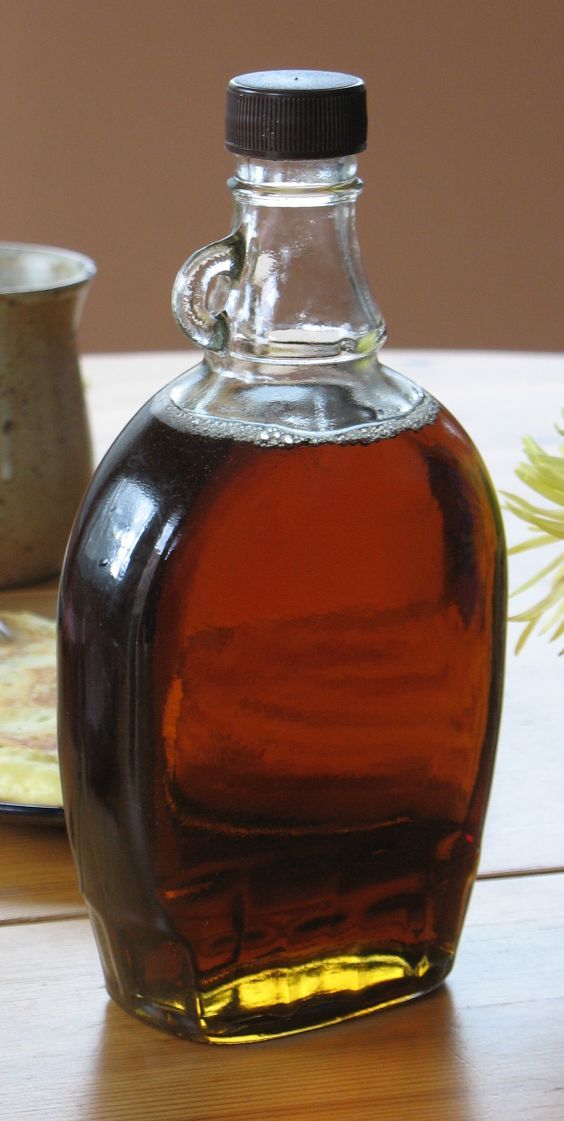
It is strongly discouraged to substitute maple syrup or honey for corn syrup or golden syrup in a standard honeycomb toffee recipe. Corn syrup and golden syrup are invert sugars that actively prevent the crystallization of the granulated sugar. Maple syrup and honey contain more water and minerals, which alter the boiling point and chemistry of the syrup. This substitution often results in a candy that is sticky, chewy, and prone to graininess rather than achieving the desired light, crisp, and glassy texture.
How should I store homemade honeycomb toffee?
Homemade honeycomb toffee must be stored in an absolutely airtight container at room temperature, away from any source of heat or humidity. Exposure to moisture in the air is the primary cause of the candy becoming soft and sticky. If the toffee is coated in chocolate, the chocolate acts as a protective barrier, extending its shelf life. Properly stored, uncoated honeycomb may last a few days to a week, while chocolate-coated pieces can remain crisp for two to three weeks. It is best to break the toffee into pieces only when ready to eat or serve.
What is the Crunchie bar's relation to honeycomb toffee?
The Crunchie bar is a popular commercial chocolate bar sold in Canada, the United Kingdom, and other Commonwealth countries. Its core is composed entirely of honeycomb toffee, which is then fully enrobed in a layer of milk chocolate. The bar exemplifies the classic pairing of the candy's brittle, airy texture with creamy chocolate. For many Canadians, the Crunchie bar is the most familiar and widely available form of honeycomb toffee, and its distinctive texture and flavour have inspired countless homemade versions seeking to replicate or personalize the treat.
What is coffee sponge toffee?
Coffee sponge toffee is a modern gourmet variation on the classic recipe that incorporates espresso or a strong coffee concentrate. A shot of cooled espresso is added to the hot sugar syrup just before the baking soda, infusing the candy with a deep, aromatic bitterness that balances its intense sweetness. This variation is particularly popular as an adult-oriented treat, often enjoyed alongside a cup of coffee or served as a dessert garnish. The recipe follows all the same technical steps as traditional sponge toffee, with the coffee addition introducing a sophisticated flavour dimension.
Sources and further reading
- Honeycomb toffee (Wikipedia)
- The Best Honeycomb Recipe (Easy honeycomb candy) (theflavorbender.com)
- Best Ever Honeycomb (talesfromthekitchenshed.com)
Checked by the Novello Desserts desk. Last updated 2026-10-30.