Pemmican
Pemmican is a concentrated, high-energy food traditionally made from dried meat, rendered animal fat (tallow), and sometimes dried berries. Originally developed by Indigenous peoples of the North American Plains, particularly the Cree and Lakota, it became a crucial staple for fur traders, explorers, and military expeditions due to its portability and long shelf life. The food played a central role in Canadian history, fuelling the fur trade and contributing to the emergence of the Métis Nation through the pemmican trade. Today, pemmican remains an important cultural food, prepared for personal, ceremonial, and commercial purposes across Indigenous communities.
Ingredients and Traditional Preparation
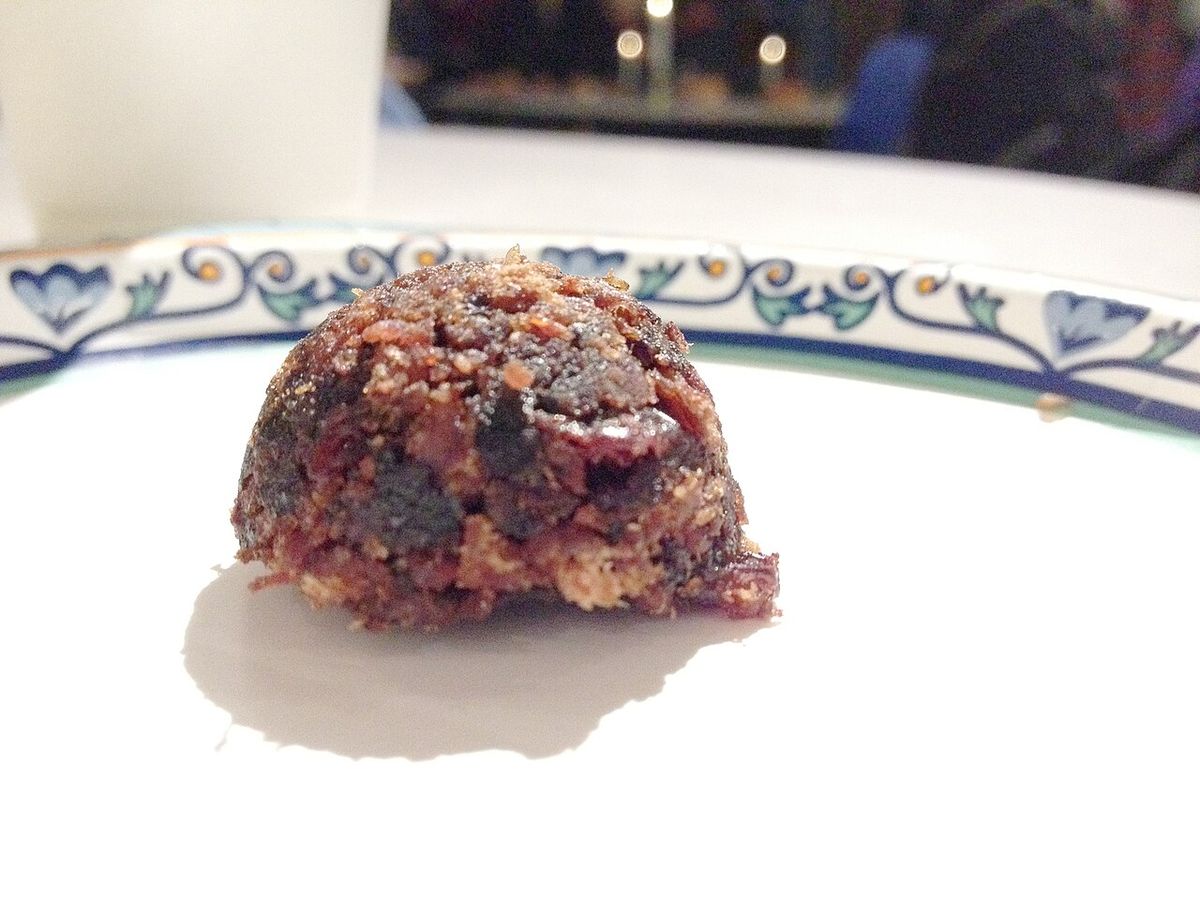
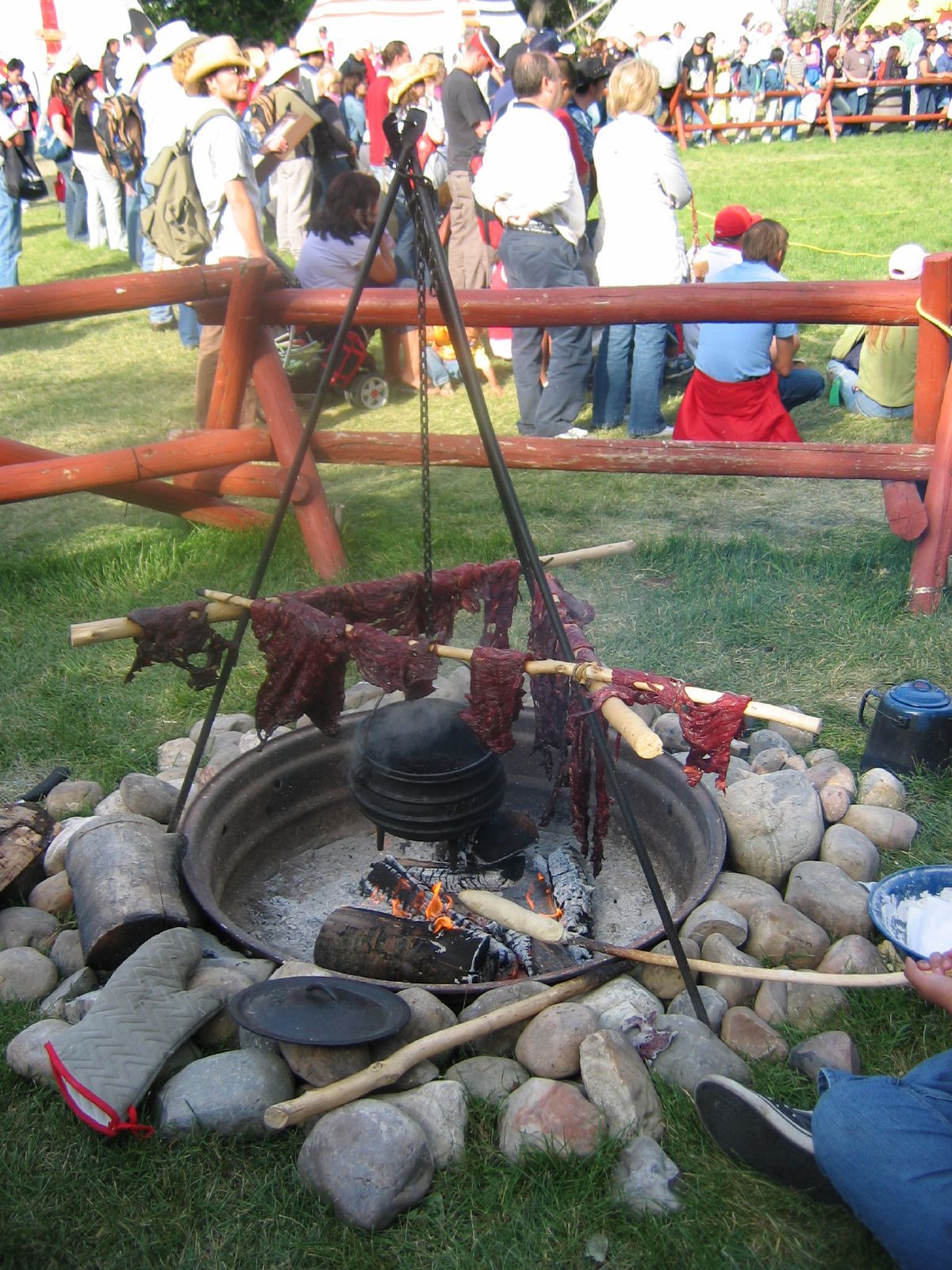
Traditional pemmican is defined by its simple, nutrient-dense components, which could be adapted based on available resources. The core ingredient is lean meat from large game such as bison, deer, elk, or moose, though fish like salmon and smaller game like duck were also used historically. This meat is meticulously prepared by being cut into thin slices and dried, either over a slow fire or in the hot sun, until it becomes hard and brittle. This dried meat, known in Cree as pânsâwân, is then pounded with stones or flails on a tanned hide until it reaches a near-powder consistency. The second essential component is rendered animal fat, typically suet turned into tallow, which is melted and mixed with the pounded meat in an approximate one-to-one ratio by weight.
In some regional and ceremonial variations, dried and pounded berries such as cranberries, saskatoon berries (misâskwatômina), blueberries, or chokeberries are added to the mixture. The Lakota and Dakota nations also prepare a version called corn wasná, which uses toasted cornmeal, animal fat, fruit, and sugar instead of dried meat. Once thoroughly combined, the pemmican mixture is packed into rawhide bags for storage, where it cools and hardens into solid, durable cakes. A standard large bag used in the fur trade, called a taureau by the Métis, weighed approximately 90 pounds (41 kilograms) and generally required the meat of one bison to fill. The Métis had specific names for different mixtures packed into these 90-pound bags.
- Taureaux fins: Pemmican mixed with fat from the udder.
- Taureaux grand: Pemmican mixed with bone marrow.
- Taureaux à grains: Pemmican mixed with berries.
The preparation of pemmican is a labour-intensive process. It requires about five pounds of fresh meat to produce just one pound of dried meat suitable for making pemmican. European fur traders historically noted that some Indigenous producers added sugar to the mixture. This addition reflects early trade influences on the traditional recipe.
Historical Significance in North America
The origins of pemmican-making on the Great Plains are ancient, with archaeological evidence like bone fragments and boiling pits suggesting the production of bone grease, a key ingredient, by around AD 1. There is widespread archaeological evidence for bone grease production on the Great Plains by that time, but the practice likely developed much earlier. Calcified bone fragments from Paleo-Indian times do not offer clear evidence of pemmican making due to a lack of associated boiling pits. The first written account of the precursor to pemmican is from Francisco Vázquez de Coronado in 1541, who described the Querecho and Teya people of the Texas Panhandle sun-drying and mincing bison meat before adding bison fat.
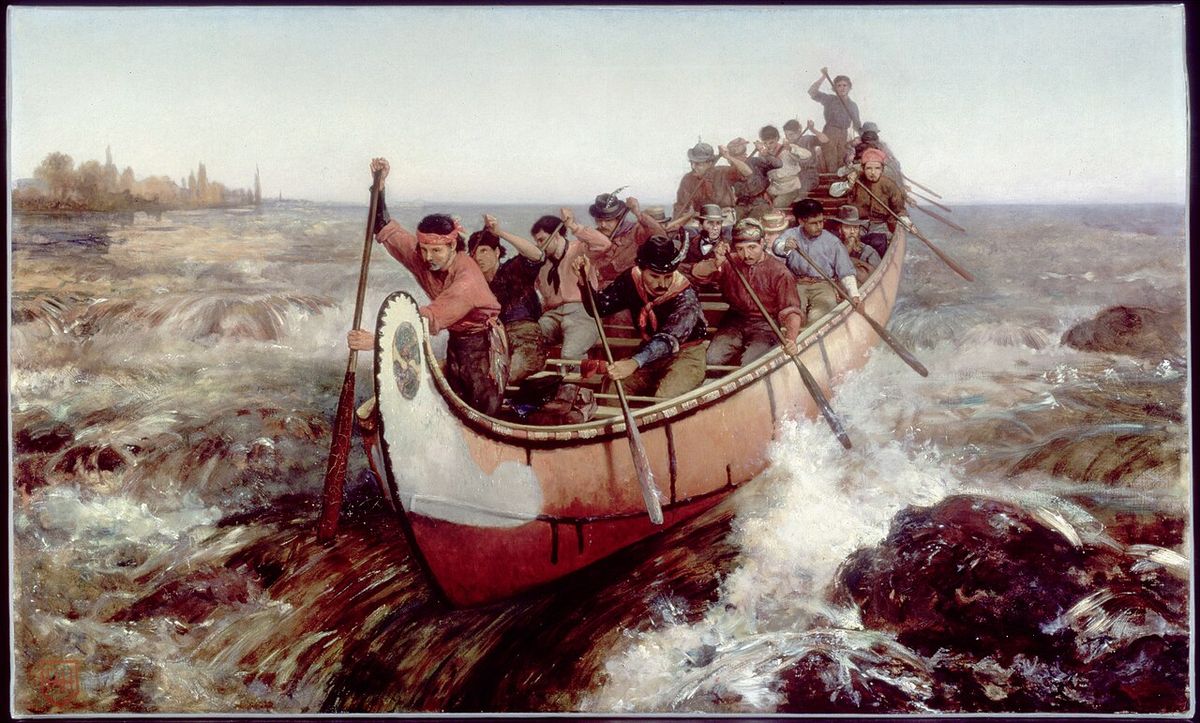
The food became indispensable with the expansion of the European fur trade across Canada. Voyageurs, who had to travel vast distances during short ice-free seasons, relied on pemmican as a compact, high-calorie food source that could be carried in their canoes without spoiling. A north canoe with six men and 25 standard packs required about four packs of food per 500 miles. Montreal-based canoemen, called mangeurs de lard or 'pork-eaters' by western crews, had a different diet of dried peas, hardtack, and salt pork, but by the time trade reached the Lake Winnipeg area, the pemmican trade was fully developed.
The pemmican trade fundamentally shaped the economy and society of the Canadian West. Métis hunters and traders would go southwest onto the prairie in Red River carts, slaughter bison, convert it into pemmican, and carry it north to trade at fur company posts. This trade was as important a source of trade goods for the Métis as the beaver trade was for Indigenous peoples farther north. It was a major factor in the emergence of the new and distinct Métis society. Packs of pemmican would be shipped north and stored at the major fur posts. In 1814, Red River Colony governor Miles Macdonell issued the Pemmican Proclamation, banning the export of pemmican from the colony and sparking a series of clashes known as the Pemmican War.
- Fort Alexander: A major fur post where pemmican was stored.
- Cumberland House: A key provisioning depot in the fur trade network.
- Île-à-la-Crosse: An important post for the pemmican trade.
- Fort Garry: A central hub in the Red River Settlement.
- Norway House: A critical transshipment point.
- Edmonton House: A major post in the western interior.
Use in Exploration and Military Campaigns
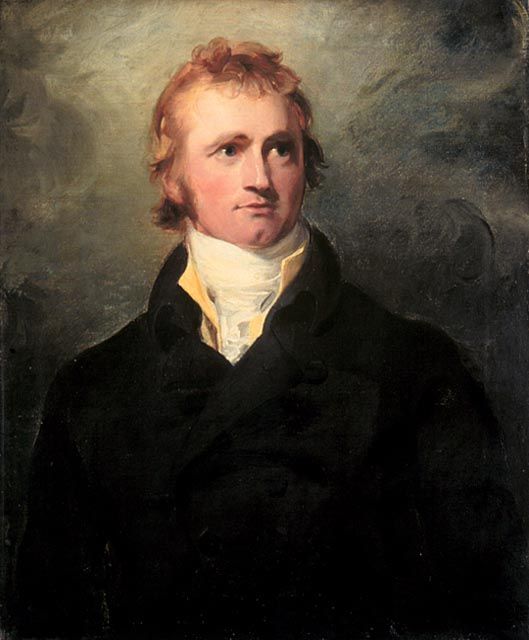
Explorer Alexander Mackenzie depended on it during his 1793 journey across the continent. North Pole explorer Robert Peary used it on all three of his expeditions from 1886 to 1909, for both his men and his sled dogs, declaring it an absolute necessity for serious polar travel. In his 1917 book, Secrets of Polar Travel, he wrote that without pemmican a sledge-party could not compact its supplies within a limit of weight for a successful journey. British polar expeditions, including those of Robert Falcon Scott and Ernest Shackleton, also carried pemmican. Shackleton's stranded men even resorted to eating the 'Bovril pemmican' originally intended for their dogs during the 1914 to 1916 Antarctic expedition.
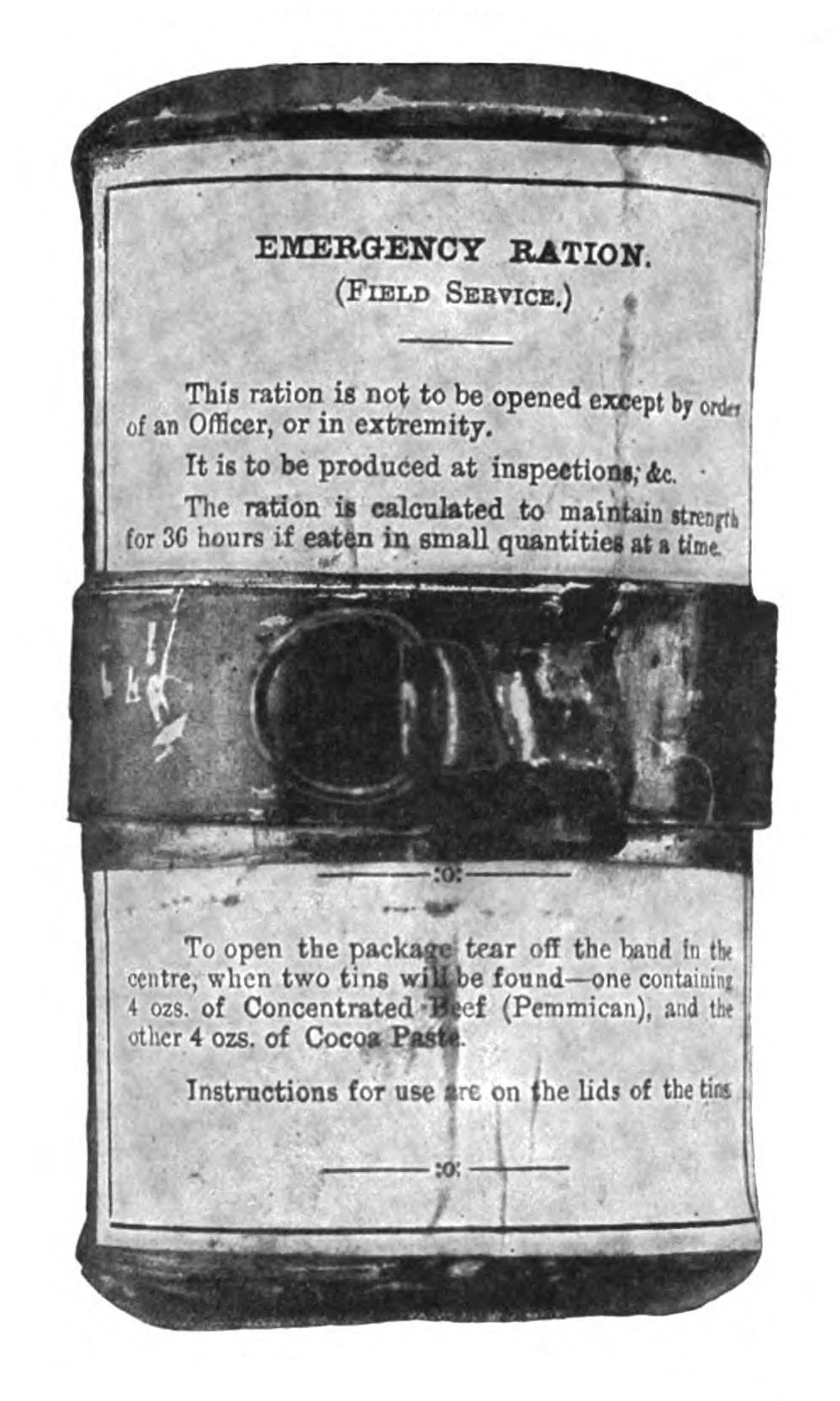
The military recognized pemmican's value as an emergency ration. During the Second Boer War (1899 to 1902), British troops carried an 'iron ration' consisting of four ounces of pemmican and four ounces of chocolate and sugar, soldered into small tins fastened inside their belts. This ration was to be used only as a last resort when ordered by a commanding officer, and a soldier could march on it for 36 hours before hunger set in. American scout Frederick Russell Burnham, while serving as chief of scouts for the British Army in South Africa, required pemmican to be carried by every scout. Amelia Earhart carried pemmican as an emergency ration on her 1928 transatlantic flight, and French troops were issued condensed meat bars based on pemmican while fighting in Morocco in the 1920s.
Subsequent scientific studies examined its nutritional efficacy for survival situations. A 1945 study criticized the sole use of pemmican as a survival food due to low levels of certain vitamins. A later U.S. military study in January 1969, entitled 'Arctic Survival Rations, III. The Evaluation of Pemmican Under Winter Field Conditions', found that during a cycle of two starvation periods, subjects could stave off starvation for the first cycle with only 1000 calories worth of pemmican. British 'Bovril pemmican' or dog pemmican used on polar expeditions had a specific formulation of two-thirds protein and one-third fat by volume, which was later found to be too high in protein for dogs, though they survived on it.
Serving and Consumption Methods
Pemmican is a versatile food that can be consumed in multiple ways, depending on need and preference. It can be eaten raw in its hardened state, providing a quick, chewy source of energy. Historical accounts, such as those from North-West Mounted Police Sergeant Major Sam Steele in 1874, detail two primary methods of cooking pemmican on the western frontier. The first was a stew called 'rubaboo,' made by boiling pemmican with water, flour, and any available vegetables like wild onions or preserved potatoes. The second method, known in the West as a 'rechaud,' involved frying pemmican in a pan, often with onions and potatoes, or by itself. Steele noted that while some people ate it raw, he personally never developed a taste for it that way, preferring it cooked.
Nutritional Profile and Scientific Evaluation
Pemmican is celebrated for its exceptional caloric density and long shelf life, which stem from its low moisture content and high fat composition. The traditional one-to-one ratio of dried meat to fat creates a food that is rich in protein and fat, with minimal carbohydrates unless berries are added. When stored properly in airtight containers like rawhide bags, glass jars, or tin boxes, pemmican can remain edible for years, even decades, as noted by its use in military iron rations. The specific shelf life depends on the ingredients used and storage conditions, but its preservative qualities are legendary. British 'Bovril pemmican' or dog pemmican used on polar expeditions had a specific formulation, consisting by volume of two-thirds protein and one-third fat, a 2:1 protein-to-fat ratio with no carbohydrates.
This composition was later found to be too high in protein for dogs, though they survived on it. For humans, pemmican's value as a compact energy source was repeatedly validated, though its completeness as a sole survival food was questioned. The 1945 study highlighted vitamin deficiencies, while the 1969 U.S. military study demonstrated its effectiveness in staving off starvation in Arctic winter conditions over a short period. The food's energy density made it possible for sledge parties to carry sufficient calories without excessive weight, a point emphasized by explorers like Robert Peary who called it an 'absolute sine qua non' for polar travel.
Notable Figures and Expeditions That Used Pemmican
- Alexander Mackenzie: Used pemmican during his 1793 expedition from Canada to the Pacific.
- Captain Robert Bartlett: Arctic explorer who utilized pemmican.
- Ernest Shackleton: His 1914 to 1916 Antarctic expedition members ate dog pemmican when stranded.
- Richard E. Byrd: The polar explorer included pemmican in his supplies.
- Fridtjof Nansen: The Norwegian explorer relied on pemmican.
- Robert Falcon Scott: British Antarctic expedition leader who used pemmican.
- George W. DeLong: American Arctic explorer who carried pemmican.
- Robert Peary: Used pemmican on all three of his North Pole expeditions (1886 to 1909).
- Matthew Henson: Peary's companion who also depended on pemmican.
- Roald Amundsen: The Norwegian explorer employed pemmican on his voyages.
Pemmican was widely adopted by European Arctic and Antarctic explorers. It was used by explorers such as Robert Peary, Matthew Henson, Roald Amundsen, Ernest Shackleton, and Robert Falcon Scott. These explorers relied on pemmican as a concentrated high-calorie food for their expeditions. Its use demonstrates its importance in exploration of challenging polar terrains.
Contemporary Uses and Cultural Relevance
Pemmican remains a living tradition within many Indigenous communities across North America. It continues to be prepared for personal sustenance, communal gatherings, and important ceremonial events such as weddings. Contemporary recipes sometimes incorporate non-traditional ingredients like beef, reflecting the evolution of foodways over the past centuries. The cultural and nutritional knowledge associated with pemmican is also being shared commercially. Several Indigenous-owned companies now produce and sell pemmican or foods based on traditional recipes, making this historic food available to a wider market while honouring its origins. The continued practice of making pemmican serves as a direct link to ancestral knowledge and a resilient food system that has sustained people for generations.
Related Foods and Comparisons
Pemmican is part of a global family of preserved meat products designed for portability and longevity. It is often compared to biltong, the air-dried cured meat of Southern Africa, though pemmican's inclusion of fat and berries creates a different nutritional and textural profile. British troops in the Boer War considered pemmican much superior to biltong for their iron rations. Other related foods include jerky, which is dried lean meat but typically without the added fat. Mincemeat, a European mixture of dried fruit, spices, and fat used in pies. And pastirma, a spiced dried beef from the Middle East. Within Indigenous North American cuisine, pemmican holds a distinct place, though it shares the food-drying preservation technique with items like smoked fish and the celebratory Alaskan ice cream (akutaq). The dictionary definition of pemmican is recorded in Wiktionary, and media related to it is available on Wikimedia Commons.
Questions about Pemmican
What is pemmican made of?
Pemmican is a mixture of tallow and dried meat. Sometimes dried berries are added to the mixture. The meat is traditionally from large game like bison, deer, elk, or moose, but fish and smaller game are also used. A Lakota variation called corn wasná uses toasted cornmeal instead of dried meat.
Why was pemmican important to Canadian history?
Pemmican was an important food for Europeans in the fur trade. The Métis people produced and traded pemmican, which was crucial for supplying fur trade posts. The Pemmican Proclamation of 1814, which forbade its export from the Red River Colony, started the Pemmican War. This trade was a major factor in the emergence of the distinct Métis society.
How did explorers use pemmican?
Polar and continental explorers prized pemmican for its energy density and long shelf life in extreme conditions. Figures like Alexander Mackenzie, Robert Peary, and Roald Amundsen relied on it during their expeditions. Robert Peary stated it was an absolute necessity for successful polar travel. British Antarctic expeditions, including Ernest Shackleton's, used it for both men and sled dogs, with Shackleton's men eventually eating the dogs' pemmican ration when stranded on the ice.
How is pemmican eaten?
Pemmican can be eaten raw. It can also be boiled in a stew called rubaboo with water, flour, and vegetables. Another method is to fry it, which was known in the West as a rechaud. These methods of preparation were recorded by North-West Mounted Police Sergeant Major Sam Steele in 1874.
Is pemmican still made today?
Yes, pemmican continues to be made today. Many Indigenous communities across North America prepare it for personal, communal, and ceremonial use, preserving traditional knowledge and practices. Some Indigenous-owned companies produce pemmican commercially, offering it for sale to the public. Contemporary recipes may sometimes use modern ingredients like beef, but the fundamental principles of drying meat and mixing it with fat remain the same.
How long does pemmican last?
Pemmican has a very long shelf life when stored properly. It can be stored in rawhide bags, glass jars, or tin boxes. During the Second Boer War, British troops were given pemmican in an iron ration that would keep in perfect condition for decades. The shelf life varies based on the ingredients and storage conditions.
Sources and further reading
- Pemmican (Wikipedia)
- Pemmican: The Original Hunter's Trail Food (themeateater.com)
- Homemade Pemmican: Cooking in the Kitchen with Chef ... (acanadianfoodie.com)
- How to Make Pemmican (primalkitchen.com)
- Pemmican (thecanadianencyclopedia.ca)
Checked by the Novello Desserts desk. Last updated 2026-10-20.