Gastown
Gastown is the original settlement that grew into the city of Vancouver, British Columbia, and is now a designated National Historic Site of Canada. This neighbourhood in Vancouver's Downtown Eastside is known for its preserved Victorian architecture, cobblestone streets, and role as the birthplace of the modern city. Named for the talkative saloon keeper 'Gassy' Jack Deighton, Gastown has evolved from a port settlement into a major tourist destination and a centre for technology, media, and creative industries. Its combination of historic character and contemporary activity makes it a key Vancouver experience, attracting many visitors to landmarks like the steam clock and the Water Street district.
Historical Origins and Development
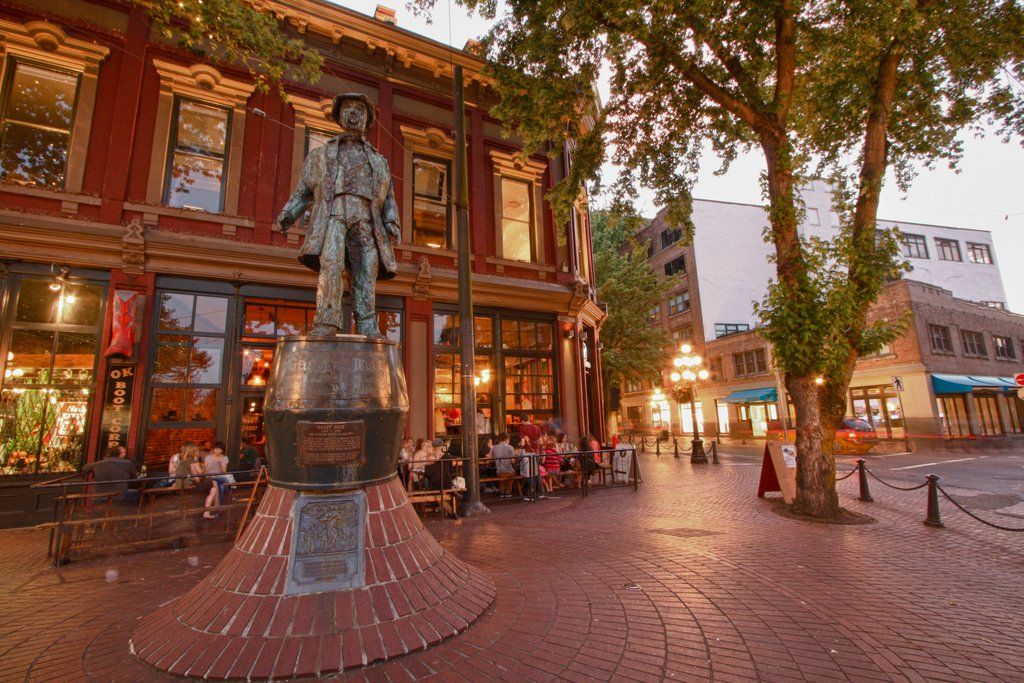
The story of Gastown begins in 1867 with the arrival of John 'Gassy Jack' Deighton, a Yorkshire seaman and steamboat captain. Deighton opened the area's first saloon near the shore of Burrard Inlet, and his loquacious nature earned him the nickname 'Gassy.' The settlement that grew around his establishment was quickly dubbed 'Gassy's Town,' a name that soon shortened to Gastown. The location prospered due to the adjacent Hastings Mill sawmill and its strategic position as a seaport, rapidly becoming a general centre for trade and commerce. The town served as a resort for off-work loggers, fishermen, and the crews of the many sailing ships that came to load timber, establishing its early character as the core of what would become Vancouver. The proper survey name for the 1870 townsite was Granville, B.I. (Burrard Inlet), but the colourful nickname endured. Gastown's historical boundaries were largely defined by the original townsite survey, encompassing the area bordered by the waterfront (now Water Street and the CPR tracks), Carrall Street, Hastings Street, and Cambie Street. The official boundary now stretches east past Columbia Street to the laneway running parallel to the west side of Main Street, but excludes most of Hastings Street except for the Woodward's and Dominion Buildings.
Preservation and Revitalization Campaign
By the 1960s, Gastown's distinctive brick and stone buildings, like those in the nearby Chinatown and Strathcona neighbourhoods, were scheduled to be demolished to build a major freeway into Vancouver's downtown core. This threat sparked a successful preservation campaign led by businesspeople, property owners, and counterculture political protestors. A key figure was Dutch immigrant Henk F. Vanderhorst, who opened the 'Exposition Gallery,' an art gallery on Water Street. His gallery started, flourished, and encouraged a flow of other fledgling business startups to establish themselves in the Gastown core, fostering an early economic revitalization. Vanderhorst's influence was formally recognized in 1976 when he was awarded 'The First Pioneer Citizen of Gastown' by Mayor Art Phillips. The campaign gained significant traction and ultimately pressured the civic, provincial, and federal governments to protect the area. This effort led to Gastown's official designation as a National Historic Site of Canada in 2009, a status that legally protects its heritage buildings and ensures their preservation for the future.
Landmarks and Built Environment
The neighbourhood's most famous modern landmark is the Gastown Steam Clock, situated at the corner of Cambie and Water Street. Built in 1977, it was originally constructed to cover a steam grate from Vancouver's distributed steam heating system and to deter people from sleeping on the spot in cold weather. The clock's original design was faulty and it had to be powered by electricity after a breakdown, but the steam mechanism was later completely restored with financial support from local businesses. It operates using low-pressure steam from a downtown network, which powers a miniature steam engine in its base that drives a chain lift system using steel balls. The weight of the balls drives a conventional pendulum clock escapement. The steam also powers whistles used instead of bells to produce the Westminster chime every fifteen minutes and to signal the hour, drawing visitors from around the world. In October 2014, the clock was temporarily removed for major repairs by its original builder and was reinstalled in January 2015. Another significant, though contested, landmark was the statue of Gassy Jack in Maple Tree Square, which was toppled by protesters on February 14, 2022, during the 31st annual Memorial March for Missing and Murdered Indigenous Women and Girls.
Visitor Attractions and Activities
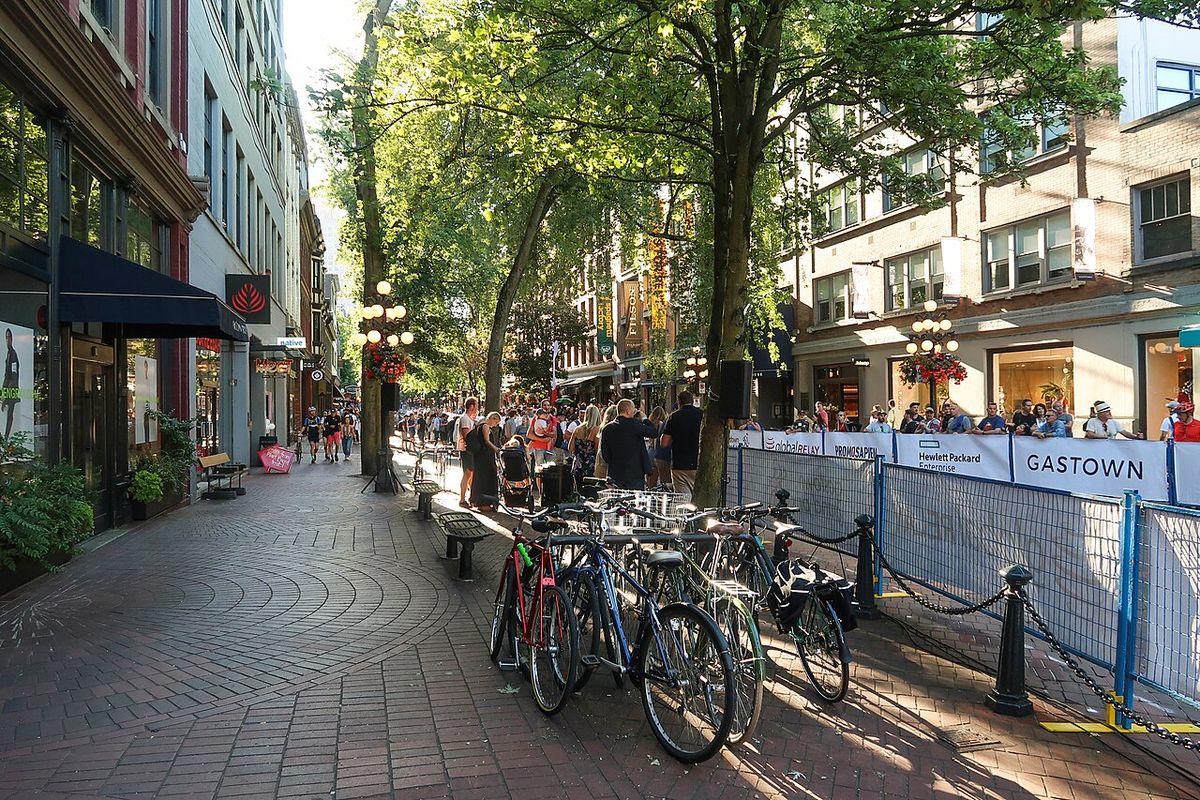
Gastown offers a dense concentration of activities centred on its historic built form and independent commercial character. The heart of the district is Water Street, a cobblestone thoroughfare lined with many of the neighbourhood's most photographed buildings, high fashion boutiques, antique stores, and art galleries. Simply strolling this street and the surrounding lanes to notice architectural details and hidden courtyards is a primary activity. The area is also known for its concentration of excellent cafés, including Nemesis, Cafe Duello, and DiBeppe, which serve as ideal spots for people-watching. For those interested in local goods, the seasonal shop 'All The Good Things From BC' at 440 West Hastings Street brings together locally designed gifts, art, apparel, and Indigenous art from across British Columbia, though it is closed seasonally with plans to reopen in May 2027. The same address also houses Value Sports, a store for winter adventure gear. Key attractions and structured activities for visitors include a number of specific options. Visitors can take guided history or food tours to learn about the area's origins in depth. Many explore the district's dining and nightlife scene, with numerous restaurants and bars. Viewing heritage buildings like the Marine Building and the Dominion Building is a popular pastime. The neighbourhood also serves as a convenient base to walk to other major Vancouver sites such as Canada Place, the Vancouver Waterfront, Harbour Air seaplane terminal, Science World, the Vancouver Lookout, and the Stanley Park Seawall.
- Take a guided history or food tour to learn about the area's origins.
- Explore the independent boutiques, high fashion stores, antique shops, and art galleries.
- Enjoy the district's dining and nightlife scene, with numerous restaurants and bars.
- View heritage buildings like the Marine Building and the Dominion Building.
- Walk to nearby attractions like Canada Place, the Vancouver Waterfront, and Science World.
- Visit the seasonal shop 'All The Good Things From BC' for local and Indigenous goods (reopening planned for May 2027).
- See the site of the former Gassy Jack statue in Maple Tree Square.
Contemporary Economy and Community
In the 21st century, Gastown has matured into a dynamic mixed-use neighbourhood that balances its historic identity with modern economic activity. It has become a significant hub for technology and new media companies, attracting firms such as Zaui Software, Idea Rebel, MetroQuest, BootUp Labs Entrepreneurial Society, SEOinVancouver, and MarketR. This influx of creative and tech businesses exists alongside long-standing independent retailers, creating a unique economic ecosystem. The neighbourhood remains a centre for arts and culture, supported by galleries and events. Community issues, particularly regarding gentrification and its impact on the surrounding Downtown Eastside, are reported on by the local Gastown Gazette, a community newspaper founded in February 2013 that has gathered provincial and national attention for its reports. In a move to enhance the visitor experience and pedestrian space, Water Street was converted into a car-free and car-light pedestrian zone from Richards Street to Carrall Street in mid-2024 as a pilot project. The area's business community is active, organizing events like the Gastown United Viewing Party, Vancouver Cocktail Week activities, and the Tourism Challenge through the Gastown Business Improvement Society.
Annual Events and Cultural Programming
Gastown's cobblestone streets and public squares serve as venues for several popular annual events that draw both locals and tourists. The neighbourhood is a key site for performances during the Vancouver International Jazz Festival, bringing music to its historic setting. Another major event is the Global Relay Gastown Grand Prix, an international criterium bicycle race where professional cyclists compete on a circuit through the district's streets. The area also hosts Vancouver Cocktail Week events in February. A past attraction, Storyeum, was a lively 65-minute theatrical show that re-enacted British Columbia history using eight sets located below street level. It opened in June 2004 but closed due to mounting debt in October 2006. The community calendar is further populated by business and social events like the Gastown United Viewing Party and the Tourism Challenge, reflecting its active local business community. These events contribute to the area's reputation as a place where Vancouver's history and contemporary cultural life intersect.
Location, Access, and Suggested Itineraries
Gastown is exceptionally accessible, located in the northwest section of the Downtown Eastside, adjacent to Downtown Vancouver. It is bordered by the waterfront, Waterfront Station, Canada Place, and Chinatown, making it easy to reach on foot, by SkyTrain, or from cruise ship terminals and seaplane docks. For a short visit of one hour or less, the essential experience includes seeing the Steam Clock, walking the length of Water Street, and viewing the site of the Gassy Jack statue in Maple Tree Square. With three hours, visitors can slow down, enjoy a coffee at a local café, and wander without a strict plan to discover hidden courtyards, murals, and independent businesses on side streets like Blood Alley. A longer six-hour itinerary allows for a full exploration, including a meal, detailed shopping, and potentially a guided tour. Many recommend visiting early in the morning to see the historic buildings catch the light and experience the area before the crowds arrive, when delivery trucks are making rounds and local workers are starting their day. The neighbourhood's central location also makes it a gateway to other major Vancouver attractions within walking distance, including the Vancouver Lookout at 555 West Hastings Street, where a glass elevator rises 168 meters for a 360-degree view.
Archival and Historical Imagery
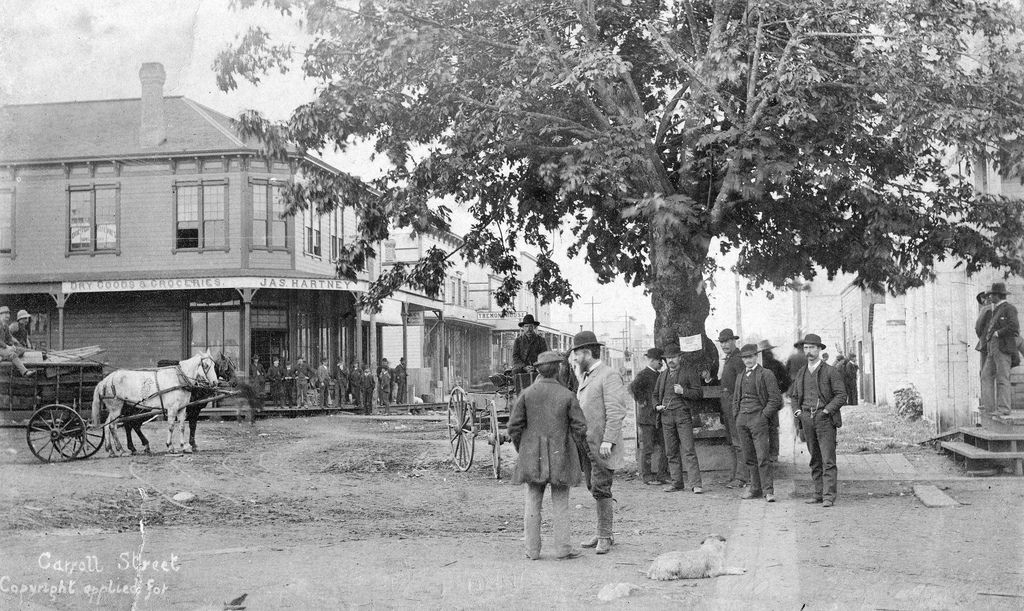
The visual history of Gastown is well documented through archival photographs that show its transformation from a small waterfront settlement to a built-up urban district. Key historical views include a look at Gastown from offshore in 1884, taken prior to the announcement of the Canadian Pacific Railway terminus. Another photograph from 1886 shows the area from a similar vantage point after further development. A photograph from 1887 shows Water Street from Maple Tree Square, with the Sunnyside Hotel visible at the right. Images of public life include a view of Cordova Street from above the intersection of Carrall Street during Dominion Day celebrations on July 1, 1890. These photographs are valuable resources for understanding the scale, architecture, and daily life of Gastown during its formative decades.
Questions about Gastown
Why is it called Gastown?
Gastown is named after John 'Gassy Jack' Deighton, a talkative Yorkshire seaman and barkeep who opened the area's first saloon in 1867. His habit of talking at length, or 'gassing,' led the settlement around his saloon to be called 'Gassy's Town,' which was eventually shortened to Gastown. The official survey name for the 1870 townsite was Granville, B.I. (Burrard Inlet), but the colourful nickname stuck and became the neighbourhood's permanent identity. The area began as a small settlement near Burrard Inlet and quickly prospered as the site of the Hastings Mill sawmill and a seaport.
What is the Gastown Steam Clock and how does it work?
The Gastown Steam Clock is a modern landmark built in 1977 at the corner of Water and Cambie Streets. It was originally constructed to cover a steam grate from Vancouver's downtown steam heating network, which originates from a plant adjacent to the Georgia Viaduct. The clock uses low-pressure steam to power a miniature steam engine in its base, which drives a chain lift that moves steel balls. The weight of the balls on a descending chain drives a conventional pendulum clock escapement that turns the hands on its four faces. The same steam powers whistles that sound the Westminster chime every fifteen minutes, with a longer sequence on the hour. It was temporarily removed for repairs by its original builder in October 2014 and reinstalled in January 2015.
When was Gastown declared a historic site?
Gastown was designated a National Historic Site of Canada in 2009. This federal designation followed decades of preservation efforts that began in the 1960s when the area was threatened with demolition for a freeway. The campaign, supported by citizens, business owners, and activists like gallery owner Henk F. Vanderhorst, successfully argued for the protection of Gastown's distinctive architecture and its significance as the original core of Vancouver. Vanderhorst's efforts were acknowledged with the 'First Pioneer Citizen of Gastown' award in 1976, years before the national designation was achieved.
What are the main annual events in Gastown?
Gastown hosts several major annual events that utilize its historic streets. These include the Vancouver International Jazz Festival, which features performances in the neighbourhood, and the Global Relay Gastown Grand Prix, an international professional bicycle race. The area also participates in Vancouver Cocktail Week with events in February. Community and business events, such as the Gastown United Viewing Party and the Tourism Challenge, are organized by the local Business Improvement Society. A past attraction, Storyeum, operated from 2004 to 2006 but is no longer running.
Is Gastown pedestrian-friendly?
Yes, Gastown is very pedestrian-friendly, a characteristic enhanced by a pilot project launched in mid-2024 that converted Water Street between Richards and Carrall Streets into a car-free and car-light pedestrian zone. The neighbourhood's compact size, cobblestone streets, and dense concentration of shops, restaurants, and attractions make it ideal for exploring on foot. Its central location also allows for easy walking access to nearby districts like Downtown, Waterfront, and Chinatown. Many visitors find the area best experienced slowly by wandering without a strict plan.
What happened to the statue of Gassy Jack?
The statue of Gassy Jack that stood in Maple Tree Square was toppled by protesters on February 14, 2022, during the 31st annual Memorial March for Missing and Murdered Indigenous Women and Girls. The act was part of a broader critique of colonial narratives and figures in public spaces. The statue has not been reinstalled as of the latest information, and the plinth remains empty, serving as a point of reflection on the neighbourhood's complex history. The memorial march is an annual event that highlights the crisis of violence against Indigenous women and girls.
Sources and further reading
- Gastown (Wikipedia)
- The Perfect Gastown Itinerary: How to Spend 1, 3, or 6 ... (allthegoodthingsfrombc.ca)
Checked by the Novello Desserts desk. Last updated 2026-10-28.