Lions Gate Bridge
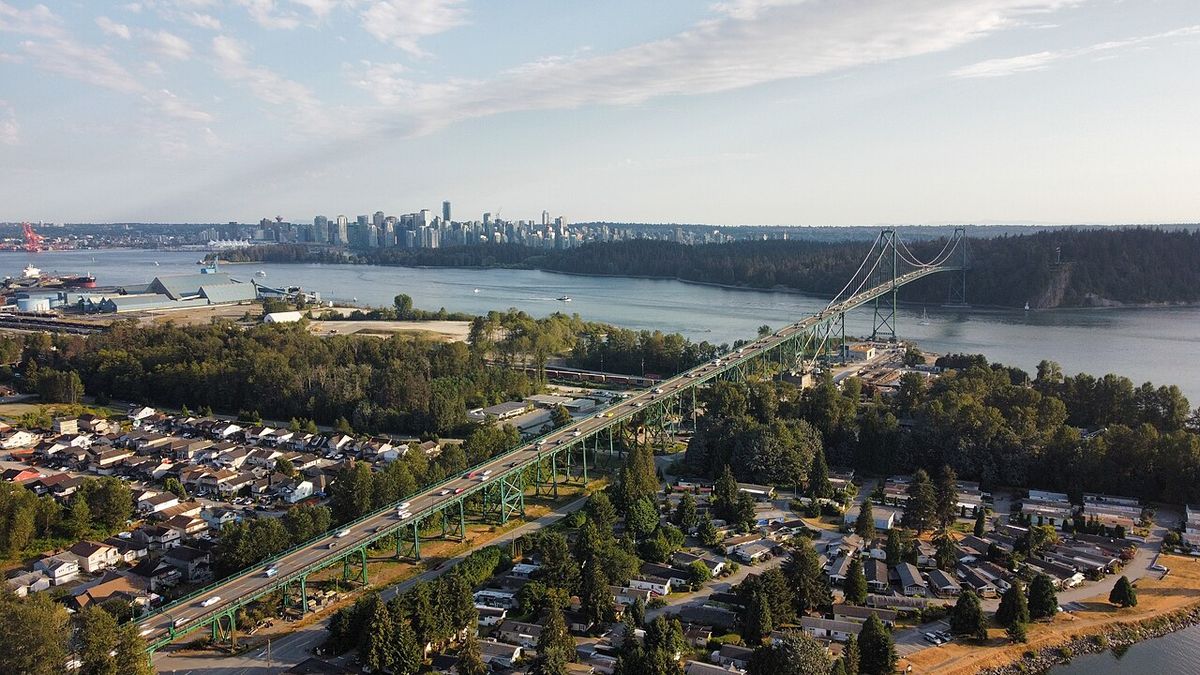
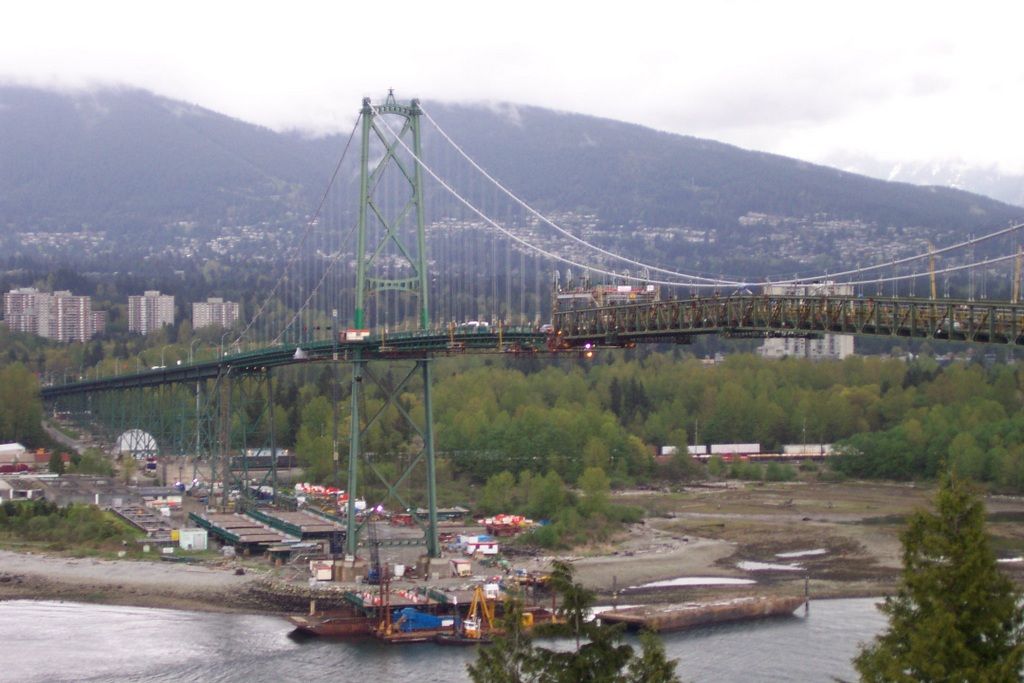
The Lions Gate Bridge is a historic suspension bridge spanning the First Narrows of Burrard Inlet in Vancouver, British Columbia. Connecting the city's downtown core and Stanley Park to the North Shore municipalities, it serves as a vital transportation link and an important symbol of the region. Designated a National Historic Site of Canada in 2005, the bridge is celebrated for its Art Deco design, innovative engineering, and its picturesque setting against a backdrop of coastal mountains and water. It carries tens of thousands of vehicles daily on Highways 99 and 1A and remains a key landmark for residents and a major draw for visitors.
Design and Engineering
The Lions Gate Bridge is a significant feat of civil engineering, recognized as the longest suspension bridge in the British Empire upon its completion. The bridge was designed by the Montreal engineering firm Monsarrat and Pratley, which later used a similar design for the Angus L. Macdonald Bridge in Halifax. Its total length, including the extensive North Viaduct required due to the flat northern terrain, is 1,823 metres, with a main suspension span of 473 metres. The twin steel towers rise 111 metres above the water, providing a ship's clearance of 61 metres for vessels entering the Port of Vancouver. The original design featured an open steelwork for the towers and a relatively thin deck, giving the massive structure a lightweight appearance that complements its scenic surroundings.
Innovations in cable construction and use were central to the bridge's engineering. The suspended structure originally consisted of a concrete deck, which was replaced in a landmark project. A major technical achievement occurred between September 2000 and September 2001, when the entire suspended structure, including the deck, hangers, and stiffening trusses, was replaced without interrupting peak-hour traffic. This was the first time such a comprehensive replacement was undertaken on a major suspension bridge while it remained in daily use. The new, lighter orthotropic steel deck also allowed for the widening of each of the three road lanes from 3 to 3.6 metres. This project, along with a prior replacement of the North Viaduct deck in 1975, has significantly extended the lifespan of the 1938 structure. The 2001 replacement involved 47 separate deck sections, each lowered to a barge and a new section raised into place during a series of nighttime and weekend closures.
Historical Development and Timeline
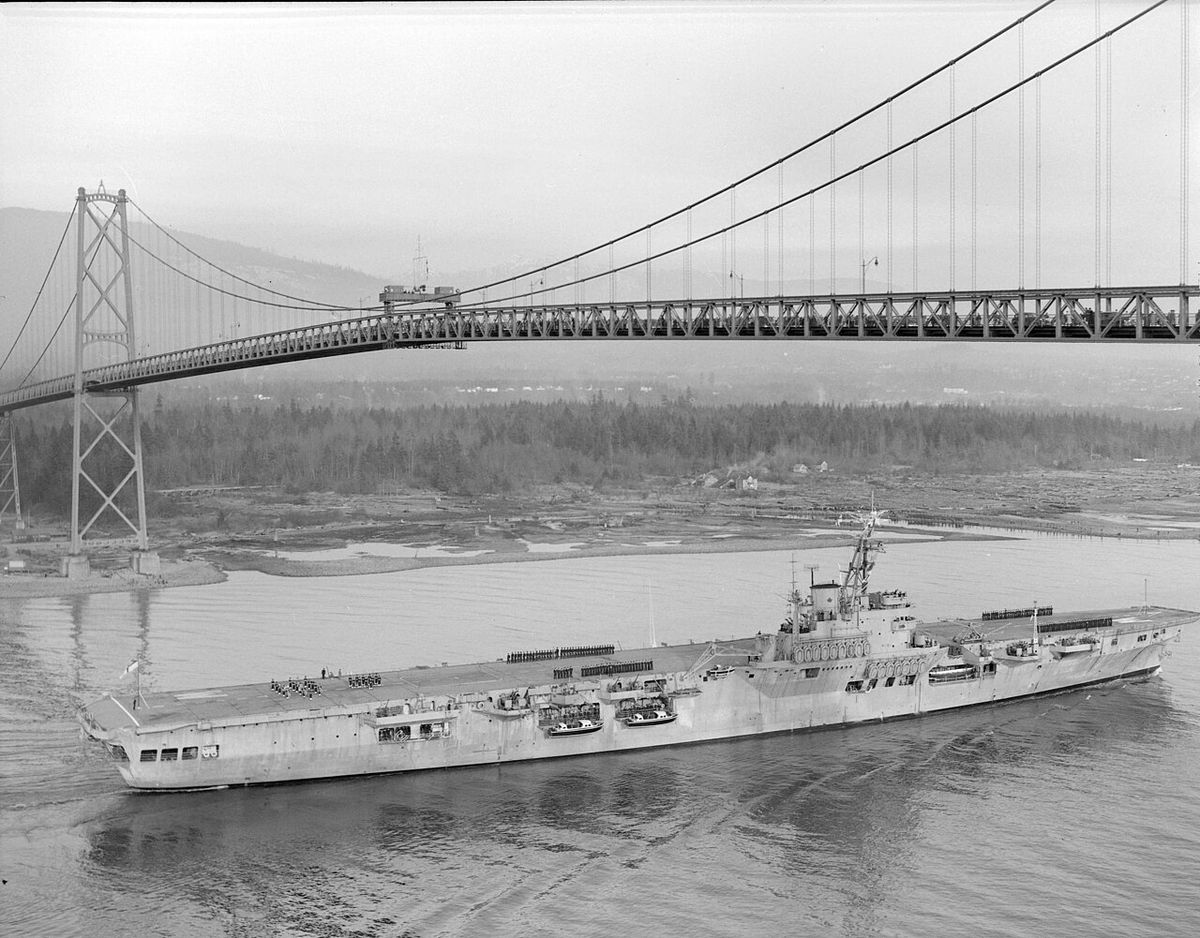
The concept of a bridge crossing the First Narrows was proposed as early as 1890 by land speculator George Grant Mackay. For decades, a ferry service operated between Gastown and Ambleside from 1909 to 1947. The modern bridge project gained momentum through the efforts of engineer Alfred James Towle Taylor, who had a land interest in the North Shore. Taylor convinced the Guinness family, famous for their Irish brewing business, to invest in the area. Their syndicate, British Pacific Properties Ltd., purchased 1,902 hectares of West Vancouver mountainside, and the bridge was seen as crucial for accessing and developing these lands. A 1927 plebiscite in Vancouver rejected the bridge, but a second vote in December 1933 passed with 70 percent support, authorizing construction with the stipulation that local materials and labour be used to provide Depression-era employment. The 1933 bylaw also included a discriminatory provision prohibiting the employment of "Asiatic" persons on the project.
Construction began on March 31, 1937, and the bridge opened to traffic on November 14, 1938, at a cost of $5,873,837. King George VI and Queen Elizabeth presided over the official opening ceremony on May 29, 1939, during their royal tour of Canada. A toll of 25 cents per car or horse and carriage was instituted, with a five-cent charge for pedestrians or bicycles. The bridge was originally built with only two lanes. To address growing traffic, a third, reversible centre lane was added on May 19, 1952, using a system of signs that was later replaced with traffic signals in 1965. The Guinness family sold the bridge to the Province of British Columbia on January 20, 1955, for exactly its original construction cost. The tolls remained until April 1, 1963, when the provincial government removed them from several bridges, leading to the demolition of the north-end toll plaza.
The bridge's history is marked by several key modifications and upgrades that have maintained its functionality. These include the 1956 construction of a partial cloverleaf interchange at Marine Way at the north approach and the 1975 replacement of the original concrete deck of the North Viaduct with a lighter, wider steel orthotropic deck. In 1986, the Guinness family gifted 170 decorative lights, first illuminated on February 19, and a new counterflow traffic system was introduced in 1994 to reduce congestion. The entire suspended structure was replaced in a landmark engineering project from 2000 to 2001, and the lighting system was updated with LED bulbs in 2009, cutting energy use by 90 percent. More recent work includes a 2020 project to reduce boat collision risk and the May 2022 replacement of lane control signals with new LED ones. These continual investments have preserved the bridge as a working piece of infrastructure and a protected historic site.
- 1956: A partial cloverleaf interchange was built at Marine Way at the north approach.
- 1975: The original concrete deck of the North Viaduct was replaced with a lighter, wider steel orthotropic deck.
- 1986: The Guinness family gifted 170 decorative lights, first illuminated on February 19.
- 1994: A new counterflow traffic system was introduced to reduce congestion.
- 2000 to 2001: The entire suspended structure was replaced in a landmark engineering project.
- 2009: The lighting system was updated with LED bulbs, cutting energy use by 90 percent.
- 2020: A project to reduce the risk of boat collisions was completed.
- 2022: Lane control signals were replaced with new LED ones in May.
Cultural Significance and Features
The Lions Gate Bridge is deeply embedded in Vancouver's cultural identity and skyline. Its name derives from The Lions, a pair of mountain peaks to the north that the bridge's alignment faces. The most recognizable decorative features are the two cast concrete lion sculptures guarding the south approach in Stanley Park, designed by Vancouver sculptor Charles Marega and installed in January 1939. In 1986, as a gift to the city celebrating Expo 86, the Guinness family funded a decorative lighting system that made the bridge a distinctive nighttime landmark. This system of 170 lights was designed by British engineer Ian Hayward and first illuminated on February 19, 1986. In July 2009, the lights were upgraded to LED technology, reducing power consumption by an estimated 90 percent and saving about $30,000 annually in energy and maintenance costs.
The bridge's cultural footprint extends beyond Vancouver. It is the namesake of the major film studio Lionsgate Films, which was founded locally. The structure has also served as a filming location and inspiration for various media. It appears as the fictional "North Bay Bridge" in the opening scene of the 2011 film Final Destination 5 and is featured in the final scene of Tron: Legacy. It appears briefly in Deadpool 2 and forms part of the backdrop for courses in the video games Mario Kart Tour and Marvel's Wolverine. Its status as a National Historic Site of Canada, designated on March 24, 2005, formally recognizes its value for its Art Deco aesthetics, technical innovation, and symbolic importance to the development of Vancouver and Western Canada. The bridge is identified as one of Canada's technical and engineering landmarks.
Traffic Management and Operations
The bridge is a critical component of the regional transportation network, forming part of both Highway 99 and Highway 1A. It typically carries between 60,000 and 70,000 vehicles per day across its three lanes. The centre lane is reversible and its direction is controlled by overhead signals to accommodate peak traffic flows, a system that has been in place since 1952. To manage congestion, a new counterflow system was introduced in 1994. For safety and preservation, certain vehicle restrictions are enforced. Trucks exceeding 13 tonnes are prohibited from using the bridge, as are vehicles equipped with studded tires. These measures help protect the historic structure from excessive wear and damage.
Ongoing maintenance and improvement projects ensure the bridge's functionality and safety. In 2020, a project was completed to decrease the likelihood of boat collisions with the bridge's supports. The lane control signals were upgraded with new LED technology in May 2022. Routine work, such as repaving the northern approach, was carried out in late 2023. The bridge's operation is carefully managed to balance the needs of high-volume commuter traffic with the preservation of its historic fabric, ensuring it continues to serve as a reliable link between Vancouver and the North Shore.
Tourism and Visitor Experience
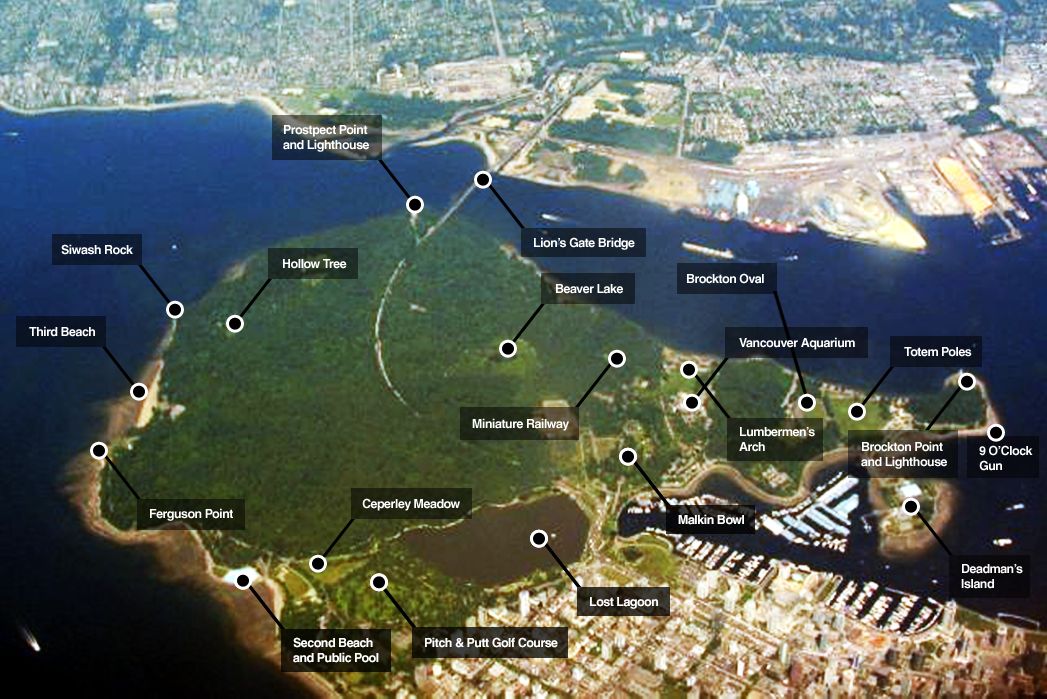
The Lions Gate Bridge is a premier tourist attraction, offering stunning panoramic views of Stanley Park, Burrard Inlet, the North Shore mountains, and the Vancouver skyline. Visitors can walk or bike across the bridge on dedicated pathways, which were cantilevered to the outside of the suspension cables during the 2001 deck replacement, providing an unobstructed vista. The south entrance in Stanley Park, framed by Marega's lion sculptures, is a popular photo opportunity. Prospect Point in the park offers a spectacular view of the bridge's entire span. Many guided tours of Vancouver include the bridge as a key highlight, emphasizing its historical and architectural significance.
A proposed adventure tourism experience, the Lions Gate Bridge Climb, has generated significant interest. If approved and launched, this venture would allow participants to climb 360 ladder rungs inside the bridge's tower legs to a small platform over 500 feet above the water near the navigational lights. Promising a 365-degree view of the city, the climb was proposed to open around Canada Day in 2017 as part of the nation's 150th birthday celebrations, with a projected cost between $250 and $300 per person. The business received a two-year license from the provincial Transportation Ministry, though it had not launched as of the most recent reports. This potential addition highlights the bridge's enduring appeal not just as a crossing, but as a destination for unique and thrilling experiences. The climb would require no new construction, utilizing existing internal ladder access within the tower legs.
Key Construction and Engineering Firms
The design and construction of the Lions Gate Bridge involved a consortium of prominent engineering and construction firms from Canada and the United States. The lead design was undertaken by the Montreal firm Monsarrat and Pratley. The detailed planning and execution required specialized expertise from several other companies, each contributing to different aspects of the massive project. These firms represent a key group of mid-20th century civil engineering and bridge building in North America. The involvement of these firms highlights the scale and complexity of the project, which was one of the biggest construction undertakings in Canada during the 1930s. Their collective work resulted in a structure that was not only functional but also aesthetically praised for its Art Deco style and graceful profile.
- Monsarrat and Pratley: The Montreal-based firm responsible for the overall design of the suspension bridge.
- Swan Wooster Engineering: A consulting engineering firm involved in the construction.
- Parsons Brinckerhoff Quade & Douglas: An American engineering firm that contributed to the project.
- Rowan Williams Davies & Irwin Inc.: A firm specializing in engineering, likely consulted on specific aspects.
- Canron Western Constructors: A Canadian construction company involved in building the bridge.
- Dominion Bridge Company: A major Canadian steel fabricator and bridge builder.
- American Bridge Company: A leading United States steel fabrication and construction firm.
Key Facts and Statistics
The Lions Gate Bridge's specifications and history are defined by a series of notable figures and events. The following table outlines key comparative statistics related to its construction, dimensions, and modifications. Beyond these figures, the bridge's physical dimensions solidify its place as an engineering landmark. Its main span of 473 metres was a record-setter in the British Commonwealth. These statistics, combined with its daily traffic volume and historic designation, encapsulate the bridge's scale and enduring importance to the region's infrastructure and heritage. The length including the approach spans is 1,517.3 metres, with the main span alone measuring 473 metres.
| Feature | Specification or Event | Year |
|---|---|---|
| Construction Cost | $5,873,837 | 1938 |
| Sale Price to Province | $5,873,837 | 1955 |
| Original Toll (per car) | 25 cents | 1938 to 1963 |
| Third Lane Addition Cost | $18,000 | 1952 |
| Deck Replacement (North Viaduct) | Steel orthotropic deck installed | 1975 |
| Decorative Lights Installed | 170 lights, gift from Guinness family | 1986 |
| Full Suspended Structure Replacement | 47 sections replaced | 2000 to 2001 |
| Lighting Upgrade to LEDs | Estimated $30,000 annual savings | 2009 |
Associated Landmarks and Structures
The Lions Gate Bridge is integrally connected to several surrounding landmarks and infrastructure projects. Its southern landing is within the world-famous Stanley Park, making the bridge and park visually and functionally linked. The construction of the bridge also directly spurred development on the North Shore, particularly the British Properties in West Vancouver, which was the real estate venture of the Guinness syndicate that financed the bridge. To manage traffic from the bridge, a partial cloverleaf interchange was built at Marine Way in 1956, followed by a new bridge over the Capilano River to address congestion.
Other significant bridges in the Vancouver area are often discussed in relation to the Lions Gate. The Angus L. Macdonald Bridge in Halifax, Nova Scotia, is considered a sister bridge due to its similar design by the same engineering firm, Monsarrat and Pratley. These connections illustrate how the Lions Gate Bridge is not an isolated structure but a central piece in a network of transportation and development that shaped metropolitan Vancouver. The bridge is also listed among other major crossings in references such as the List of bridges in Canada.
Appearances in Film and Media
The distinctive silhouette of the Lions Gate Bridge has made it a popular setting and backdrop for numerous films, television shows, and video games. Its appearance often serves to immediately establish a Vancouver location or to provide a dramatic visual. The bridge's association with the film industry is further cemented by the fact that the major studio Lionsgate Films took its name from the bridge. These appearances contribute to the bridge's status as a recognizable symbol of Vancouver in global popular culture. Beyond specific listings, the bridge is frequently photographed and appears in travel documentaries and promotional material for the city, reinforcing its role as a visual anchor for the region's identity.
- Final Destination 5 (2011): The opening scene features the bridge as the fictional "North Bay Bridge" where a catastrophic collapse occurs.
- Tron: Legacy (2010): The film's final scene shows the character Sam Flynn riding his motorcycle across the Lions Gate Bridge.
- Deadpool 2 (2018): The bridge appears briefly in this superhero film.
- Mario Kart Tour (video game): The "Vancouver Velocity" course features the bridge in its background scenery.
- Marvel's Wolverine (video game): The bridge is visible in the background of "The One That Got Away" level.
Questions about Lions Gate Bridge
Why is it called the Lions Gate Bridge?
The Lions Gate Bridge is named for The Lions, a pair of mountain peaks north of Vancouver. Northbound traffic on the bridge heads in their general direction. The term 'Lions Gate' refers directly to these peaks. This name was later adopted by the locally founded film company Lionsgate Films. The bridge itself is also officially known as the First Narrows Bridge, referencing its location crossing the first narrows of Burrard Inlet.
Can you walk or bike across the Lions Gate Bridge?
Yes, pedestrians and cyclists can cross the Lions Gate Bridge using dedicated walkways. These walkways are cantilevered to the outside of the suspension cables, providing clear views. The bridge connects downtown Vancouver at Stanley Park's Prospect Point to the North Shore municipalities, making it a scenic route. It is a popular activity for enjoying panoramic views of the harbour and mountains. The original 1938 opening included a five cent toll for pedestrians or bicycles, but all tolls were removed in 1963.
When were the lion statues added and who created them?
The pair of cast concrete lion statues were placed on either side of the south approach to the bridge in January 1939. They were designed by sculptor Charles Marega. These well-known Art Deco sculptures symbolically guard the entrance to the crossing from Stanley Park. Their installation occurred shortly after the bridge opened to traffic in November 1938. The lions have become a defining and photographed feature of the bridge's identity.
Is there a toll to cross the Lions Gate Bridge?
No, there is no toll to cross the Lions Gate Bridge. Tolls were permanently removed on April 1, 1963, as part of a provincial government scheme. Originally, a toll of 25 cents per car was charged by the private owners, the Guinness family, who built the bridge. The province purchased the bridge from the Guinness family in 1955 for the original construction cost. The toll plaza at the north end was subsequently demolished after the tolls ended.
What was unique about the bridge's deck replacement in 2001?
The deck replacement from 2000 to 2001 was a pioneering global engineering feat. It was the first time the entire suspended structure of a major suspension bridge was replaced without interrupting peak hour traffic. Workers replaced the deck, hangers, and stiffening trusses in 47 sections during nighttime and weekend closures. Old sections were lowered to barges and new, lighter orthotropic deck sections were raised into place. This project extended the lifespan of the 1938 bridge and widened each of its three road lanes.
Has there ever been a proposal to allow climbing the bridge?
Yes, a business venture was proposed to offer guided climbs to the top of the bridge towers. The plan involved climbing 360 ladder rungs inside the tower legs to a platform over 500 feet high for a 365 degree view. The provincial Transportation Ministry granted the venture a two year license. The proposer, Kevin Thomson, aimed for a Canada Day 2017 opening to celebrate Canada's 150th birthday. As reported, the plan required no construction but details like a proposed fee of $250 to $300 needed finalization before launch.
Sources and further reading
- Lions Gate Bridge (Wikipedia)
- Given the Chance, Would you Climb the Lions Gate Bridge? (destinationvancouver.com)
- Lions Gate Bridge, Vancouver Heritage Site Finder (heritagesitefinder.ca)
Checked by the Novello Desserts desk. Last updated 2026-10-28.