Scotiabank warns diesel price shock will raise grocery and shelter costs by 2026
A new report says higher diesel and crude oil prices from global conflicts will drive up consumer prices for food and shelter over the next 18 months.
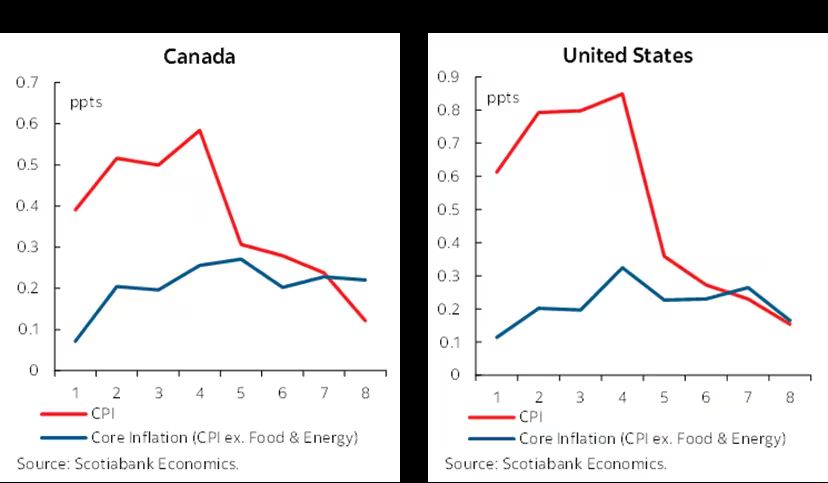
Canadians could see higher grocery and shelter costs by 2026 due to a major price shock for diesel and crude oil working through supply chains, according to a Scotiabank report.
The bank's director of modelling and forecasting, Olivier Gervais, said the conflict in Iran has created more than a typical oil shock, with diesel prices rising sharply.
"The Iran war has led to more than a typical oil shock. Diesel prices have risen well beyond what the move in crude would normally imply, adding a distinct and broader layer of inflation pressure to the latest energy shock," said Olivier Gervais, Scotiabank director of modelling and forecasting, who authored the report.
The report explains that higher diesel costs for transportation, agriculture and industry will gradually push up consumer prices over 12 to 18 months.
READ MORE: Higher diesel prices to add 0.6 percentage points to food inflation, expert says
READ MORE: Food and beverage sales rise but face pressure from trade and energy costs
Crude oil supplies have been particularly strained from the Iran war choking off most shipments through the Strait of Hormuz.
Diesel has been in short supply worldwide as Russia, a major producer, has seen its diesel refineries and infrastructure damaged by its war with Ukraine.
Gervais said shelter and food prices rise with a lag, peaking roughly one year after the shock for shelter and 18 months for food.
"That delayed response is consistent with higher transportation, heating, and production costs gradually working their way through the supply chain," says Gervais.
The Iran war began on Feb. 28 of this year, while the Russia-Ukraine war has been ongoing since 2022.
Scotiabank estimates consumers may start feeling significantly more financial pressure starting around March 2026.
The report warns that a longer-lasting shock would increase the risk of broader inflation pressure and a stronger monetary policy response from central banks.
"With the diesel shock adding to an already widening set of upside risks, a sustained move would increase the pressure to raise rates more aggressively," the report said.
The Bank of Canada, which has a mandate to keep prices stable, is monitoring the situation closely.
In August, Governor Tiff Macklem said there was "little evidence that higher oil prices have fed through to other goods and services prices more broadly," and added: "But it is early days and we will be watching this closely."
Higher oil and gas prices have kept consumer inflation at three per cent in July and August, at the top of the Bank's one to three per cent target range.
If inflation spikes, taking out a loan or renewing one, like a mortgage, could also get more expensive.
A food expert told Novello Desserts last month that rising diesel costs would increase grocery retail inflation within four to eight weeks as trucking companies apply surcharges.
With files from Global News
Renée Bouchard writes about food, restaurants and grocery prices across Canada for Novello Desserts.