Black Canadians face far higher risk of pregnancy complications than white people, study finds
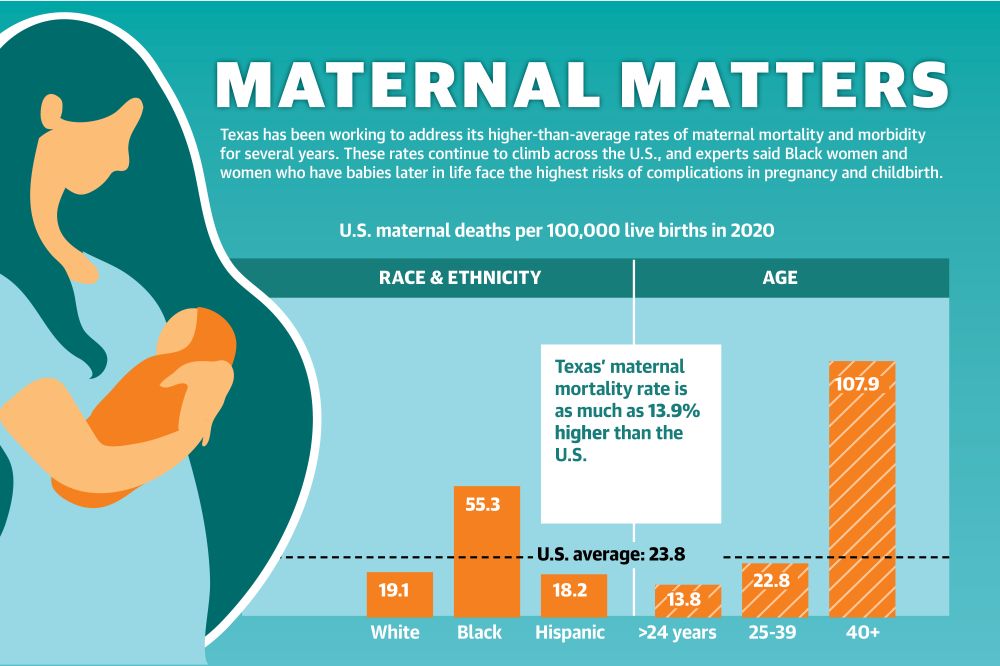
A major study found severe maternal morbidity was 47.8 per 1,000 births for Black parents versus 27.7 for white parents, a 66% higher risk.
Black people in Canada face a significantly higher risk of severe complications during pregnancy and childbirth than white people, according to a major new study published Monday.
Researchers found that severe maternal morbidity, encompassing complications such as pre-eclampsia, hemorrhage and sepsis, occurred at a rate of 47.8 out of 1,000 live births for a Black parent compared to 27.7 out of 1,000 live births for a white parent.
Even when researchers accounted for other factors like age, immigration status or other health conditions, Black people still had a 66 per cent higher chance of experiencing these potentially life-threatening complications.
READ MORE: Long COVID linked to lower dopamine levels in brain, study finds
READ MORE: Debris found from missing air ambulance that vanished off Massachusetts coast
“It's huge to finally have this, you know, so-called proof and evidence that we've been told that we need to have in order to really prioritize Black communities and reproductive health,” said Cheyenne Scarlett, co-founder of the Black Birth Project.
The research, published in the Canadian Medical Association Journal, looked at more than 108,000 in-hospital deliveries to Black people, and more than 1.3 million in-hospital deliveries to white people across the country between 2012 and 2023.
Giulia Muraca, an associate professor of obstetrics and gynecology at McMaster University and a study author, said the findings should prompt an examination of inequities in access, communication and treatment.
“Being Black is not the cause of these differences,” Muraca said. “These are things that we can start to now collect routine data on and hold institutions accountable for.”
The higher rates of complications for Black people persisted when researchers controlled for conditions that occur in different rates in Black and white populations, such as sickle cell disease.
The authors noted in the study that the consistent disparity “suggests broader structural influences on maternal health.”
While a higher income correlated with an improvement in maternal outcome for white parents, the study found that rates of severe complications increased for Black parents along with their income.
Muraca suggested this is an example of a "diminishing returns" phenomenon, in which those who experience structural marginalization don't receive the same advantages of an increased income.
Kearie Daniel, executive director and founder of the Black Women’s Institute for Health, said the data aligns with what community organizations have been documenting for years.
“So me, as a Black woman, when I go into the hospital, when I'm in front of a practitioner, how are they responding to me?” Daniel said. “Are they going to see my pain the same way that they're seeing someone else's?”
A national survey released by the Black Women’s Institute for Health in 2025 looked at the experiences of nearly 2,000 Black women and girls with Canada’s health-care system.
It found that 42 per cent avoid seeking medical care because they were afraid of how they might be treated.
When it came to maternal care, some women reported fearing their children might be taken from them after staff summoned social workers with no justification, Daniel said.
Others dealt with miscarriages at home rather than risk poor treatment at the hospital, and many reported their pain was ignored.
“They're giving birth in the emergency bathroom, in the waiting room, they are being turned away,” Daniel said.
She described her own experience during pregnancy, when her mother stressed she needed to dress well when going to the hospital, concerned that she wouldn’t be taken seriously.
“Having to go into a system that really isn't seeing your full humanity when you're depending on them to do so for your survival and the survival of your baby is just so, 'demoralizing' is not the right word. It's not a heavy enough word to really articulate just how excruciating it is,” Daniel said.
Scarlett, of the Black Birth Project, told CBC News that she has first-hand experience with the cracks in Canada’s maternal care, saying she was once sent home from an ER with an ectopic pregnancy without proper treatment.
“This report is not at all shocking to me,” she said.
To ensure equitable maternity care, Daniel said real action is needed from governments and health-care organizations, including better staff training and the tracking of race-based data.
“There has to be accountability,” Daniel said. “We are dying as a result of not having that.”
Although some regions began tracking race-based health data after the pandemic, it's still fractured across the country.
With files from CBC News
Amara Okafor covers health, medical research and public health in Canada for Novello Desserts.