Jiaozi
Jiaozi are a traditional Chinese dumpling consisting of a ground meat or vegetable filling encased in a thin wheat dough wrapper, then sealed and cooked. A staple of northern Chinese cuisine, they hold particular cultural significance during Lunar New Year celebrations, where their ingot-like shape symbolizes wealth and prosperity. In Canada, jiaozi are widely available in restaurants and are a popular homemade dish, reflecting the country's diverse culinary landscape and the influence of its Chinese Canadian community. They can be prepared through various methods including boiling, steaming, pan-frying, and deep-frying, and are typically served with a dipping sauce of black vinegar and soy sauce.
Historical Origins and Cultural Significance
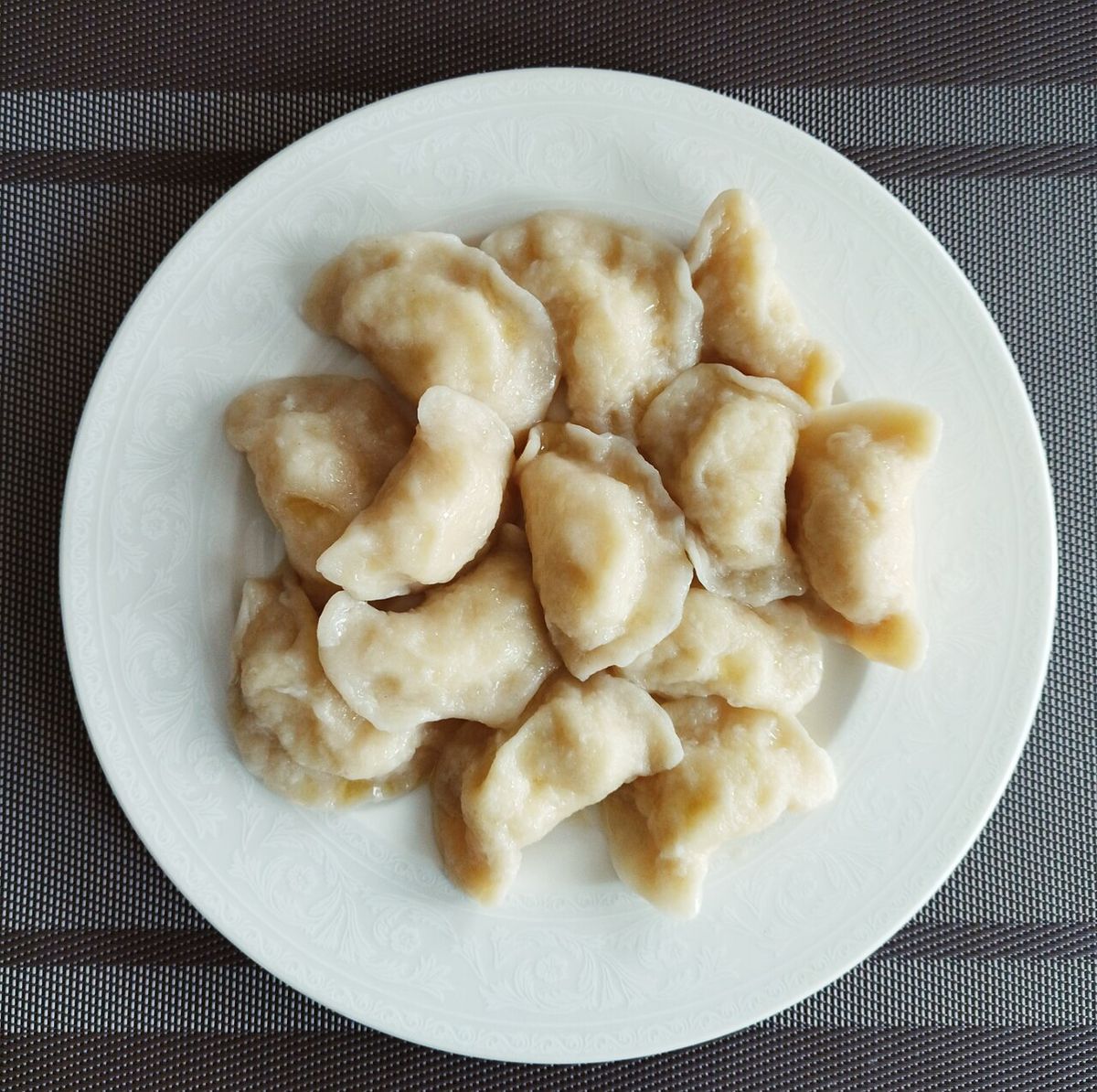
The origins of jiaozi are deeply rooted in Chinese history and folklore. One prominent legend attributes their invention to Zhang Zhongjing, a renowned physician of the Eastern Han dynasty (AD 25-220). He is said to have created dumplings filled with lamb and warming herbs to treat villagers suffering from frostbitten ears during winter, initially calling them tender ears (jiāo'ěr). Archaeological evidence, including dumplings found in tombs from the Tang dynasty (AD 618 to 907) in Turpan, confirms the dish's ancient lineage. The name jiaozi itself is thought to derive from the word for horn (jiǎo), referencing their traditional crescent shape. Over centuries, jiaozi evolved from a medicinal food to a celebratory dish. Their resemblance to the gold and silver ingots (sycee) used in Imperial China transformed them into a powerful symbol of wealth and good fortune. This symbolism is central to their role in Lunar New Year traditions, particularly in northern China, where families often gather to make and eat jiaozi at midnight on New Year's Eve. Some customs involve hiding a clean coin inside one dumpling, with the finder believed to receive extra luck in the coming year. While strongly associated with the New Year, jiaozi are now consumed year-round across China as a common breakfast, lunch, dinner, or restaurant course.
Preparation and Cooking Methods
The preparation of jiaozi is a process that often involves multiple hands, emphasizing community and family. It begins with making a simple dough from wheat flour and water, which is rested, rolled, and cut into circular wrappers. The filling is prepared separately by finely chopping or mincing ingredients and mixing them with seasonings. A small amount of filling is placed in the centre of each wrapper, which is then folded and sealed using various techniques. The most common shape is the crescent, created by pinching the edges together in a series of small pleats. Once assembled, jiaozi can be cooked using several distinct methods, each yielding a different texture and flavour profile. Boiling (shuǐjiǎo) results in tender, soft dumplings often served in a broth or with a robust dipping sauce. Steaming (zhēngjiǎo) produces a slightly firmer, delicate wrapper. Pan-frying (jiānjiǎo), a method particularly popular in the West where they are often called potstickers, creates a crispy, golden-brown base with a steamed top, typically achieved by frying then adding water to the pan and covering it. Deep-frying (zhàjiǎo) yields a wholly crisp exterior. The chosen cooking method fundamentally changes the eating experience, offering versatility from a comforting soup dumpling to a crunchy appetizer.
Common Fillings and Regional Variations
Jiaozi fillings vary widely across regions and personal preference, but they generally combine a protein with vegetables and aromatic seasonings. Common meat fillings include pork, chicken, beef, shrimp, and fish. These are typically mixed with finely chopped vegetables such as napa cabbage, scallions, Chinese chives, celery, spinach, mushrooms, and carrots. Seasonings like ginger, garlic, soy sauce, sesame oil, and rice wine are essential for building depth of flavour. Vegetarian fillings might feature combinations of tofu, mushrooms, cabbage, and scrambled egg. Within China, notable regional variations exist. In northern China, where jiaozi originated, dumplings are often heartier with thicker, handmade wrappers. In contrast, Cantonese-style gaau ji, commonly found in dim sum, are smaller with a thinner, translucent wrapper and are almost always steamed, with shrimp (har gaw) being a classic filling. Shanghai is known for soup dumplings (tang jiao) and specific pan-fried varieties. Another distinct northern Chinese type is guotie, often elongated and sometimes left open at the ends, designed specifically for pan-frying to achieve a maximum crispy surface area. The diversity of fillings and styles reflects the vastness of Chinese culinary traditions, where local ingredients and tastes shape this universal dish.
Jiaozi in Global Cuisines
The culinary influence of jiaozi extends far beyond China, having been adapted into several other Asian cuisines with local characteristics. In Japan, gyōza were introduced after the Second World War by Japanese repatriates from China. Japanese gyōza are characterized by thinner, often machine-made wrappers and a filling prominently seasoned with garlic and ginger, typically served pan-fried with a soy-vinegar dipping sauce. In Korea, the dumpling is known as mandu, which can be steamed, boiled, or fried and is considered a signature dish, enjoyed in everything from royal cuisine to street food stalls. The Tibetan and Nepalese version, called momo, is usually steamed or fried and features fillings like ground water buffalo, lamb, or chicken, served with a spicy tomato-based sauce or a sesame sauce. In the West, particularly in North America, the pan-fried jiaozi became widely known as potstickers, a term derived from the Chinese guōtiē. In some regions, like the Boston area, they were historically marketed as Peking Ravioli to appeal to local tastes. These global adaptations demonstrate the dumpling's versatility and its capacity to integrate into different food cultures while maintaining its core identity as a filled dough parcel.
Jiaozi in the Canadian Context
Jiaozi have found a comfortable home in Canada's multicultural food scene. They are a menu staple in countless Chinese restaurants across the country, from large metropolitan centres to smaller communities, available as appetizers, side dishes, or main courses. The dish's popularity is also evident in home cooking, with many Canadian families, both of Chinese heritage and others, embracing the tradition of making dumplings together. Asian grocery stores nationwide routinely stock jiaozi wrappers, both fresh and frozen, and pre-made frozen dumplings, making them an accessible convenience food. Culinary schools, community centres, and cooking blogs frequently feature jiaozi-making classes or recipes, further integrating the dish into Canada's culinary fabric. The dish's communal nature aligns with Canadian values of family and sharing, while its symbolic connection to prosperity and new beginnings resonates during cultural celebrations like Lunar New Year, which is widely observed in Canadian cities. As a result, jiaozi serve not only as a delicious food but also as a culinary bridge, connecting Canadians to Chinese traditions and to each other through shared meals.
Distinguishing Jiaozi from Other Dumplings
It is common to confuse jiaozi with other types of Chinese dumplings, most notably wontons. While both are filled dough parcels, they differ in several key aspects. Jiaozi typically have a thicker, wheat-based dough wrapper that is rolled into a round shape. When folded, they have a flatter, more oblate profile, often resembling a crescent moon or a pleated half-circle. They are most commonly boiled, steamed, or pan-fried and served with a dipping sauce. Wontons, by contrast, use a thinner, often egg-enriched dough that is rolled into squares. The folding style is usually simpler, resulting in a shape that is less uniform, and they are most famously served floating in a clear broth as a soup. The fillings can be similar, but the wrapper texture and primary serving method are the main differentiators. Another point of confusion arises from supermarket packaging, where wrappers suitable for jiaozi are often generically labeled as wonton skins. Understanding these distinctions helps appreciate the specific place jiaozi holds within the broader and diverse world of Chinese dumplings.
Serving and Accompaniments
The serving of jiaozi is nearly as important as their preparation. They are rarely eaten plain and are almost always accompanied by a dipping sauce that enhances their flavour. The most traditional and common base for this sauce is a combination of Chinese black vinegar and light soy sauce. From this foundation, diners often customize their dip with additions such as finely minced garlic, grated ginger, chili oil or crisp, sesame oil, and a dash of rice wine. The balance of salty, sour, umami, and spicy can be adjusted to personal taste. When served in a soup (tang jiao), the dumplings are submerged in a clear, flavourful broth, often garnished with greens. For pan-fried jiaozi or guotie, a popular presentation involves creating a crispy lattice on the bottom of the pan by adding a flour-water slurry at the end of cooking, which binds the dumplings together with a delicate, crunchy web. Whether served as a quick breakfast from a roadside steamer, a shared appetizer, or the centrepiece of a festive family meal, the context of sharing and the interactive element of dipping contribute significantly to the overall jiaozi experience.
Questions about Jiaozi
What is the difference between jiaozi and wontons?
Jiaozi and wontons are both Chinese dumplings but differ in their wrappers, shapes, and typical serving styles. Jiaozi wrappers are made from a thicker, unleavened wheat dough and are rolled into rounds, then folded into a distinctive crescent or pleated half-moon shape. They are commonly boiled, steamed, or pan-fried and served with a dipping sauce. Wontons use a thinner, often egg-containing dough cut into squares, are folded into simpler shapes like triangles, and are most traditionally served in a broth as a soup. The confusion is compounded as store-bought wrappers are often labeled for both uses.
Why are jiaozi eaten during Chinese New Year?
Jiaozi are strongly associated with Lunar New Year, especially in northern China, due to their symbolic shape. Their resemblance to ancient Chinese gold or silver ingots (sycee) makes them a powerful symbol of wealth and prosperity for the coming year. The act of making and eating them together as a family also symbolizes unity and familial blessing. Some families uphold the tradition of hiding a clean coin in one dumpling, with the person who finds it believed to receive extra good fortune. While central to New Year's Eve meals, they are now enjoyed throughout the year.
What does 'potsticker' mean and how is it related to jiaozi?
The term potsticker is the common English name for pan-fried jiaozi, specifically the type known in Chinese as guōtiē, which literally translates to pot stick. It refers to the cooking method where dumplings are first fried in a pan to create a crispy base, then a small amount of water is added and the pan is covered to steam the tops. This technique can sometimes cause the dumplings to stick to the pot, hence the name. In North America, potsticker has become a generic term for any pan-fried Chinese dumpling, though in China, guotie may refer to a specific elongated style.
What are the most common fillings for jiaozi?
Common jiaozi fillings typically combine a ground meat with finely chopped vegetables and aromatics. Pork mixed with napa cabbage is a classic and widespread combination. Other popular meat fillings include chicken, beef, shrimp, and fish. Vegetable additions often include scallions (green onions), Chinese chives, celery, spinach, mushrooms, and carrots. Seasonings like fresh ginger, garlic, soy sauce, sesame oil, and rice wine are essential for flavour. Vegetarian versions are also common, using ingredients such as tofu, scrambled egg, mushrooms, and various leafy greens.
How are Japanese gyōza different from Chinese jiaozi?
Japanese gyōza are an adaptation of Chinese jiaozi, introduced after the Second World War. The main differences lie in the wrapper and seasoning. Gyōza wrappers are usually thinner and often machine-made, resulting in a delicate skin. The filling typically has a more pronounced garlic and ginger flavour compared to many Chinese regional styles. Gyōza are most commonly served pan-fried (yaki-gyōza) with a dipping sauce of soy sauce, vinegar, and chili oil. While jiaozi in China have immense regional variety, the Japanese version has become a standardized and popular dish in its own right, commonly found in ramen shops and supermarkets.
Can you buy jiaozi wrappers in Canadian grocery stores?
Yes, jiaozi wrappers are widely available in Canada. They can be found in the refrigerated or frozen sections of most major Asian grocery stores and are increasingly present in the international aisles of larger mainstream supermarkets. These pre-made wrappers, often round for jiaozi or square for wontons, save significant time in home preparation. They are usually sold in packs of dozens. For those preferring to make them from scratch, the dough requires only wheat flour and water, but store-bought wrappers offer a convenient and consistent option for home cooks across the country.
Sources: Wikipedia and current public reporting, checked by the Novello Desserts desk. Last updated 2026-10-21.