Peameal bacon
Peameal bacon is a distinctive Canadian cured pork product, most closely associated with the province of Ontario and particularly the city of Toronto. It is made from a lean, centre-cut boneless pork loin that is wet-cured in a brine, then traditionally rolled in cornmeal. The dish is celebrated for its mild, salty-sweet flavour and its versatility, being served for breakfast, lunch, or dinner, often sliced and fried or grilled. Its most famous iteration is the peameal bacon sandwich, a simple yet well-known meal built on a Kaiser roll that is widely considered a signature dish of Toronto.
Description and characteristics
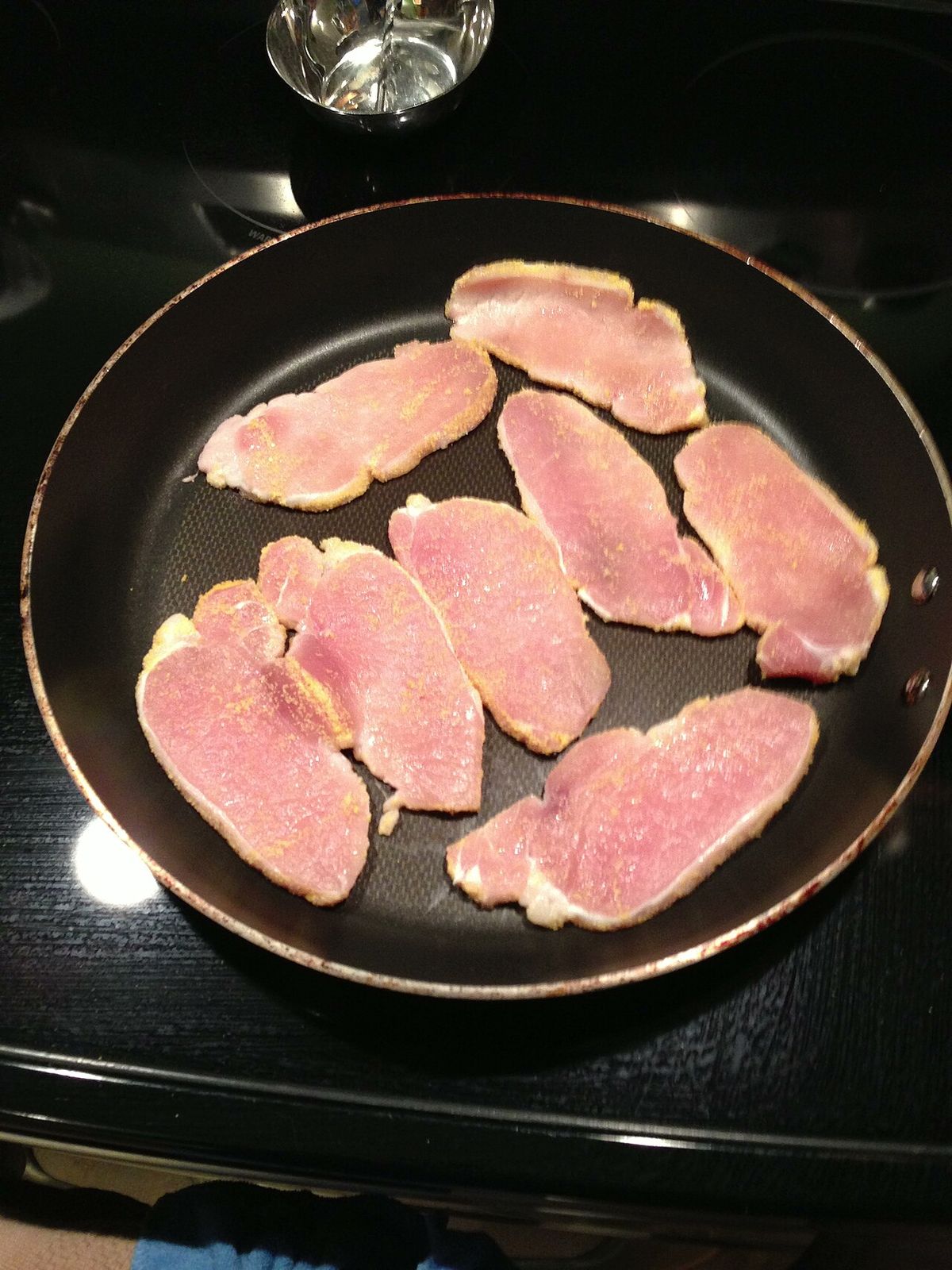
Peameal bacon is an unsmoked bacon product distinguished by its preparation and ingredients. It is crafted from a centre-cut pork loin that is trimmed of excess fat before undergoing a wet-curing process in a brine typically composed of salt and sugar. After curing, the loin is rolled in ground yellow cornmeal, which forms a distinctive golden crust when cooked. This preparation method results in a lean cut of meat with a notably low fat content compared to side bacon. The brining process contributes to its tender texture, making it difficult to overcook, while the cornmeal coating provides a satisfying crispy edge when pan-fried, griddled, or grilled. Cooked slices of peameal bacon have a mild, salty-sweet flavour profile that is more reminiscent of fresh ham than heavily smoked bacons. The finished product is often described as resembling small pork cutlets, and it is consumed across all dayparts, from a breakfast side to a dinner ingredient.
The name 'peameal' is a historical artifact from the product's origins. In the Victorian era, the cured pork loins were rolled in dried and ground yellow peas, a practice intended to draw out moisture and extend the meat's shelf life before modern refrigeration. Following the First World War, cornmeal became the standard coating due to its greater availability and improved preservation techniques, but the original name persisted. Outside of Southern Ontario, peameal bacon is uncommon and is frequently, though inaccurately, referred to simply as 'back bacon'. This terminology can cause confusion, as true back bacon is a similar but distinct product that is typically smoked. The American term 'Canadian bacon' used by the U.S.-based North American Meat Institute refers to an American style of smoked back bacon, which is not the same as authentic Canadian peameal bacon.
Historical development
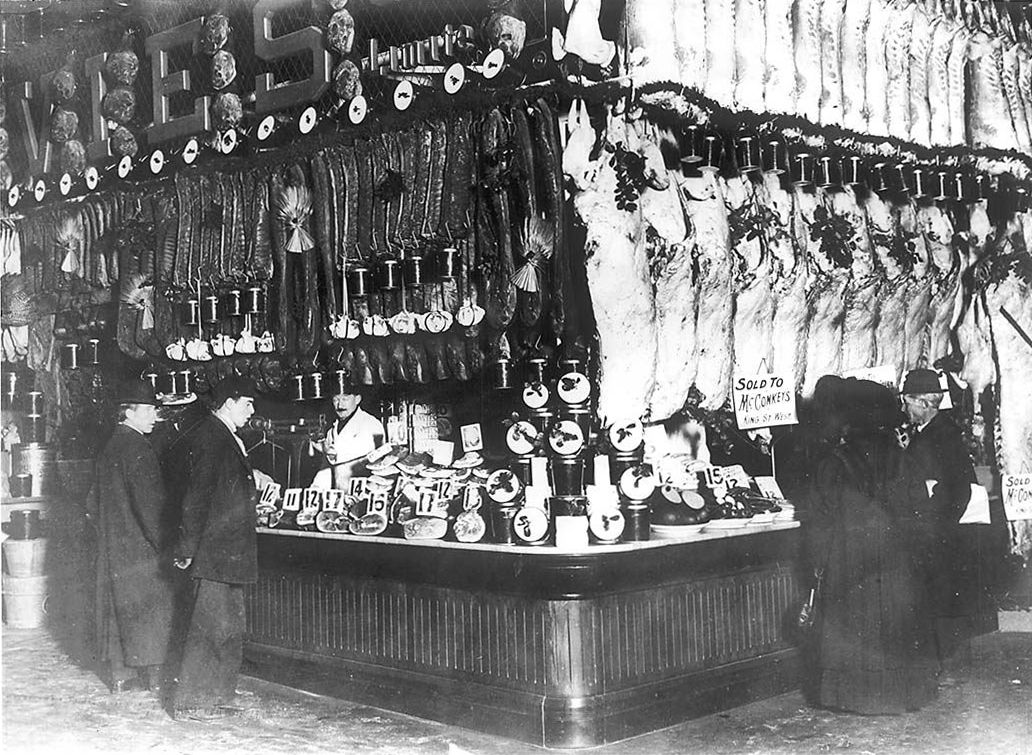
The precise origins of peameal bacon are not definitively documented, though the practice of brine-curing pork has ancient and global roots, including methods like the English Wiltshire cure used since at least 1765. The development of peameal bacon in Canada is strongly linked to William Davies, a pork packer who immigrated from England to Canada in 1854. Davies established a shop in Toronto's St. Lawrence Market, which grew into the William Davies Company. While it is uncertain whether Davies, an employee, or an acquired process invented peameal bacon, oral history credits him with its popularization. According to local lore, Davies shipped brine-cured pork loins to relatives in England and packed them in ground yellow peas to aid preservation during the voyage. The positive reception led to the continued use of peameal as a coating to extend shelf life.
Its large Front Street processing plant handled nearly half a million hogs annually, a scale of operation that contributed to Toronto's longstanding nickname of 'Hogtown'. The shift from peameal to cornmeal as the coating occurred after the First World War, driven by cornmeal's availability and advancements in refrigeration that reduced the need for the pea meal's preservative function. This change solidified the modern form of the product, even as its historical name remained. The company's massive operations show the product's deep roots in Toronto's commercial and culinary history.
- 1854: William Davies immigrates to Canada from England and sets up shop in Toronto.
- Post-World War I: Cornmeal replaces ground yellow peas as the standard coating for the bacon.
- 1977: Renovation of St. Lawrence Market, where the Carousel Bakery expanded its peameal bacon sandwich operation.
The peameal bacon sandwich and culinary uses
The peameal bacon sandwich is a culinary staple of Toronto, with its popularization deeply tied to the St. Lawrence Market. In the 1960s, butcher Joe Homer and baker Elso Biancolin collaborated to create a solution for the less-desired ends of the cured peameal loins. They sliced and fried these bacon ends and sold them on buns, creating an early version of the sandwich. The concept was expanded by Biancolin's sons, Robert and Maurice, during the market's 1977 renovation at their Carousel Bakery. Their version, featuring 1/8-inch slices of griddled peameal bacon drizzled with honey mustard on a fresh Kaiser roll, garnered national and international attention from food critics and television chefs. The Carousel Bakery's sandwich is defined by its simplicity, without complicated sauces, toppings, or layers, though options to add an egg or side bacon are common.
Modern recipes and variations have expanded its form, often incorporating additional ingredients for a heartier meal. Common additions and preparations for peameal bacon and its sandwich include building a breakfast sandwich with melty cheese, maple syrup, lettuce, tomato, and a fried egg for a combination of sweet, salty, and savoury flavours. It is also used as a lean protein in a BLT-style sandwich or as an ingredient in dishes like a Croque Monsieur casserole featuring cranberry. For home cooks, it can be combined with sweet potato, oil, pepper, salt, and nutmeg in a skillet dish baked in the oven. Beyond the sandwich, peameal bacon is a versatile ingredient in home cooking. It can be roasted whole and then sliced, or used in skillet dishes. Its lean profile and savoury flavour make it a popular choice for adding a Canadian twist to various breakfast, brunch, and dinner recipes, such as sliding into eggs Benedict in place of ham or being layered into a brunch casserole when feeding a crowd.
- Griddled 1/8-inch slices served on a Kaiser roll with honey mustard (Carousel Bakery style).
- Maple Peameal Bacon Breakfast Sandwich with cheese and amber maple syrup.
- Peameal Bacon BLT with tomato, lettuce, and mayonnaise.
- As a component in an Egg and Bacon Skillet with sweet potato and spices.
- Used in a Croque Monsieur Casserole with cranberry.
- Served alongside fried eggs, hash browns, and buttered toast for a classic plate.
- As a substitute for ham in eggs Benedict.
- Roasted whole, then sliced and served.
Cultural significance and recognition
Peameal bacon holds a special place in Ontario's, and particularly Toronto's, culinary identity. The sandwich's status was formally recognized in 2016 when it was officially named Toronto's signature dish, an announcement made by Mayor John Tory at a local food festival featuring several interpretations. This cultural significance is further demonstrated by its use in civic events and friendly wagers. For instance, peameal bacon sandwiches were served at the inaugural Canadian Comedy Awards in 2000. In 2019, during the NBA Finals, the dish was part of a wager between Toronto Mayor John Tory and Oakland Mayor Libby Schaaf, highlighting its role as a symbol of the city. The product's history is intrinsically linked to Toronto's economic development through the massive William Davies Company and the 'Hogtown' moniker.
While peameal bacon is rarely found in its authentic form outside of Southern Ontario, it remains a point of provincial pride and a sought-after item for visitors to Toronto, especially at the St. Lawrence Market. Its distinction from what Americans commonly call 'Canadian bacon' is a frequent point of clarification, reinforcing its unique Canadian heritage. The dish's simplicity and strong local association have made it a subject of national media coverage and a common feature in discussions of Canadian regional cuisine. The sandwich's rise from a market stall solution to a recognized civic symbol charts its journey within Toronto's food culture.
Nutritional profile and analysis
Due to its origin from the lean pork loin, peameal bacon offers a nutritional profile that is favourable when compared to other bacon types. A standard 100-gram sample, equivalent to about two thick slices of peameal bacon, contains significantly fewer calories and less fat than the same weight of side bacon or even many brands of turkey bacon. A comparative analysis of 100-gram samples reveals the following nutritional differences. While turkey bacon often markets a healthier image, this comparison shows popular brands can have higher sodium and carbohydrate content from additives like corn syrup. Nutritionist Theresa Albert provided this specific data, highlighting that peameal bacon has less than half the sodium of turkey bacon and a fraction of the fat found in side bacon.
| Product | Calories | Sodium (mg) | Carbohydrates (g) | Fat (g) |
|---|---|---|---|---|
| Peameal Bacon | 157 | 904 | 1.7 | 7 |
| Side Bacon | 541 | 1,717 | 1.4 | 42 |
| Turkey Bacon | 382 | 2,285 | 3.1 | 28 |
The complete peameal bacon sandwich, however, presents a different nutritional picture due to the bread and condiments. A 2018 laboratory analysis of a Carousel Bakery sandwich weighing 241 grams found it contained 499 calories, 49 grams of carbohydrates, 8 grams of fat, and 57 grams of protein. Dietitian Shannon Crocker noted that the high protein and calorie content can make it a satisfying meal, but the 2,520 milligrams of sodium in that single sandwich exceeds 10 percent of the maximum recommended daily limit. This analysis highlights that the classic preparation is a hearty, occasional treat rather than an everyday health food, though the lean bacon itself is a relatively nutritious protein choice.
Home preparation and ingredients
Authentic peameal bacon can be challenging to find outside of Ontario, leading many enthusiasts to prepare it at home. The homemade process involves curing a trimmed boneless pork loin in a brine solution for several days. A typical brine includes distilled water, kosher salt, sugar, peppercorns, garlic, bay leaves, and Prague Powder #1, a curing salt containing 6.25 percent sodium nitrite and 93.75 percent sodium chloride. This curing agent, also called tinted cure or pink curing salt, preserves colour and flavour while inhibiting bacterial growth and is essential for food safety and proper texture. After curing for approximately five days, with the meat turned daily, the loin is soaked in fresh water for two hours, drained, and soaked again to desalinate before being patted completely dry and rolled in cornmeal, pressing lightly so the coating sticks.
Once prepared, peameal bacon can be cooked in several ways. The most common method is to slice it and pan-fry or griddle the slices until the cornmeal coating is crisp and the interior is cooked through. It can also be roasted whole in an oven and then sliced for serving. Properly cured peameal bacon will keep for about a week when tightly wrapped and refrigerated, and it can be frozen in portions or individual slices for longer storage. For those not making it from scratch, it is primarily available at butchers and specialty food markets within Ontario, with St. Lawrence Market in Toronto being its most famous retail source. The ability to make it at home allows for control over the salt and sugar levels in the brine, creating a product that can be tailored to personal taste.
Recipe variations and serving suggestions
The basic peameal bacon sandwich invites numerous variations that build upon its core components. Many contemporary recipes aim to create a more substantial meal, often positioning it as a centrepiece for brunch. A Maple Peameal Bacon Breakfast Sandwich incorporates cheese and a drizzle of amber maple syrup alongside the bacon on a toasted bun. Other popular modifications include adding creamy avocado sprinkled with fleur de sel for texture, or substituting mixed greens for lettuce to introduce a peppery bite. For added heat, a drizzle of hot sauce, such as varieties incorporating coffee, oak wood, pineapple, or intense peppers like ghost pepper or Carolina Reaper, can be applied. Cooked mushrooms or caramelized onions are also suggested as toppings to provide umami flavour and sweetness.
Beyond the sandwich format, peameal bacon is utilized in a range of other dishes. It can be sliced and served on a classic brunch plate alongside fried eggs, hash browns, and buttered toast. It serves as an excellent substitute for ham in eggs Benedict or as a layered component in a savoury breakfast casserole. For dinner applications, it can be featured in a Croque Monsieur casserole or an egg and bacon skillet bake with sweet potato. These diverse applications demonstrate the product's flexibility and its role as a staple protein in Canadian-inspired cooking, capable of adapting from a simple, handheld meal to a more composed plate. Suggested recipe variations for the sandwich and other dishes include the following common additions.
- Avocado, swapped for tomato, with a sprinkle of fleur de sel.
- Mixed greens in place of regular lettuce for a peppery bite.
- A drizzle of hot sauce, such as Fusion Hot Sauces with coffee or pineapple.
- Cooked mushrooms prepared with butter for umami flavour.
- Caramelized onions for sweetness and sharpness.
- An added fried egg or slice of side bacon.
- Melty cheese, such as in a Maple Peameal Bacon Breakfast Sandwich.
- Heirloom tomatoes and finely minced garlic on a toasted Kaiser bun.
Questions about Peameal bacon
Is peameal bacon the same as Canadian bacon?
No, they are different. In the United States, the term 'Canadian bacon' often refers to a smoked back bacon. Authentic peameal bacon is unsmoked and coated in cornmeal. While both are made from pork loin, the curing, smoking, and coating processes differ. This distinction means what is sold as 'Canadian bacon' in U.S. supermarkets is not the same as traditional Canadian peameal bacon.
How do you cook peameal bacon?
Peameal bacon is most commonly sliced and cooked on a griddle, in a frying pan, or on a grill. It should be cooked until the cornmeal coating is crispy and the interior is fully heated through. Due to the brining process, it is difficult to overcook and remains juicy. It can also be roasted whole in an oven and then sliced for serving, or used as an ingredient in casseroles and skillet bakes.
What is peameal bacon?
Peameal bacon is a wet-cured, unsmoked bacon made from trimmed lean boneless pork loin rolled in cornmeal. It is a Canadian specialty found mainly in Ontario, particularly associated with Toronto. The pork loin is centre-cut, trimmed of fat, and cured in a salt and sugar brine. This process results in a product with a mild salty sweet flavour and a crispy edge from the cornmeal coating when cooked. It is eaten for breakfast, lunch, or dinner and is distinct from smoked back bacon or American side bacon.
Why is it called peameal bacon if it's rolled in cornmeal?
The name 'peameal bacon' derives from the historic practice of rolling the cured pork loin in dried and ground yellow peas. This was done in the Victorian era to draw out moisture and extend the product's shelf life before modern refrigeration. Since the end of World War I, ground yellow cornmeal replaced peameal as the standard coating due to its availability and improved refrigeration practices. However, the original name has persisted, and the product is still known as peameal bacon despite the change in coating.
Where did peameal bacon originate?
Peameal bacon originated in Toronto, Ontario. Its development is credited to Toronto pork packer William Davies, who moved to Canada from England in 1854 and set up a shop in Toronto's St. Lawrence Market. According to oral history, Davies began packing brine cured pork loins in ground yellow peas for preservation when shipping to England. His company, the William Davies Company, expanded to become the largest pork exporter in the British Empire, processing nearly half a million hogs per year by the early 1900s and contributing to Toronto's 'Hogtown' nickname.
What is a peameal bacon sandwich?
A peameal bacon sandwich is a signature dish of Toronto, often consisting of cooked peameal bacon on a Kaiser roll. The classic version, popularized by Carousel Bakery in St. Lawrence Market, features one eighth inch slices of peameal bacon cooked on a griddle until crisp, drizzled with honey mustard, and served on a soft fresh roll. It is a simple sandwich without complicated sauces, though options exist to add an egg or side bacon. In 2016, the peameal bacon sandwich was officially named Toronto's signature dish by Mayor John Tory.
Sources and further reading
- Peameal bacon (Wikipedia)
- Maple Peameal Bacon Breakfast Sandwich Recipe (farmboy.ca)
- Peameal Bacon Recipe, Authentic Ontario-Style, Made ... (cookwhatyoulove.com)
Checked by the Novello Desserts desk. Last updated 2026-10-28.