Rotisserie chicken
Rotisserie chicken is a dish consisting of a whole chicken cooked on a rotating spit, or rotisserie, using direct heat. The method, which can employ gas or electric infrared heating elements, produces a consistently juicy and flavourful bird with a crisp skin. In Canada, rotisserie chicken is a culinary staple and a significant element of popular culture, widely available from dedicated restaurant chains and as a ready-to-eat option in grocery stores. Its popularity stems from its convenience, affordability, and versatility, often serving as a centrepiece for family meals or as a base ingredient for countless quick recipes.
Cooking Method and Characteristics
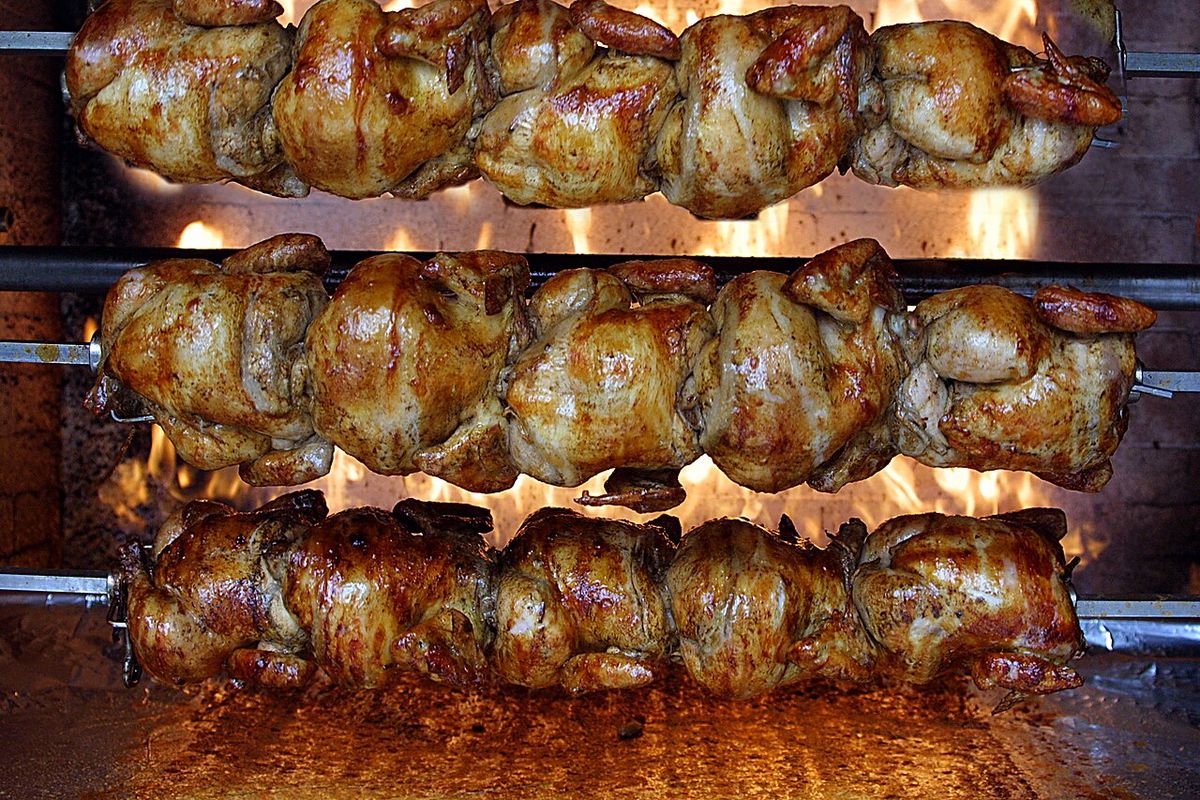
Rotisserie chicken is defined by its specific cooking technique, where a whole chicken is skewered on a spit and rotated continuously adjacent to a direct heat source. This rotation ensures even cooking and self-basting as the chicken's own juices are redistributed over the meat. Modern rotisseries often use adjustable infrared heating elements powered by electricity or gas, which provide efficient and controllable heat. The result is a chicken with a moist interior and a uniformly browned, crisp exterior skin. This cooking method is distinct from oven roasting or grilling, as the constant motion prevents drying and promotes a distinctive texture and flavour profile that has become widely recognized and appreciated.
Global Variations and Popularity
While a simple concept, rotisserie chicken has been adapted into distinct regional specialties around the world. In Peru, pollo a la brasa is considered a national dish, with citizens consuming it an average of three times per month and such restaurants making up 40% of the country's fast food industry. In Mexico, it is known as pollo rostizado and is commonly served with tortillas, salsa, arroz rojo, and refried beans. France has a long historical association with the dish, notably consumed by Napoleon Bonaparte. Australia has developed a strong culture around both supermarket rotisserie chickens, colloquially called a 'bachelor's handbag', and family-run charcoal chicken shops, where the chicken is cooked over charcoal for added smokiness. Major international warehouse club Costco has been instrumental in popularizing rotisserie chicken as a retail product in several countries, including Canada, the United States, Mexico, and Australia. Its consistent, low-price model has made it a benchmark in the market. The dish's universal appeal lies in its combination of being a complete, ready-to-eat protein that requires no preparation from the consumer, coupled with its potential for use in a wide array of other dishes, making it a versatile staple in many cuisines.
Rotisserie Chicken in Canada
Rotisserie chicken has been a popular food in Canada since the 1950s and is deeply embedded in the nation's casual dining and pop culture. The market is dominated by two major Canadian casual dining chains: Swiss Chalet and St-Hubert. These establishments have built their brand identities around their signature rotisserie chicken, often served with distinctive dipping sauces and sides like fries and coleslaw. Their enduring popularity speaks to the dish's status as a comfort food and a common choice for family dinners or casual gatherings across the country. Beyond these dedicated restaurants, rotisserie chicken is a ubiquitous presence in Canadian grocery stores. Following the model established in the United States, most major supermarket chains, including Costco, sell ready-to-eat rotisserie chickens, typically as a loss leader to attract customers. The cultural footprint of the dish is perhaps best illustrated by Swiss Chalet's dedicated cable channel, which airs content related to rotisserie chicken twenty-four hours a day, seven days a week. The channel primarily features footage of chickens rotating on a rotisserie, occasionally interspersed with a man dancing in a costume resembling a container of the chain's famous dipping sauce.
The Supermarket Loss Leader Strategy
The widespread practice of selling rotisserie chickens at grocery stores for a price often lower than that of a raw whole chicken is a deliberate retail strategy known as using a loss leader. Stores sell the product at or below cost to draw shoppers into the store. The economic logic is that once customers arrive to purchase the attractively priced chicken, they are likely to also buy higher-margin complementary items such as side dishes, salads, bread, beverages, and other groceries. This strategy increases overall basket size and store traffic, offsetting the minimal profit or loss on the chicken itself. A secondary reason for this pricing involves inventory management. Grocery stores frequently use chickens that are nearing their 'best by' dates for rotisserie preparation. By cooking these birds, the store converts perishable raw inventory into a value-added, ready-to-eat product with a new shelf life, thereby recouping costs that would otherwise be lost if the raw chicken had to be discarded. This approach reduces food waste while providing a convenient product for consumers. The strategy is employed by major chains across Canada, the United States, Australia, and the United Kingdom.
The Costco Phenomenon
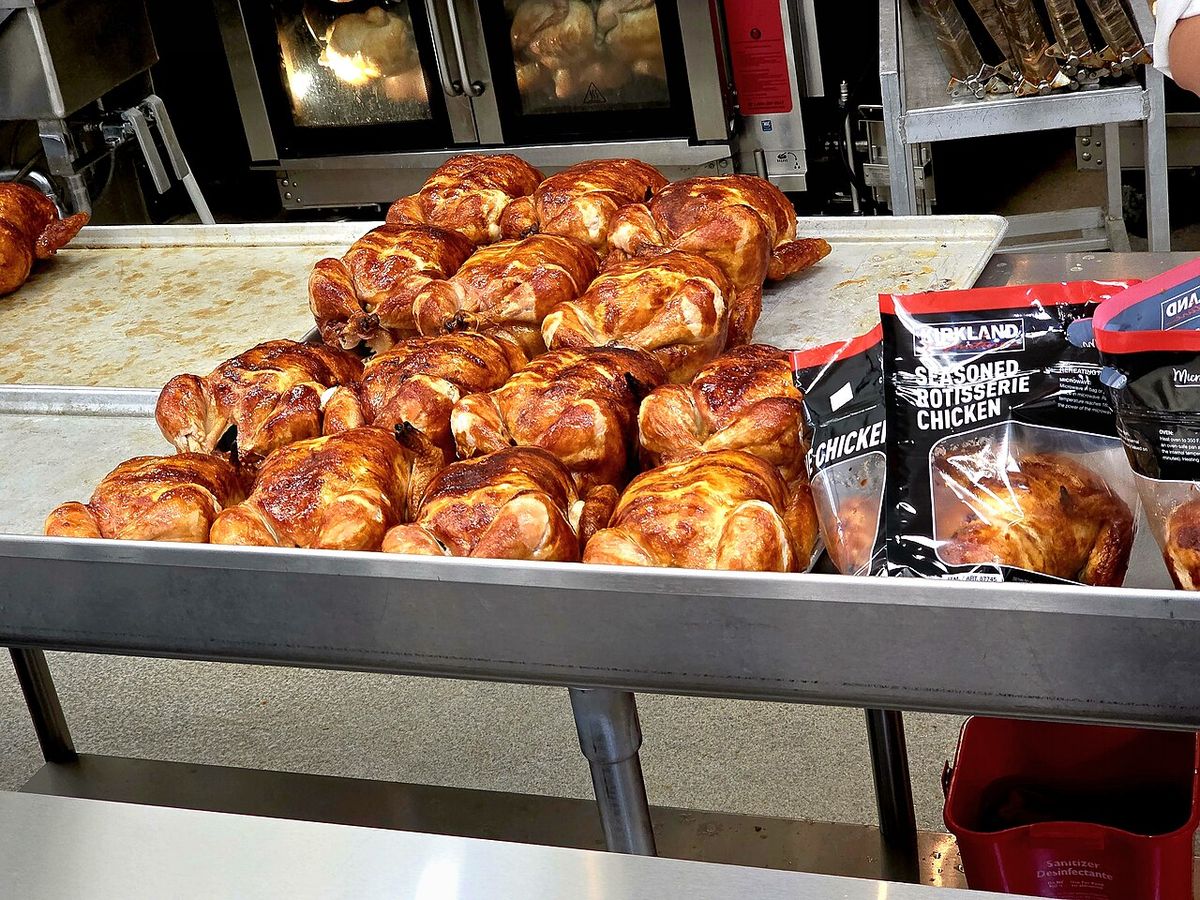
Costco Wholesale has become synonymous with rotisserie chicken in North America, with commentators describing it as the undisputed king of the product. The company is one of the largest producers and vendors of rotisserie chickens in the United States. Sales figures demonstrate its scale, with approximately 87 million chickens sold in 2017, rising to 106 million in 2021. A key to its success has been a firm commitment to a low price point. Since 2009, Costco has maintained the price of its rotisserie chicken at $4.99 USD, a policy repeatedly defended by executives like former CFO Richard Galanti and CEO Ron Vachris, who has vowed not to raise the price on his watch. To control costs and supply for this flagship item, Costco vertically integrated its production. In 2017, it broke ground on a massive 414-acre facility in Fremont, Nebraska, which includes a hatchery, feed mill, and processing plant. Operating as Lincoln Premium Poultry, the $275-$400 million plant opened in 2019 and produces around 100 million chickens per year, supplying roughly 40% of Costco's needs. This level of investment highlights the strategic importance of the rotisserie chicken to Costco's business model and customer value proposition.
Culinary Uses and Recipe Trends
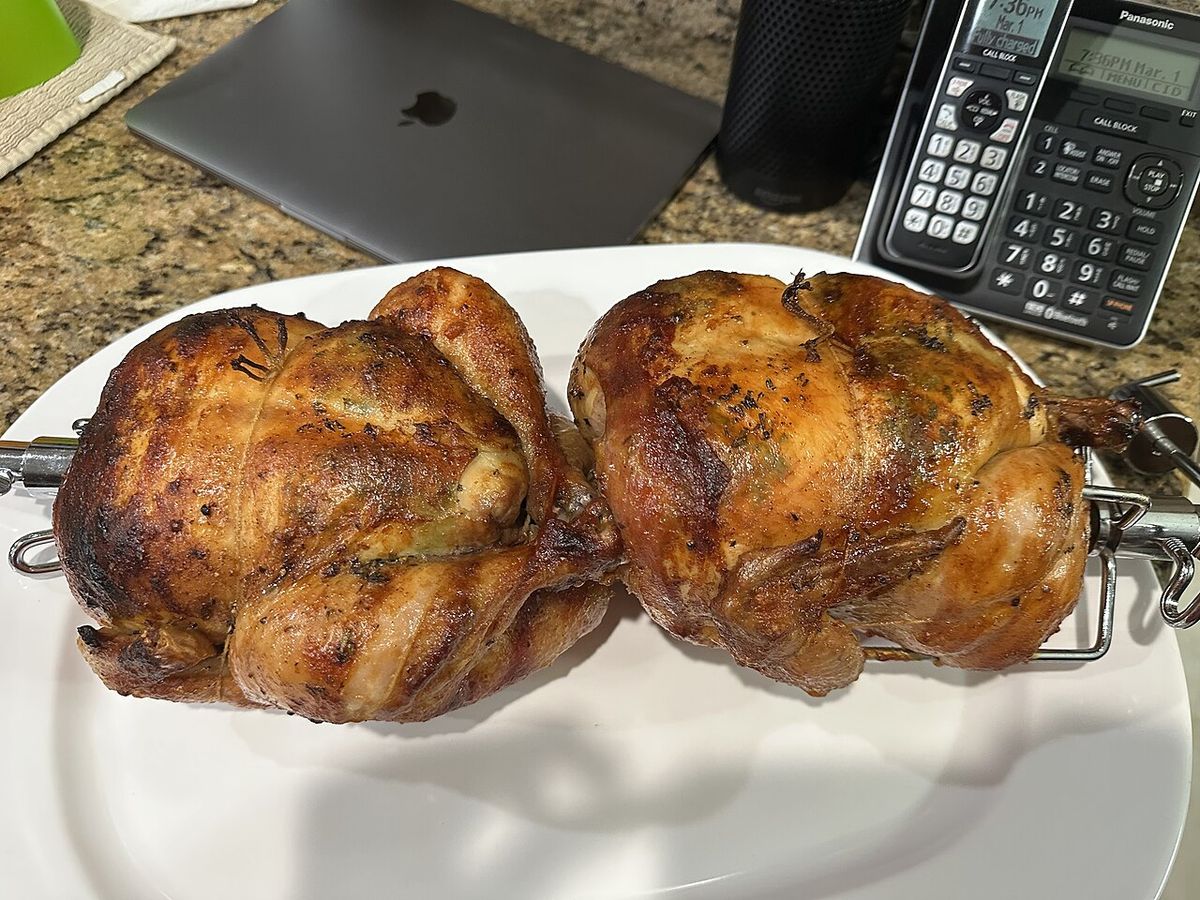
The utility of rotisserie chicken extends far beyond being a simple ready-to-eat meal. Its pre-cooked, versatile meat is a celebrated shortcut for home cooks, forming the foundation for a vast array of quick and easy dishes. The leftover meat can be shredded, chopped, or pulled for use in countless recipes, saving significant preparation time. This has made it a favourite subject for food bloggers, chefs, and media outlets offering solutions for busy weeknights. Common applications include incorporating the chicken into soups, stews, casseroles, tacos, enchiladas, salads, sandwiches, and pasta dishes. Contemporary recipe trends focus on maximizing convenience and nutrition. Popular categories for rotisserie chicken recipes include high-protein meals, 30-minute dinners, and healthy preparations. A sample of modern recipe ideas demonstrates its versatility.
- Sheet Pan Chicken Pot Pie
- Baked Chicken Chile Tacos
- Italian Pastina Soup
- King Ranch Chicken Casserole
- Cajun Chicken and Sausage Gumbo
- Creamy Chicken Enchiladas
- Mediterranean Chicken Pita Wraps
- Chicken Fried Rice
Leftover rotisserie chicken may be used in a variety of dishes such as soup, chicken salad, and sandwiches. This adaptability ensures that a single rotisserie chicken can be transformed into multiple distinct meals. This practice helps in reducing food waste. It also simplifies meal planning for families and individuals alike.
Notable Facts and Cultural Moments
Rotisserie chicken has inspired unique cultural moments and business disputes. In Australia, the slang term 'bachelor's handbag' for a whole roast chicken purchased hot from a supermarket in a handled plastic bag was voted the people's choice for the country's word of the year in 2022. In the United Kingdom in 2025, the supermarket chain Morrisons lost a legal challenge against HM Revenue and Customs over whether Value Added Tax should be charged on its rotisserie chickens, with a tribunal citing the store's failure to disclose key facts about special temperature-control packaging. The dish has also spawned internet micro-celebrities. In 2022, a waiter in Philadelphia, Alexander Tominsky, gained local fame after eating a rotisserie chicken every day for 40 consecutive days. That same year, a Spanish-speaking TikTok user known as @donpollo2982 gained notoriety for videos of himself eating food, usually rotisserie chicken, in his car, often interrupted by notification sounds from his Android smartphone. These instances reflect the dish's embedded status in everyday life and its potential as a focal point for humour and novelty.
Industry and Consumption Data
The scale of rotisserie chicken production and consumption, particularly in the United States, is immense and has grown steadily. In 2010, consumers purchased approximately 600 million rotisserie-cooked chickens from U.S. supermarkets, club stores, and similar retail outlets. By 2018, that figure had surged to over 900 million chickens sold by foodservice outlets and retail stores combined. This growth marks the product's transition from a niche offering to a mainstream grocery and foodservice staple. The preparation of chickens for the rotisserie often involves injecting them with a brine solution to enhance moisture retention and flavour, and additional ingredients like oleoresin and yeast extract may be used to promote browning and improve taste. Several major Australian supermarket and restaurant chains have played a significant role in the dish's local popularity.
- Coles, IGA, and Woolworths sell supermarket rotisserie chicken.
- Costco sells rotisserie chicken at its Australian outlets.
- The chain Red Rooster was founded in Perth in the early 1970s.
- Chargrill Charlie’s was founded in Coogee, Sydney in 1989.
- El Jannah was founded in Granville, Sydney in 1998.
- Oporto and Frango emerged as chains in the late 1980s.
Costco is one of the largest producers and vendors of rotisserie chickens in the United States. In 2017, Costco sold approximately 87 million rotisserie chickens in the United States. That number rose to 106 million chickens in 2021. Costco has maintained a price of $4.99 USD for a rotisserie chicken since 2009.
| Year | Costco U.S. Rotisserie Chicken Sales | Notable Price Point |
|---|---|---|
| 2009 | Data not specified | Price set at $4.99 USD |
| 2017 | Approximately 87 million | Held at $4.99 USD |
| 2021 | 106 million | Held at $4.99 USD |
| 2024 | Data not specified | CEO reaffirms commitment to $4.99 price |
Questions about Rotisserie chicken
Why is rotisserie chicken often cheaper than raw chicken at the store?
Rotisserie chickens are often sold at a lower price than raw whole chickens in grocery stores. One explanation is that grocery stores may use rotisserie chickens as loss leaders to bring shoppers into the store. Another explanation is that rotisserie chickens are often made with poultry that is about to reach its 'best by' date. By cooking and selling these chickens, stores are able to recoup some of their expenditures.
What are some easy recipes to make with a store-bought rotisserie chicken?
Rotisserie chicken is incredibly versatile for quick meals. The pre-cooked meat can be used in soups like chicken noodle or enchilada soup, casseroles such as King Ranch chicken, tacos, quesadillas, salads, and sandwiches. Popular specific recipes include sheet pan chicken pot pie, creamy chicken enchiladas, chicken fried rice, and Mediterranean chicken pita wraps. The meat saves preparation time and forms the protein base for countless 30-minute dinners.
What is a 'bachelor's handbag'?
A 'bachelor's handbag' is Australian slang for a whole roast chicken purchased hot from a supermarket. It is packaged in a disposable plastic carry bag with a handle. The term refers to a product that requires no further preparation before being consumed. This expression was the people's choice as the country's word of the year for 2022.
How does Costco keep its rotisserie chicken price at $4.99?
Costco has maintained the $4.99 price for its rotisserie chicken since 2009. The company's CFO has repeatedly rebuffed suggestions to increase the price. In 2024, the CEO promised that raising the price would not happen on his watch. Costco has gone to great lengths to maintain this price as a key value item for members.
Which Canadian restaurant chains are famous for rotisserie chicken?
Two Canadian casual dining restaurant chains famous for rotisserie chicken are Swiss Chalet and St-Hubert. These chains dominate the market for chicken in Canada. Swiss Chalet owns a cable channel that exclusively airs content related to rotisserie chicken twenty-four hours a day, seven days a week. The dish is a staple of Canadian pop culture.
What is pollo a la brasa?
Pollo a la brasa literally means 'roasted chicken'. It is the Peruvian version of rotisserie chicken and is considered a national dish. Peruvians consume it an average of three times per month. Rotisserie chicken restaurants account for 40 percent of the fast food industry in Peru.
Sources and further reading
- Rotisserie chicken (Wikipedia)
- 25 High Protein Rotisserie Chicken Recipes (masonfit.com)
Checked by the Novello Desserts desk. Last updated 2026-10-28.